


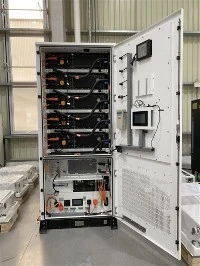
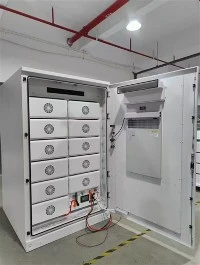
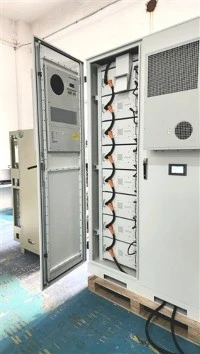
With the growing popularity of commercial & industrial (C&I) energy storage systems, many business operators are considering deploying energy storage solutions. However, most buyers have limited prior exposure and know little about energy storage cabinets. Today, we will break down the internal components of an energy storage cabinet, which mainly include the following parts:


Battery System
Core Function: Stores electric energy and acts as the core energy carrier of the whole system.
Main Chemistry: Lithium Iron Phosphate (LFP) batteries are the mainstream option at present. Thanks to high safety performance and long cycle life, they meet the demand for long-term stable operation in commercial and industrial scenarios.
Structure: Multiple battery modules are connected in series and parallel to form battery racks, which are further integrated into the battery cabinet. Capacity can be flexibly configured according to project requirements.
Battery Management System (BMS)
Positioning: Real-time monitoring of battery parameters including voltage, temperature and current; it performs State of Charge (SOC) estimation, cell balancing, fault early warning and protection.
Function: Guarantee safe and long-lasting battery operation, extend battery service life, and prevent abnormalities such as overcharging, overdischarging and overheating.
Power Conversion System (PCS)
Core Function: Enables bidirectional conversion between alternating current (AC) and direct current (DC), serving as the power conversion hub of the system.
Application Logic: During charging, it converts grid AC power into DC power to charge batteries. During discharging, it converts DC power from batteries into AC power to supply loads. It also supports power regulation, on-grid/off-grid switching and other functions to ensure power quality complies with grid standards.
Energy Management System (EMS)
Intelligent Decision-Making: Based on preset strategies (peak-valley arbitrage, demand management, etc.), real-time electricity prices and power load data, the EMS automatically generates charge-discharge schedules and coordinates joint operation of the PCS and battery system.
Extended Functions: It can connect to grid dispatching platforms to participate in demand response, ancillary service market transactions, and maximize economic benefits.
Thermal Management System
Function: Maintain batteries within the optimal operating temperature range to stabilize battery performance.
Common Solutions: Air cooling (lower cost) and liquid cooling (higher heat dissipation efficiency and superior temperature uniformity, gradually becoming the mainstream). It prevents performance degradation and accelerated aging caused by excessively high or low battery temperatures.
Fire Protection & Safety System
Protection Setup: Equipped with monitoring devices including combustible gas detectors, smoke sensors and temperature sensors, as well as automatic fire suppression devices (using fire extinguishing agents such as FM-200 and Novec 1230), forming a multi-level safety protection system.
Purpose: Timely detect and mitigate safety hazards such as battery thermal runaway, protecting equipment and personnel safety.
Structural & Auxiliary Systems
Physical Support: Consists of energy storage cabinets, energy storage containers, power distribution equipment and more. It provides physical protection including structural support, insulation, dust prevention and rainproofing for internal equipment.
Auxiliary Functions: Some systems are also equipped with monitoring systems and communication modules to realize remote operation & maintenance and data transmission, allowing users to check system operating status in real time.
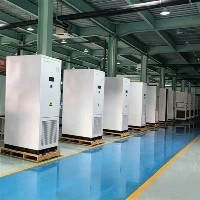
Commercial & industrial energy storage systems are widely distributed, generally with relatively small capacity. Larger-capacity projects adopt container-type energy storage cabinets, yet the internal configuration is still composed of the above subsystems.

125KW 241kWh Battery Energy Storage System Cabinet
The BESS 125KW 241kWh Lithium Battery Energy Storage Cabinet is a high-power, large-capacity integrated energy storage solution engineered for medium-to-large commercial, industrial, and utility-scale applications. It integrates a 125kW high-performance bidirectional inverter, a 241kWh lithium iron phosphate (LiFePO4) battery bank, and a full-featured intelligent energy management system (EMS) into a modular cabinet design. This system enables efficient renewable energy storage, peak shaving, load shifting, grid frequency regulation, and emergency backup power supply. Ideal for large factories, shopping malls, industrial parks, utility-scale solar/wind farms, and microgrids, it enhances energy independence, reduces high grid demand charges, and supports the stable integration of high-penetration renewable energy into the grid.