


Most industrial battery storage business cases are built around energy: store cheap kilowatt-hours overnight, release them during the expensive block. That model earns money on a factory site, but it is rarely the reason a plant buys a battery. On a real production floor, the pain is concentrated in seconds, not hours. A spot welder draws a spike measured in tens of milliseconds. A 250 kW motor starting direct-on-line pulls five to seven times its rated current for a second or two. An arc furnace swings the load by megawatts as scrap melts and the electrodes reposition.
These events share a signature: high power, short duration, high repetition. They are power problems wearing an energy problem's clothes. When a plant tries to solve them with a four-hour battery sized for tariff arbitrage, the result is usually an undersized inverter, a battery cycling far harder than its warranty assumed, and a disappointed energy manager.
This article is about sizing and specifying industrial battery storage for that kind of load - what the spikes actually look like, where the value really sits, and how to phase a project so the first cabinet proves the case before the second one is ordered. It complements our industry guides on cold storage, hospitals, ports and mining, and assumes the reader already understands the basic architecture covered in our EMS, BMS and PCS explainer.
Start With the Load Signature, Not the Bill
Before anyone models savings, the plant needs a load profile at the right resolution. Most utility bills offer 15-minute demand intervals. That is adequate for billing analysis and almost useless for equipment sizing. A 60-second spike that trips a drive or blemishes a weld disappears entirely inside a 15-minute average.
What you actually need is sub-second or at minimum one-second data from the main incomer, plus separate logging on the feeders that serve welding, large motors and furnace loads. Three things in that data determine the entire design:
The magnitude and duration of each transient - the peak kVA and how long it lasts before decaying
The repetition rate - a weld cell running 40 parts per minute is a very different duty than one running four
The coincidence pattern - whether spikes cluster (shift start, furnace charge) or spread evenly
The coincidence question is where most desktop studies go wrong. A plant with a 900 kVA peak that occurs twice a day has a small battery requirement. The same plant with a 900 kVA peak recurring every 90 seconds for eight hours has a large one, because the battery must absorb nearly all of it continuously, and thermal design rather than energy capacity becomes the binding constraint.
Why the Battery, and Not a Bigger Transformer
The conventional fix for weak supply is a service upgrade: larger transformer, thicker cable, higher capacity tariff. It works, but it is slow, capital-heavy, and it locks in a demand charge based on a peak you may only hit a few times a month.
A battery sitting behind the meter changes the economics in three ways at once. It clips the peak that sets the demand charge, so the billing peak falls without touching production. It supplies transient current faster than a transformer can respond, so voltage at the welding cell stays inside the tolerance band. And it does both while the utility connection stays unchanged, which matters enormously on sites where an upgrade means a 12-to-18-month queue and a construction project in the middle of a live yard.
The distinction that decides whether the project works is response speed. A demand-management system that reacts on a 15-minute rolling average is a billing tool. A system that reacts in under 100 milliseconds is a power-quality tool. They use different equipment, different control loops, and different warranty assumptions. Buying the first and expecting the second is the most common failure mode in this segment.
The Load Spectrum, and What Each One Demands
Resistance spot welding is the classic stress case. Each weld is a burst of perhaps 50 to 200 kVA lasting 100 to 400 milliseconds, and a robotic line may execute 30 to 60 of them per minute across several robots. The aggregate is a sawtooth that never settles. The battery must follow that sawtooth cycle after cycle, which means cycle life at high C-rate, not nominal capacity, is the specification that matters.
Arc welding - MIG, MAG, TIG, stick - is gentler in peak but longer in duration, and it is sensitive to voltage sag in a way that shows up as porosity, spatter and inconsistent penetration rather than as a tripped breaker. Weld quality problems that appear only on the third shift, when the rest of the plant is idle and the tap changer sits in a different position, are a classic symptom of supply impedance interacting with arc stability.
Large motor starts are the third family. Direct-on-line starting of a 200 to 400 kW compressor or crusher produces an inrush that collapses voltage across the whole plant for a second or more. VFDs soften this, but not all loads are VFD-fed, and a single unsoftened start can be the constraint on the entire service. Here the battery is doing voltage support more than peak shaving.
Arc furnaces and induction melting are the extreme case. Multi-megawatt swings, strong harmonic content, and a load that is genuinely stochastic. These projects are engineer-to-engineer, rarely standard product, and should be treated as a separate class of work from the welding and motor applications described here.
C-Rate Is the Specification That Decides the Warranty
A battery sized for four hours of arbitrage discharges at roughly 0.25C. A battery absorbing welding spikes may see repeated excursions at 2C or higher, hundreds of times per shift. Those are not the same product, and the difference is not marketing - it is cell chemistry, thermal design, and the degradation model behind the warranty.
Three questions expose whether a supplier has actually designed for this duty. First, what continuous and peak C-rate is warranted, and for how many seconds at peak. Second, what cycle life is stated at that duty rather than at 0.5C, since a 6,000-cycle claim at low C-rate tells you nothing about a high-frequency application. Third, how the thermal management handles sustained high-rate cycling - air cooling in a hot plant room is a different proposition from liquid cooling, and the ambient temperature inside a factory is often 10 to 15°C above outdoor.
A useful discipline is to specify the duty cycle explicitly in the procurement documents: a representative 24-hour profile with peak kVA, duration, repetition count and ambient temperature, and require the supplier to warrant against that profile. This is the same logic we recommend in the RFQ template, applied to a load case rather than a generic site description.
Two Ledgers: Demand Savings and Production Quality
The financial case for industrial battery storage in manufacturing usually runs on two parallel ledgers, and both need to be calculated before the project is credible.
The first is the demand ledger. Peak shaving reduces the billed maximum demand, and in markets with ratchets, a single bad peak can set the charge for eleven months. A battery that reliably caps the plant at a setpoint converts a volatile charge into a predictable one. That is straightforward to model from interval data, with the usual caveat that the savings depend on the tariff structure, the ratchet clause and the local rules in force.
The second ledger is production. This is where the numbers get larger and softer. Voltage sag causes weld defects, nuisance trips on contactors and drives, shortened motor life, and in sensitive processes, scrap. A plant running 5% scrap on a welding line may be losing more to power quality than it spends on electricity. Quantifying that requires production data - defect rates correlated with time of day, maintenance logs on contactor and drive failures, and quality records tied to shift patterns. When the correlation appears, the battery case stops being an energy project and becomes a quality project, which is a much easier conversation with operations.
Be conservative on the second ledger. Claim only the defects you can trace, and treat the rest as upside.
Harmonics, Power Factor, and the Interaction Nobody Models
Welding sets and arc furnaces are harmonic sources. So are VFDs, which are everywhere in a modern plant. A battery system with a bidirectional inverter sits in the same electrical neighborhood and will interact with that distortion.
Two practical consequences. First, the PCS must be specified with harmonic tolerance - what total harmonic distortion on the supply it can ride through without derating or tripping. Second, if the site already has capacitor banks for power factor correction, those banks and the battery can resonate. A harmonic study is not optional on a plant with significant welding load; it is the difference between a system that runs quietly for a decade and one that trips every time the furnace charges.
Power factor also cuts both ways. A battery inverter can supply reactive power and improve PF, which may reduce penalties. But it must be coordinated with existing correction equipment rather than fighting it. Specify the coordination explicitly, and require the supplier to state the PF range and response time the PCS can deliver.
Phasing: Prove It on One Line First
The most reliable path into a manufacturing plant is not a plant-wide study followed by a large order. It is a monitoring phase, then a single-line pilot, then expansion.
Phase one is two to four weeks of power logging on the main incomer and the two or three worst feeders, with one-second resolution synchronized to production records. This costs very little and settles most of the arguments, because it replaces opinion about which line is the problem with data.
Phase two is a battery on one welding cell or one motor group, sized from that data, instrumented to log both electrical performance and production outcomes. Six to eight weeks is usually enough to see whether defect rates move and whether the demand setpoint holds through a full production cycle.
Phase three is replication, at which point the design is de-risked and the internal business case is built on your own measurements rather than a vendor's model. Our article on front-of-meter versus behind-the-meter siting is worth reading before phase three, because a plant with several metered supplies may find that the optimal architecture is not one battery per building.
What to Put in the Specification
Four items separate a specification that gets built correctly from one that gets argued about later. The measured load profile, with resolution and duration stated. The duty cycle the warranty must cover, expressed in C-rate, cycles per day and ambient temperature. The response time requirement, in milliseconds, with the measurement method defined. And the harmonic and power factor coordination requirements, referencing a site study rather than a generic standard.
Everything else - enclosure rating, corrosion class, communications protocol, cybersecurity - follows the patterns in our structural and software guides and should be treated as standard, not bespoke.
Manufacturing sites are the hardest commercial storage application to size and the easiest to justify once measured. The spikes are real, the cost of power quality is real, and the conventional alternative is a service upgrade measured in years. Start with the data, size for the duty rather than the energy, and let one line prove the case before the plant commits.

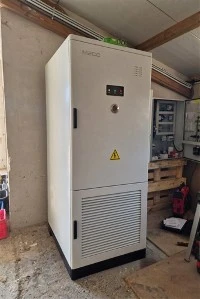
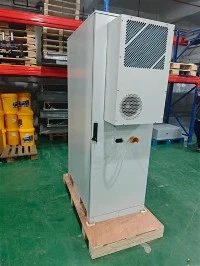
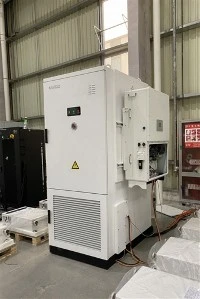
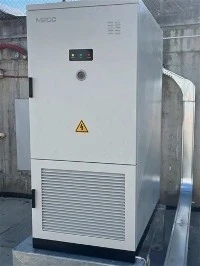
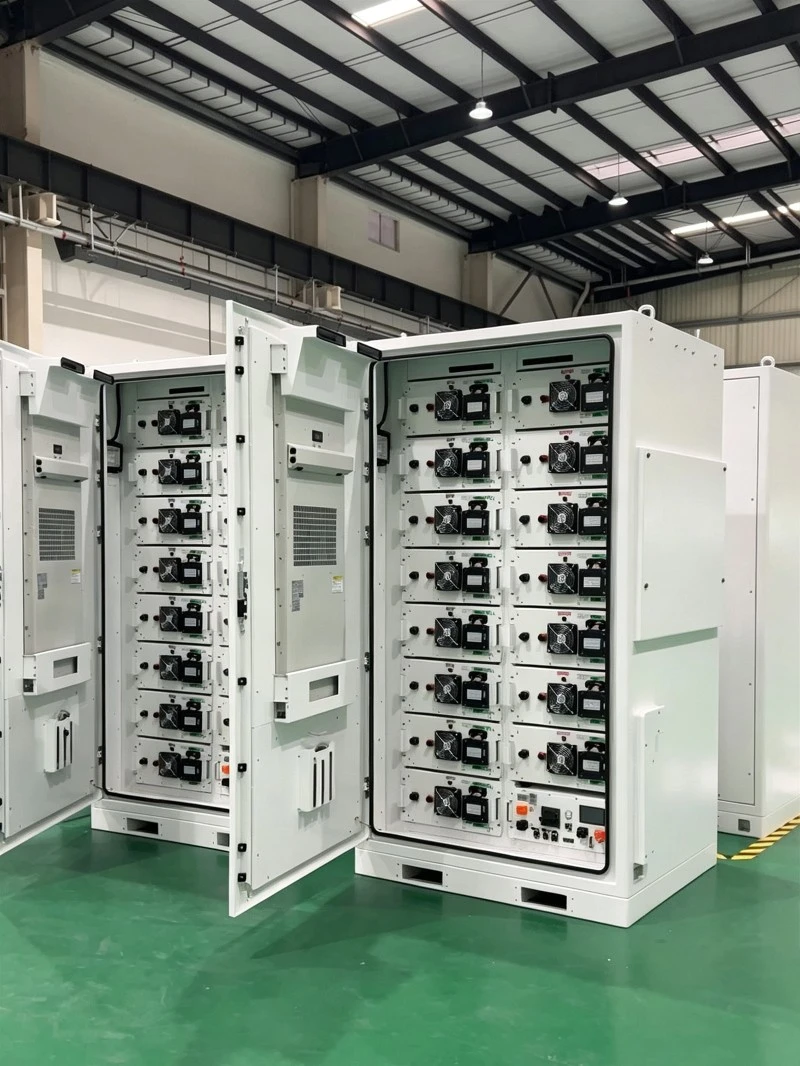
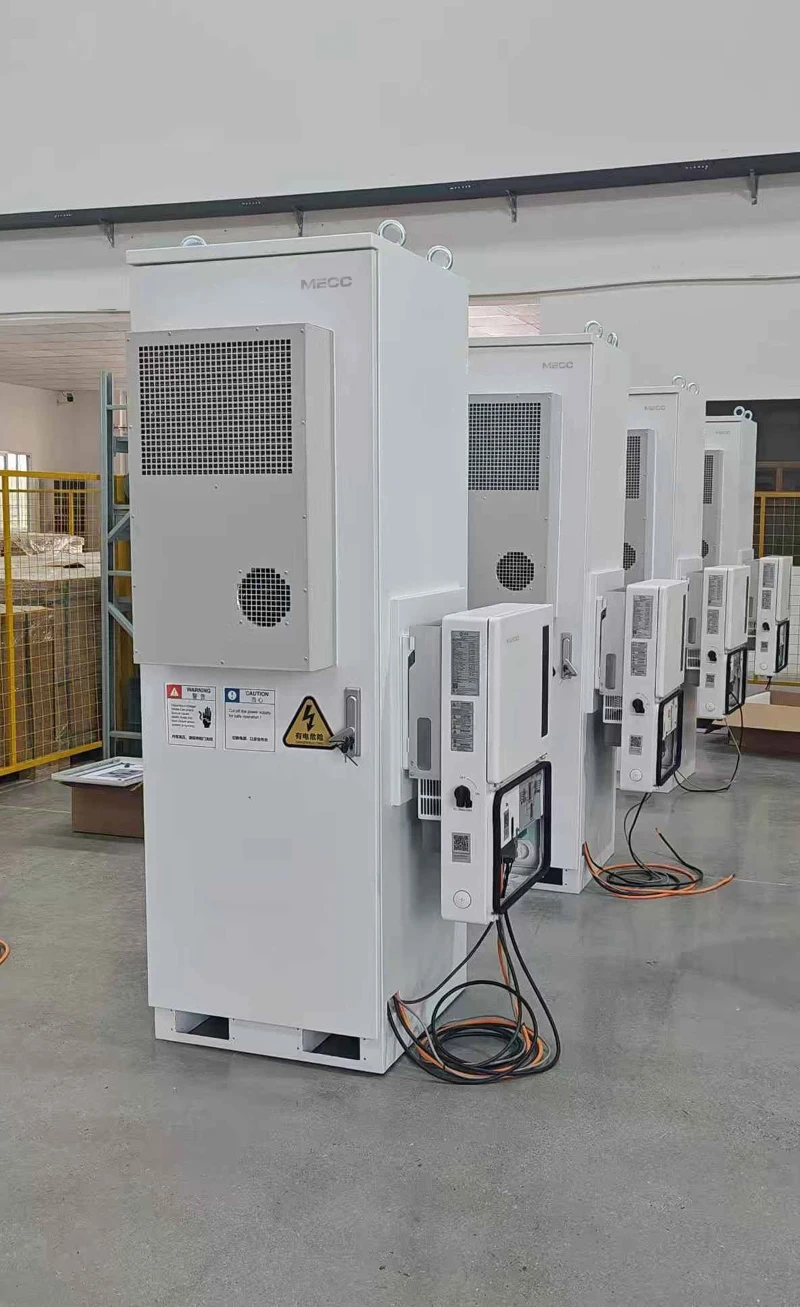
125KW 241kWh Battery Energy Storage System Cabinet
The BESS 125KW 241kWh Lithium Battery Energy Storage Cabinet is a high-power, large-capacity integrated energy storage solution engineered for medium-to-large commercial, industrial, and utility-scale applications. It integrates a 125kW high-performance bidirectional inverter, a 241kWh lithium iron phosphate (LiFePO4) battery bank, and a full-featured intelligent energy management system (EMS) into a modular cabinet design. This system enables efficient renewable energy storage, peak shaving, load shifting, grid frequency regulation, and emergency backup power supply. Ideal for large factories, shopping malls, industrial parks, utility-scale solar/wind farms, and microgrids, it enhances energy independence, reduces high grid demand charges, and supports the stable integration of high-penetration renewable energy into the grid.