


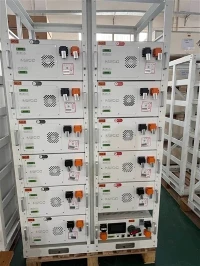
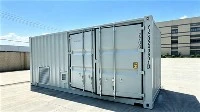
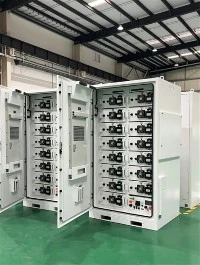
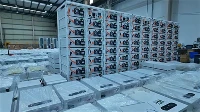
Mecc Solar has released its 125 kW / 261 kWh liquid-cooled outdoor energy storage cabinet, an integrated battery energy storage system (BESS) built for commercial and industrial sites that need dependable power in demanding climates without surrendering floor space to a plant room. A 125 kW power conversion system (PCS), 261 kWh of lithium iron phosphate (LiFePO4) storage, an in-house energy management system (EMS) and a dedicated liquid-cooling loop share one pre-assembled enclosure. The unit is available now for project orders through direct sales and OEM/ODM channels.


One Cabinet, Two Functions: Storage and Power Conversion
Most commercial storage projects require a battery cabinet, a separate PCS, a cooling solution and a controls package from different vendors, leaving the buyer responsible for making them work together. This cabinet ships as a single tested unit.
The integrated PCS delivers 400 V three-phase AC output with maximum conversion efficiency of at least 98 percent. Charge and discharge transition takes under 100 milliseconds, total harmonic distortion stays at or below 3 percent at full load, and power factor is adjustable from -0.99 to 1. The DC side uses 314 Ah LFP cells in an IP260S configuration.
An independent liquid-cooling circuit with 50 percent ethylene glycol coolant removes heat more evenly than air and keeps the temperature spread between cells within roughly 2 degrees Celsius. That uniformity slows capacity fade and sustains continuous 125 kW discharge.
Because the design needs no large ventilation fans, noise stays at or below 75 dB, a practical advantage for industrial parks, hotels and retail sites with sound restrictions. The cabinet is rated for outdoor installation, with IP65 protection in the battery compartment and IP54 in the electrical compartment. Stated operating range is -20 to 50 degrees Celsius, with de-rated operation above 45 degrees Celsius, humidity tolerance to 95 percent non-condensing and a maximum altitude of 2,000 meters. Its 1,000 x 1,300 x 2,500 mm footprint and roughly 2.6-ton weight keep crane and foundation requirements modest next to containerized systems.
Fire protection combines perfluorohexanone, aerosol and water suppression with temperature, smoke and carbon monoxide detection. An optional arc fault circuit interrupter (AFCI) is available for sites requiring arc-fault mitigation, and the EMS reports battery health while applying multi-layer protection logic.
Technical Advantages That Shift Project Economics
The LFP pack is rated for over 6,000 cycles at 90 percent depth of discharge, beyond the typical planning horizon of a commercial payback model for an operator cycling once daily. Liquid cooling protects that rating in hot climates where air-cooled cabinets often derate. Higher-density cells also let the 261 kWh unit store about 8 percent more energy than a standard 241 kWh cabinet within the same 1.5 square meter footprint, a margin that can decide whether a project fits in an urban facility or an enclosed yard.
Beyond charge and discharge, the PCS provides static var compensation and harmonic suppression, steadying voltage and correcting three-phase imbalance at industrial microgrids. Operating modes include peak shaving, demand control, reactive power adjustment, anti-backflow protection, remote dispatch and local data storage. CAN, Ethernet, RS485 and Modbus TCP/RTU interfaces allow integration with existing SCADA and building management platforms.
Up to eight cabinets operate in parallel for 1,000 kW of combined power, letting a site start with one unit and add capacity as load grows, a staged approach that reduces upfront capital.
Applications Across Commercial and Industrial Sites
Peak shaving and demand charge control. Factories, cold-chain warehouses, shopping centers and hotels charge during low-tariff windows and discharge at peak, targeting the demand charges that often dominate a commercial electricity bill.
Solar self-consumption. On-grid self-consumption systems store daytime photovoltaic output for evening use. The cabinet is not a hybrid PV-storage unit and cannot connect to PV panels directly; arrays must feed a dedicated PV inverter first.
Backup power and weak-grid sites. The PCS serves as the voltage source during outages, and the 261 kWh buffer supports industrial inductive loads, absorbing motor inrush current through PCS overload capability. For off-grid use, variable frequency drives or soft starters are recommended to limit starting current.
Infrastructure and remote assets. Telecom sites, charging hubs, pumping stations and island or mining operations with unreliable grid supply use the cabinet to displace diesel runtime and stabilize power quality.
Market Value and One-Stop Project Delivery
Storage purchasing in Europe, North America and Southeast Asia increasingly favors suppliers who can document manufacturing quality and support a full project lifecycle rather than a single shipment. The cabinet's certification set, including UN38.3, IEC 62619, IEC 61000, EN 62477-1, EN 50549-1/-2 and VDE-AR-N 4105, addresses the grid-connection and safety requirements most often raised in European interconnection applications. OEM and ODM support covers casing, branding, BMS protocol and packaging, so distributors and EPC contractors can launch a storage brand without investing in production capacity.
Mecc Solar positions the cabinet inside a broader service model. Engineering teams review load profile, tariff structure, grid conditions and available space, then return a capacity calculation, single-line diagram, layout drawing and full bill of materials within 24 hours. Manufacturing follows 128 quality control points, with 72-hour high-temperature aging and 24-hour ambient testing on every pack before shipment. Logistics support covers UN38.3 packing and dangerous goods documentation for sea and air freight, and after-sales engineers guide commissioning remotely. Warranty runs five to ten years depending on configuration, with lifetime service support.
Outlook
As commercial electricity prices rise and grid connection queues lengthen, storage is shifting from an optional efficiency upgrade to core infrastructure. Mecc Solar expects demand for outdoor liquid-cooled cabinets to grow fastest in space-constrained urban projects and in climates where temperature control determines system life. The company will continue expanding its parallel capacity range and grid-support functions to serve utility-adjacent and microgrid applications.
About Mecc Solar. Mecc Solar (MECC) manufactures solar and LiFePO4 energy storage products in Hangzhou, China. With more than 15 years in the new energy sector, the company runs a 5,000 square meter production base with over 180 employees, including more than 20 R&D engineers. Its portfolio spans residential power walls, hybrid inverters, commercial and industrial storage cabinets and megawatt-scale containerized BESS, exported to more than 140 countries under ISO 9001, CE, UL and UN38.3 certification.
Liquid Cooling 125KW 261kWh Lithium Battery Energy Storage Cabinet
The IP55 Protected All-in-One Solar Energy Storage Cabinet is a high-performance, integrated energy solution engineered for outdoor commercial, industrial, and utility-scale solar applications. It integrates a 125kW Power Conversion System (PCS), a 261kWh lithium iron phosphate (LiFePO4) battery bank, an advanced liquid cooling system, and a intelligent Battery Management System (BMS) into a single cabinet with IP55 weatherproof protection. Designed to withstand harsh outdoor environments while delivering efficient energy conversion and storage, it supports solar energy absorption, peak shaving, load shifting, grid auxiliary services, and emergency backup power. Ideal for utility-scale solar farms, industrial parks, large commercial complexes, and remote microgrids, it provides a reliable, space-saving, and low-maintenance solution for large-scale renewable energy integration.
