MECC Completes 1MW / 2.088MWh Modular C&I Energy‑Storage Installation, Delivering Expandable Distributed Energy Capacity For Industrial And Commercial End‑users

Aug 21, 2026 Leave a message

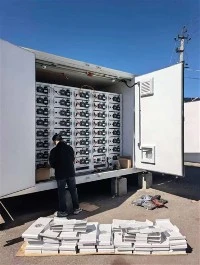
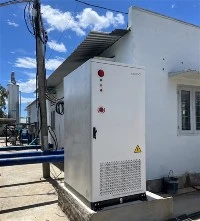
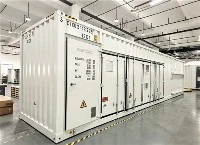
MECC, a global supplier of advanced energy storage hardware and system‑level solutions, has successfully finished installation and full‑commissioning of a large‑scale scalable commercial and industrial energy‑storage system. The project comprises eight individual 125kW/261kWh energy storage cabinets operating in parallel, coupled with a purpose‑built DC combiner cabinet to centralise DC power connection and signal interaction. The combined configuration achieves 1 MW of rated power output and a total energy capacity reaching 2.088 MWh.
 
 
Adopting mature lithium‑iron‑phosphate (LFP) battery technology as its core energy‑storage medium, this system is engineered to cover diversified real‑world operational demands across the C&I sector. Applicable use‑cases include peak‑load shaving, time‑of‑use load shifting, on‑site renewable energy integration as well as critical emergency backup power for manufacturing plants, industrial parks and large commercial complexes. One of the most prominent advantages lies in its modular‑oriented mechanical and electrical architecture. Such design greatly simplifies end‑to‑end system integration procedures, shortens on‑site commissioning cycles, and reduces complexity for daily operational management and routine equipment maintenance.
 
 
Backed by in‑house R&D and manufacturing strength, MECC maintains comprehensive capabilities throughout the full energy‑storage value chain. Our expertise extends from battery cell screening and qualification, intelligent BMS firmware development, PCS hardware optimisation all the way to complete ESS turn‑key system integration and field delivery. The completion of this 1 MW / 2.088 MWh project represents another tangible milestone in MECC's continuous pursuit of smarter, safer and highly expandable distributed energy‑storage deployments for global markets.


7726110279092908055930293653888189994386583n


Real‑world technical challenges encountered during project implementation
 
 
For multi‑cabinets parallel‑connected energy‑storage projects at medium power scale, system integrators and asset owners are frequently troubled by two practical technical risks that may erode asset lifetime and return on investment.
 
 
First of all, circulating current and inter‑cabinet output imbalance remain a persistent pain point. Even products from the same production batch still have minor deviations in component parameters. Together with inconsistent cable impedance on‑site, these deviations will trigger circulating current among paralleled storage cabinets in the running state. Under such circumstances, partial cabinets bear excessive charge‑discharge load while others run under light‑load status. Long‑term unbalanced working conditions create divergent ageing progress for battery packs inside different cabinets. Gradually, the overall usable capacity of the whole storage system declines. In severe operating scenarios including high‑rate peak shaving or sudden backup‑power activation, abnormal current may trigger over‑temperature warnings or unplanned protective shutdown events, threatening power supply continuity for factories and commercial facilities.
 
 
Secondly, capacity expansion for traditional parallel‑storage systems brings heavy re‑commissioning burdens. Plenty of existing parallel‑configured ESS lack native modular collaborative scheduling logic. Whenever customers intend to expand system capacity by adding extra storage cabinets to match growing business power consumption, field engineers need to carry out large‑scale adjustment and re‑calibration for system‑wide parameters. These manual modification works consume substantial manpower and project time, meanwhile introducing potential risks of human‑caused configuration errors. Such drawbacks make it difficult to realise true plug‑and‑play incremental expansion, conflicting with the phased‑investment habit of most commercial‑industrial enterprises.


MECC targeted technical solutions
 
 
To tackle circulating current and output imbalance risks, this project deploys a dedicated DC combiner cabinet serving as unified convergence hub for eight storage cabinets. Cooperating with MECC self‑developed multi‑unit parallel control algorithm, the control layer implements high‑frequency synchronous sampling of real‑time voltage, current and SOC status data from every single cabinet. The master controller dynamically distributes charge and discharge power set‑points for each parallel unit according to system‑level demand. This active control mechanism effectively suppresses harmful circulating current and maintains stable, well‑balanced current sharing across all cabinets. Throughout long‑duration cyclic operation, every cabinet keeps operating within similar depth‑of‑charge range, slowing differential battery degradation. Even under rigorous heavy‑duty working conditions, all storage units stay inside safe operation boundaries, making full use of the 1 MW / 2.088 MWh system's designed capacity.
 
 
For flexible capacity scaling and simplified O&M requirements, the whole solution is built upon standardised 125kW/261kWh cabinet‑level modular design. Based on the current 8‑cabinets baseline configuration, end‑users are capable of adding more identical storage cabinets in the future as production scale expands or electricity‑consumption requirements rise. The unified system control framework can automatically identify newly‑connected hardware modules, without requiring massive re‑calibration of global system parameters. This feature significantly cuts on‑site debugging workload for EPC partners and project contractors. Additionally, modular hardware supports independent fault isolation. If abnormality occurs inside one cabinet, technicians can isolate that single unit for inspection, repair or replacement, without shutting down the entire energy‑storage system. This capability effectively minimises power‑service interruption and economic loss for C&I sites. Supported by MECC's self‑developed BMS and end‑to‑end system integration capability, seamless coordination is realised from battery‑cell layer up to the complete ESS platform.


Project impact and industry significance
 
 
This scalable 1 MW / 2.088 MWh energy‑storage system delivers dual‑layer value covering economic benefit and power‑supply resilience for commercial‑industrial end‑customers. Operators can lower monthly electricity expenditure through peak‑valley arbitrage and load‑shifting strategies. When grid blackouts or voltage abnormalities take place, the storage system provides reliable emergency backup power to protect critical production equipment and core business loads. When combined with on‑site photovoltaic generation facilities, it further improves self‑consumption ratio of local renewable energy. Its modular parallel architecture perfectly adapts to phased‑investment models widely adopted among industrial and commercial operators.
 
 
As a fully field‑validated practical reference for medium‑scale modular parallel‑cabinet C&I energy‑storage, this project vividly demonstrates MECC's comprehensive technical strengths across battery hardware, BMS algorithm research and complete system integration. It offers a proven feasible technical route for building smarter, safer and expandable distributed energy‑storage assets. Furthermore, the case promotes wider global adoption of modular LFP‑based energy‑storage solutions, supporting industrial and commercial enterprises to fulfil energy‑cost reduction targets and advance their low‑carbon transformation agendas.


Related Products


Liquid Cooling 125KW 261kWh Lithium Battery Energy Storage Cabinet


The IP55 Protected All-in-One Solar Energy Storage Cabinet is a high-performance, integrated energy solution engineered for outdoor commercial, industrial, and utility-scale solar applications. It integrates a 125kW Power Conversion System (PCS), a 261kWh lithium iron phosphate (LiFePO4) battery bank, an advanced liquid cooling system, and a intelligent Battery Management System (BMS) into a single cabinet with IP55 weatherproof protection. Designed to withstand harsh outdoor environments while delivering efficient energy conversion and storage, it supports solar energy absorption, peak shaving, load shifting, grid auxiliary services, and emergency backup power. Ideal for utility-scale solar farms, industrial parks, large commercial complexes, and remote microgrids, it provides a reliable, space-saving, and low-maintenance solution for large-scale renewable energy integration.

page-1000-1000

Send Inquiry

whatsapp

Phone

E-mail

Inquiry