



Project Overview
When facing high electricity demand, energy storage alone is not enough.
MECC delivers practical commercial and industrial energy‑storage solutions for enterprises to optimise energy consumption, reduce peak load and enhance power flexibility.
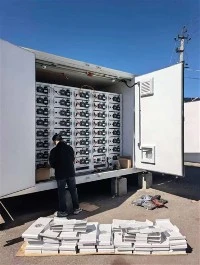
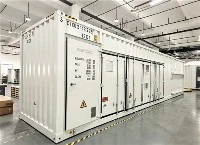
Featuring 108 kWh energy‑storage capacity with a maximum discharge power of 60 kW, the solution is applicable to factories, commercial buildings, industrial parks, data centres and other sites.
Engineered to tackle real‑world energy challenges, it supports smarter power management for business operations.
Even with properly‑sized storage hardware, many enterprises will still encounter practical bottlenecks during actual deployment. Two typical pain points frequently hinder assets from delivering expected economic and operational benefits.
Core Practical Pain Points
Pain Point 1: Difficulty in coordinating multi‑objectives under volatile real‑world load profiles
Factories, commercial complexes and data centres generate highly variable power consumption curves. Load spikes may occur randomly from production equipment, cooling systems and IT hardware. Relying purely on battery hardware without refined collaborative control often creates conflicting operational goals. For instance, the system may prioritise peak‑valley arbitrage to cut electricity bills yet fail to reserve sufficient capacity for sudden load surges. When instantaneous power demand jumps, the storage system cannot respond fast enough, and the facility still has to draw expensive peak‑time power from the grid. Without reasonable logic for load‑limitation and power allocation, the storage hardware cannot fully release its value, even though the 60 kW / 108 kWh specification matches theoretical calculation results.
Pain Point 2: Poor adaptability to complex on‑site electrical environments in mixed‑load premises
User‑side sites such as industrial parks and data centres contain large quantities of non‑linear loads including frequency converters, servers and air‑conditioning drives. These devices introduce harmonic distortion into local power circuits. If the energy‑storage system lacks targeted harmonic suppression and adaptive grid‑interaction capability, harmonic interference will affect the operating efficiency of PCS and battery packs. Long‑term harmonic pollution accelerates component ageing. Moreover, many existing buildings have limited space and old‑style distribution frameworks, which may cause compatibility risks during retrofitting storage systems. Simple battery deployment cannot resolve these site‑specific electrical defects.


MECC Targeted Technical Solutions
Solution 1: Intelligent EMS‑driven multi‑objective collaborative control to balance peak‑load mitigation, arbitrage and surge‑power response
Beyond battery hardware, MECC's complete solution adopts an embedded energy management system as the decision‑making core. The EMS continuously collects real‑time load data, grid tariff information and battery status. Instead of executing simple charge‑discharge cycles, it dynamically allocates the 60 kW maximum discharge capacity according to onsite conditions.
In normal operation, the system performs peak‑valley arbitrage by charging during low‑tariff periods and discharging to offset high‑cost grid power. When unexpected load surges appear, the system instantly increases output power within rated limits to suppress peak‑load spikes. Operators can also configure a configurable SOC threshold to preserve partial battery capacity for unexpected demand jumps. This set‑up avoids the common defect of "hardware being in place while control logic falls behind", ensuring the 108 kWh storage asset delivers expected peak‑reduction benefits under volatile real‑world load conditions.
Solution 2: Optimised PCS performance for harmonic suppression and high compatibility with retrofitted C&I sites
The PCS unit built into this solution incorporates harmonic‑suppression functions to counteract distortion caused by large‑volume non‑linear loads inside factories and data centres. It improves local power quality and protects battery modules and power‑distribution devices from harmonic‑induced wear. Meanwhile, the whole system adopts standardised electrical interfaces. It can be smoothly connected to legacy distribution systems of existing factories, commercial buildings and industrial parks, without large‑scale reconstruction of on‑site power circuits.
The solution does not merely add battery hardware onto the existing power network. It integrates power quality optimisation, real‑time load monitoring and intelligent scheduling together, solving hidden electrical risks at user premises. For data‑centre scenarios with strict power‑quality requirements, this capability is especially critical for stable and safe long‑term running.
Project Functions & Industry Impact
For end‑user enterprises, this 60 kW / 108 kWh C&I energy‑storage solution goes far beyond simple energy buffering. It optimises overall energy consumption patterns, curbs excessive peak‑load demand to reduce demand‑charge fees, and strengthens overall power‑system flexibility for factories, commercial buildings and data centres. By combining hardware with intelligent scheduling logic, enterprises can achieve tangible electricity‑cost savings while improving power‑quality performance of on‑site distribution networks.
From an industry perspective, this case delivers a clear insight: merely installing batteries cannot unlock full energy‑storage value for high‑demand C&I sites. MECC's complete solution model offers a replicable reference for small‑and‑medium‑scale commercial‑industrial retrofitting projects. It demonstrates how matched control strategies and power‑quality processing cooperate with storage hardware to address real‑world site challenges. This approach lowers application risks for enterprise users and accelerates the popularisation of intelligent user‑side energy‑storage across diversified C&I sectors.