


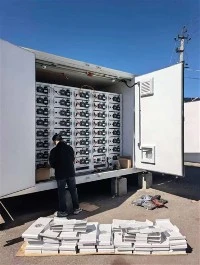
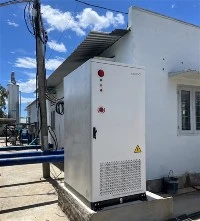
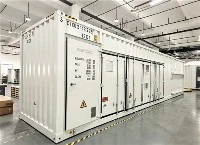
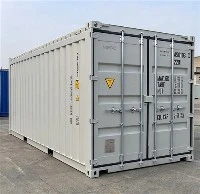
Driven by the dual carbon target and peak valley electricity pricing policy, industrial and commercial energy storage containers have become a popular choice for enterprises to reduce costs and increase efficiency. However, issues such as high initial investment and complex operation and maintenance costs constrain the investment decisions of enterprises. Through full lifecycle cost optimization, industrial and commercial energy storage containers can not only achieve maximum economic value, but also enhance the sustainability of enterprise energy management.

Pre planning: precise control from equipment selection to site adaptation
Equipment selection is the primary step in cost control. Taking a manufacturing enterprise as an example, by comparing the container energy storage systems of different suppliers, it was found that although the initial cost of the lithium iron phosphate battery system is 15% higher than that of the ternary lithium battery, the cycle life exceeds 6000 times and the safety is better. From the perspective of the entire life cycle, it actually reduces the replacement cost. In terms of power configuration, the enterprise adjusted the originally planned 1MWh capacity to 800kWh based on historical electricity consumption data modeling and analysis, which not only meets peak and valley regulation needs but also saves 20% of equipment procurement costs.
Venue adaptation also affects costs. Container energy storage requires strict requirements for the load-bearing, ventilation, and fire prevention of the installation site. When a commercial complex was renovating its roof and installing energy storage containers, structural reinforcement design was carried out in advance to avoid secondary construction caused by insufficient load-bearing capacity in the later stage. At the same time, utilizing the existing ventilation ducts and fire protection system of the building can reduce additional construction costs by about 120000 yuan. Reasonable site planning can reduce installation costs by 10% -15%.

Operation phase: Cost reduction path of intelligent operation and cascading utilization
Intelligent operation and maintenance system is the key to reducing operating costs. Real time monitoring of battery voltage, temperature, SOC and other parameters through IoT sensors, combined with AI algorithms to predict faults, transforms passive maintenance into active maintenance. After deploying an intelligent operation and maintenance system in an industrial park, the fault handling time was reduced by 60% and the operation and maintenance labor cost was reduced by 40%. In addition, the system can automatically optimize the charging and discharging strategies based on fluctuations in grid electricity prices and enterprise load curves, thereby increasing the economic benefits of the energy storage system by more than 25%.
The hierarchical utilization of batteries has opened up new opportunities for cost reduction. When the battery capacity of the energy storage container decays to 80%, it can be downgraded and applied to scenarios with lower performance requirements, such as low-speed electric vehicles, backup power sources, etc. A logistics company will transform retired energy storage batteries into electric forklift power sources, extending the battery life by 3-5 years and saving over a million yuan in new battery procurement costs. By establishing a battery lifecycle traceability system, the recycling value can also be increased, further diluting costs.

Policies and Financial Instruments: External Assistance for Lowering Investment Barriers
Government subsidies and tax incentives significantly reduce initial investment pressure. In China, some regions provide construction subsidies of 0.3-0.5 yuan/Wh for industrial and commercial energy storage projects, combined with the policy of immediate refund of value-added tax, which can shorten the investment payback period of the project by 1-2 years. Enterprises can also use green financial tools such as low interest loans, financing leases, and other methods to obtain funds. A certain new energy enterprise raised funds through a special green bond for energy storage, reducing financing costs by 1.5 percentage points compared to ordinary loans, significantly alleviating financial pressure.
Participating in electricity market transactions can create additional revenue. In the spot market, energy storage containers can generate revenue through peak valley arbitrage, peak shaving and frequency regulation services. In the ancillary services market, adjusting power in response to grid dispatch instructions can also receive corresponding compensation. The energy storage system of a certain data center has increased its annual revenue by 30% by participating in electricity market transactions, effectively sharing investment costs.