


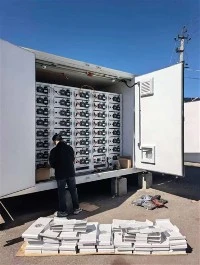
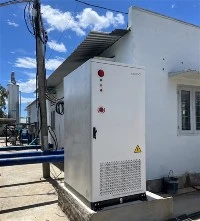
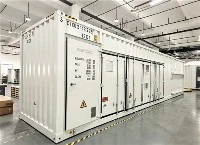
The core value of industrial and commercial energy storage systems lies in transforming "static energy storage" into "dynamic benefits" through precise power dispatch. The current mainstream intelligent scheduling system can deeply integrate electricity pricing policies, load characteristics, and new energy output, enabling seamless switching of energy storage equipment between multiple roles such as "peak valley arbitrage", "demand management", and "backup power". The annual return of a single system can be increased to over 20% of the initial investment, becoming a key tool for industrial and commercial users to reduce costs and increase efficiency.
1 Peak valley arbitrage: capturing the time value of electricity price differentials
The time of use electricity pricing policy provides natural soil for energy storage arbitrage. Taking Shanghai as an example, during peak hours (10:30-11:30, 19:00-21:00), the electricity price reaches 1.174 yuan/kWh, while during low hours (23:00-7:00), it is only 0.294 yuan/kWh, with a price difference of 0.88 yuan/kWh. A 1MWh energy storage system can earn 880 yuan per day by charging and discharging once, with an annual income of over 300000 yuan. The intelligent scheduling system predicts the next day's electricity price curve through AI algorithms and completes charging and discharging during the period with the largest price difference, resulting in a 15% increase in revenue compared to the traditional fixed period charging and discharging mode.
The multi period charging and discharging strategy further amplifies profits. In regions where the "peak peak normal period low valley" four period electricity price is implemented (such as Guangdong), the dispatch system can fully charge and discharge during the low valley period, and then release the remaining electricity during the peak period, achieving "two charges and two discharges per day". After adopting this strategy, the 2MWh energy storage system of a certain electronics factory achieved an annual arbitrage profit of 720000 yuan, an increase of 40% compared to single period charging and discharging. The system can also adjust its electricity pricing strategy based on holidays, and obtain excess returns by extending the discharge time during special periods such as the Spring Festival.

2 Demand management: Reduce the capacity cost of maximum load
Electricity demand is an implicit burden for industrial and commercial users. Large industrial users are required to pay a fee based on the maximum monthly electricity consumption (demand) of approximately 38 yuan/kilowatt per month. A 1MWh energy storage system can reduce demand by 1000 kilowatts and save 456000 yuan in annual electricity bills. The intelligent scheduling system monitors load changes in real time and quickly discharges when demand is about to exceed a threshold, controlling the maximum load within the target value. Through this method, a certain machinery factory reduced the monthly electricity bill from 120000 yuan to 80000 yuan.
The closed-loop of "prediction control" improves management accuracy. The system predicts the production load curve 24 hours in advance, identifies potential load peaks (such as equipment start-up periods), charges in advance, and discharges during peak periods to smooth the load curve. The actual measurement of a certain automotive parts factory shows that after the intervention of energy storage, the maximum load fluctuation has decreased from ± 200kW to ± 50kW, and the accuracy of demand control has reached 98%, avoiding fines for excessive demand caused by sudden loads.

3 New energy consumption and emergency power supply: collaborative release of multiple values
In the scenario of photovoltaic self use, energy storage can reduce the loss of abandoned light. The 500kW rooftop photovoltaic system of a certain food factory is equipped with 1MWh energy storage. The dispatch system charges when the photovoltaic output exceeds the load and discharges when it is insufficient, increasing the spontaneous self use rate from 60% to 90% and saving 180000 yuan in electricity bills annually. The system can also track the intraday fluctuations of photovoltaic output, respond quickly in cloudy weather (response time<100ms), and ensure stable power supply for the production line.
The emergency power supply function reduces power outage losses. The loss of one hour of power outage for industrial and commercial users can reach tens of thousands of yuan (such as semiconductor factories), and the energy storage system can switch to off grid mode within 0.1 seconds in case of grid failure to ensure the operation of critical equipment. The intelligent scheduling system regularly conducts "black start" drills to ensure that the battery can maintain more than 80% of its emergency capacity under long-term float charging. The energy storage system of a data center successfully supported the core server to run for 4 hours during last year's power grid failure, avoiding losses exceeding one million yuan.
The intelligent scheduling of industrial and commercial energy storage is evolving from "single function" to "diversified services". In the future, with the maturity of virtual power plant technology, these decentralized energy storage systems will participate in grid peak shaving through aggregation platforms, obtain additional revenue sharing, and fully tap the value of each kilowatt hour in time, space, and functional dimensions, ultimately achieving a multiple win-win situation of "user cost reduction, grid efficiency improvement, and social emission reduction".