


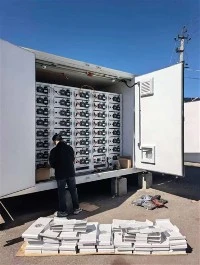
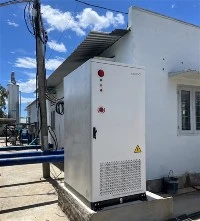
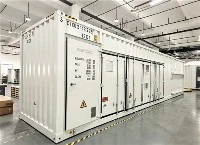
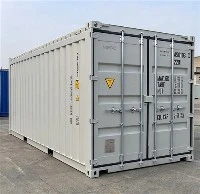
In the current era of rapid iteration of energy storage technology, commercial container energy storage is facing dual challenges of performance improvement and safety assurance. To meet the needs of industrial and commercial users for efficient and reliable energy storage, technological innovations continue to emerge in various aspects, from battery materials to system integration, from temperature control technology to intelligent management, promoting a qualitative leap in container energy storage.
Battery Technology Iteration: Breakthrough in Balancing Performance and Cost
Lithium batteries, as the core of commercial container energy storage, have a direct impact on system performance due to technological breakthroughs. Lithium iron phosphate batteries dominate the market due to their high safety and long cycle life. In recent years, companies have optimized the particle structure of lithium iron phosphate cathode materials through nanoscale material modification technology, increasing the energy density of batteries to 180-200Wh/kg, which is 15% higher than traditional products. For example, the new generation of energy storage dedicated lithium iron phosphate batteries launched by CATL adopts single crystal technology and nanoscale coating process, which extends the cycle life to more than 8000 times and significantly reduces the full life cycle cost.
At the same time, sodium ion batteries have emerged in the field of container energy storage due to their abundant resources and excellent low-temperature performance. The sodium ion battery container energy storage system developed by Zhongke Hai Sodium can maintain over 90% discharge capacity in an environment of -20 ℃, effectively solving the performance degradation problem of lithium batteries in cold regions. With the gradual improvement of the sodium battery industry chain, its cost is expected to drop below 0.3 yuan/Wh by 2025, forming a complementary development trend with lithium batteries.

Intelligent temperature control and fire protection system: building a strong safety defense line
The enclosed environment inside the container can easily lead to thermal accumulation of batteries, and temperature control and fire protection technology have become key to ensuring safety. The new liquid cooled temperature control system achieves precise control of battery pack temperature through micrometer level pipeline design. The liquid cooled container developed by a certain enterprise adopts dual cycle liquid cooling technology to control the temperature difference of the battery pack within ± 2 ℃, which improves the heat dissipation efficiency by 40% compared to the air-cooled system and effectively extends the battery life.
In terms of fire protection, composite fire protection systems have gradually become mainstream. Taking the combination of perfluorohexane gas fire extinguishing and ultrafine dry powder suppression as an example, when the system detects a thermal runaway signal of the battery, perfluorohexane gas quickly suppresses the open flame within 10 seconds, and then ultrafine dry powder covers the surface of the battery to prevent reignition. After the application of this system in a container energy storage project in a large industrial park, zero fire safety accidents were achieved, setting a safety benchmark for the industry.

Energy management system upgrade: achieving intelligent regulation
The new generation energy management system (EMS) integrates AI and digital twin technology, endowing container energy storage with a smart brain. Through real-time analysis of multidimensional data such as grid electricity prices, enterprise load curves, and new energy generation, EMS can accurately predict electricity demand and automatically optimize charging and discharging strategies. In a commercial complex project, intelligent EMS adjusts the energy storage charging and discharging period based on real-time electricity price fluctuations, reducing the enterprise's electricity cost by 32%.
The application of digital twin technology has further improved the efficiency of system operation and maintenance. By constructing a virtual energy storage system model, operation and maintenance personnel can simulate the system response under different operating conditions and predict potential faults in advance. When the actual system encounters abnormalities, the digital twin model can quickly match the fault scenario, provide accurate solutions, and shorten the fault handling time by more than 60%.

Modularization and Integration Technology: Enhancing Deployment Flexibility
The modular design of container energy storage continues to be upgraded, achieving "plug and play" through standardized interfaces. Huawei's intelligent string container energy storage integrates battery clusters, inverters, and monitoring systems into independent modules, with a single module capacity of up to 250kWh and multiple modules that can be freely connected in parallel for expansion. This design not only simplifies the installation process, but also shortens the system expansion time from the traditional weeks to a few days, greatly improving the efficiency of project implementation.
In terms of electrical integration, high-voltage direct current (HVDC) technology is used to reduce energy conversion links and improve system efficiency. After applying HVDC technology to a 10MWh container energy storage project, the overall system efficiency reached 95%, which is 3-5 percentage points higher than traditional AC systems and further reduces the cost of electricity per kilowatt hour.
Industrial and commercial container energy storage is breaking through the bottleneck of performance and safety development through multidimensional technological innovation. With the continuous advancement of technology and the continuous reduction of costs, container energy storage will provide solid support for the transformation of industrial and commercial energy in a more efficient and safe manner in the future, promoting the energy storage industry to move towards a new stage of intelligence and integration.