


Example of roof photovoltaic capacity calculation
1. Capacity calculation method
The capacity calculation of rooftop photovoltaic projects needs to consider multiple factors, including roof area, lighting resources, photovoltaic module efficiency, installation angle, etc.

1.1 Roof area
Measure roof area: Use drones, laser rangefinders, or blueprints to measure the available area of the roof.
Deducting obstacles: Deducting the area occupied by obstacles on the roof (such as chimneys, ventilation openings, air conditioning outdoor units, etc.).
1.2 Lighting Resources
Obtain lighting data: Obtain the local annual average solar radiation (kWh/m ²/day) through meteorological stations or online platforms.
Consider seasonal changes: The light intensity in winter and summer is different, and the annual average value needs to be taken into account.
1.3 Photovoltaic module efficiency
Select component type: Choose monocrystalline silicon, polycrystalline silicon, or thin-film components according to project requirements.
Component power: Select the nominal power (Wp) of the component.
1.4 Installation angle and direction
The optimal inclination angle is usually ± 10 ° of the local latitude.
Orientation: South is the best, followed by east and west, and north is the worst.
1.5 System losses
Temperature impact: High temperatures can reduce the power generation efficiency of components.
Shadow impact: Shadows on the roof can affect power generation.
Electrical losses: Losses of inverters, cables, etc.
2. Capacity calculation formula
System capacity (kW)=Available roof area (m2) x Component power density (W/m2) 1000 System capacity (kW)=1000 Available roof area (m2) x Component power density (W/m2)
Among them, the power density of the components is calculated based on the nominal power and size of the components.
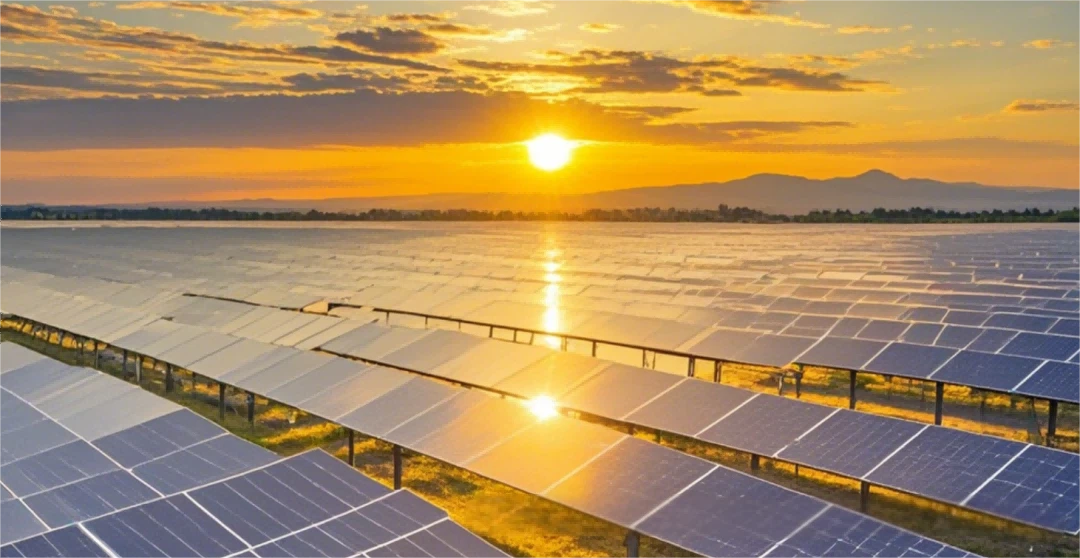
3. Case examples
3.1 Project Background
Roof type: Flat roof
Roof area: 1000 m ²
Annual average solar radiation: 4.5 kWh/m ²/day
Component type: monocrystalline silicon component
Component power: 350 Wp
Component size: 1660 mm × 992 mm
Component efficiency: 18%
Installation angle: 20 °
Orientation: Southward
3.2 Calculation steps
Calculate component area
Component area=1.66 m × 0.992 m=1.64672 m2
Calculate component power density
Component power density=350 Wp1.64672 m2 ≈ 212.5 W/m2
Calculate the number of available components
Number of available components=available roof area Component area=1000 m2 1.64672 m2 ≈ 607 pieces
Calculate system capacity
System capacity=number of available components x component power=607 blocks x 350 Wp=212450 Wp ≈ 212.45 kWp
Consider system losses
Temperature impact: Assuming a 5% reduction
Shadow impact: Assuming a 3% reduction
Electrical loss: Assuming a 2% reduction
Actual system capacity=212.45 kWp × (1-0.05-0.03-0.02) ≈ 192.6 kWp
3.3 Results
System capacity: 192.6 kWp
Annual power generation estimation:
Annual power generation=System capacity x Annual average solar radiation x 365 Annual power generation=System capacity x Annual average solar radiation x 365
Annual power generation=192.6 kWp × 4.5 kWh/m2/day × 365 days ≈ 316000 kWh/year

4. Parameter Summary
| Parameter | Numerical value |
| Roof area | 1000 m² |
| Module type | Monocrystalline silicon module |
| Module power | 350 Wp |
| Module size | 1660 mm × 992 mm |
| Module efficiency | 18% |
| Installation angle | 20° |
| Face | Face south |
| Annual average solar radiation | 4.5 kWh/m²/day |
| Capacity | 192.6 kWp |
| Annual energy output | 316,000 kWh/year |