


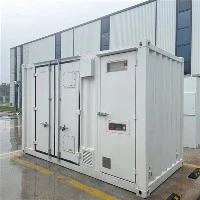
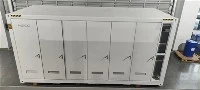
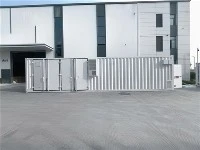
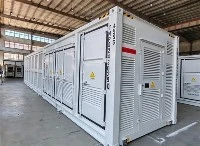
Energy storage systems are divided into four main types based on their architecture and application scenarios: string based, centralized, distributed, and modular. Each type of energy storage method has its own characteristics and applicable scenarios.
1. String type energy storage
Characteristic:
Each photovoltaic module or small battery pack is connected to its own inverter (micro inverter), which is then connected in parallel to the grid.
Suitable for small households or commercial solar systems due to its high flexibility and easy scalability.
Example:
Small lithium battery energy storage devices used in household rooftop solar power generation systems.
Parameters:
Power range: typically several kilowatts (kW) to tens of kilowatts.
Energy density: relatively low because each inverter requires a certain amount of space.
Efficiency: Due to the reduction of power loss on the DC side, the efficiency is relatively high.
Scalability: Easy to add new components or battery packs, suitable for phased construction.

2. Centralized energy storage
Characteristic:
Use a large central inverter to manage the power conversion of the entire system.
More suitable for large-scale power plant level applications, such as wind farms or large ground-based photovoltaic power plants.
Example:
The megawatt level (MW) energy storage system equipped in large wind power plants.
Parameters:
Power range: from several hundred kilowatts (kW) to several megawatts (MW) or even higher.
Energy density: Due to the use of large equipment, the energy density is relatively high.
Efficiency: There may be higher losses when dealing with high currents.
Cost effectiveness: For large-scale projects, the unit cost is lower.

3. Distributed energy storage
Characteristic:
Distribute multiple smaller energy storage units in different locations, working independently but able to collaborate through networking.
Beneficial for improving local power grid stability, enhancing power quality, and reducing transmission losses.
Example:
The microgrid within urban communities consists of small energy storage units in multiple residential and commercial buildings.
Parameters:
Power range: from tens of kilowatts (kW) to hundreds of kilowatts.
Energy density: depends on the specific energy storage technology used, such as lithium-ion batteries or other new types of batteries.
Flexibility: able to quickly respond to local demand changes and enhance the resilience of the power grid.
Reliability: Even if a single node fails, other nodes can continue to operate.

4. Modular energy storage
Characteristic:
Composed of multiple standardized energy storage modules, flexibly combined into different capacities and configurations as needed.
Support plug and play, easy to install, maintain, and upgrade.
Example:
Containerized energy storage solutions used in industrial parks or data centers.
Parameters:
Power range: expanding from tens of kilowatts (kW) to several megawatts (MW) and above.
Standardized design: modules have good interchangeability and compatibility.
Easy to expand: simply add additional modules to easily expand energy storage capacity.
Easy maintenance: If a module malfunctions, it can be replaced directly without the need to shut down and repair the entire system.

FEATURES
| Dimension | String type energy storage | Centralized energy storage | Distributed Energy Storage | Modular energy storage |
| Applicable scenarios | Small household or commercial solar energy systems | Large scale utility level power plants (such as wind farms, photovoltaic power plants) | Urban community microgrid and local power optimization | Industrial parks, data centers, and other places that require flexible configuration |
| Power range | Thousands of kilowatts (kW) to tens of kilowatts | From several hundred kilowatts (kW) to several megawatts (MW) or even higher | From tens of kilowatts to hundreds of kilowatts | Can be expanded from tens of kilowatts to several megawatts or more |
| Energy density | Lower because each inverter requires a certain amount of space | High, using large equipment | Depending on the specific energy storage technology used | Standardized design, moderate energy density |
| Efficiency | High, reducing DC side power loss | There may be higher losses when dealing with high currents | Quickly respond to local demand changes and enhance grid resilience | The efficiency of a single module is relatively high, and the overall system efficiency depends on integration |
| Extensibility | Easy to add new components or battery packs, suitable for phased construction | Expansion is relatively complex and requires consideration of central inverter capacity limitations | Flexible, capable of working independently or collaborating online | Easy to expand, just add extra modules |
| Cost | Initial investment is high, but long-term operating costs are low | Low unit cost, suitable for large-scale projects | Diversification of cost structure depends on the breadth and depth of distribution | Module costs decrease with economies of scale, and initial deployment is flexible |
| Maintenance | Easy maintenance, a single fault does not affect the entire system | Centralized management simplifies some maintenance work, but key components are important | Widely distributed, increasing the workload of on-site maintenance | Modular design facilitates replacement and maintenance, reducing downtime |
| Reliability | High, even if one component fails, others can still operate normally | Dependent on the stability of the central inverter | Improved the stability and independence of local systems | The high redundancy design between modules enhances the reliability of the system |