From Isolated Island to Green Island: How the Grid-Connected Solar-Powered Hydrogen-Fuel Cell Microgrid Solves Power Supply Problems in Mines and Remote Outposts

Aug 04, 2026 Leave a message

In global mining, smelting operations and remote base sites, power shortages and unstable electricity supply are long-standing operational challenges. Taking the Musonoi Copper-Cobalt Mine in the Democratic Republic of the Congo and a PV-storage-diesel microgrid project in Djibouti as typical examples, such facilities are either far from national main power grids or located in regions with fragile grid infrastructure, forcing them to rely heavily on diesel generator sets for electricity.
 
 
In the past, diesel power generation was a widely adopted power supply solution for remote industrial sites. Nevertheless, as mines, smelters and remote facilities pursue continuous production, stable power supply and lower operating costs, the limitations of conventional diesel generation solutions have become increasingly prominent. For these remote industrial scenarios, power supply challenges are no longer limited to securing basic electricity access. Operators are confronted with more complex demands: can power be supplied consistently? Can the system withstand sudden impact loads? Can power be rapidly restored after a complete site blackout? Can diesel consumption and operational expenses be reduced? To address these pain points, MECC has developed integrated PV + Energy Storage + Diesel Generator microgrid solutions centered on grid-forming energy storage, offering an innovative technical pathway for mines, smelters and remote industrial bases.


mmexport1783867415131


Industry Pain Points: Three Major Difficulties Facing Islanded Power Grids


For islanded and weak grid applications, conventional diesel generation solutions feature flexible deployment, yet they exhibit obvious drawbacks under heavy loads, frequent load surges and continuous operation requirements:


1.High operational costs vulnerable to supply chain volatility

 
The levelized cost of electricity from diesel generation is generally 2–3 times higher than utility grid power.
For remote mines and overseas industrial bases, fuel requires long-distance transportation and is subject to dramatic price fluctuations. Any disruption to logistics can directly interfere with production activities. Therefore, diesel generation brings not only cost pressure but also operational risks stemming from unstable fuel supply chains.


2.Slow response incapable of mitigating impact loads

 
Equipment such as mine hoists, large ball mills and rolling mills generates significant power surges during startup and shutdown, with impact power reaching 3–5 times rated capacity.
 
Mechanical speed governors of diesel generators respond on a second timescale, making it impossible to suppress power fluctuations within milliseconds. When load surges occur, the system may suffer voltage dips, frequency deviation or even protective shutdowns, breaking production continuity.


3.Limited black start capacity leading to lengthy power restoration


Once a full blackout occurs on a remote islanded grid, there is usually no external power source available for black start support.
 
Under such circumstances, power restoration may take several hours or even days, threatening production safety and continuous operation. Hence, black start capability is a key consideration for power system construction at mines, smelters and remote industrial facilities.
 
mmexport1783867401973
 
mmexport1783867407370


Limitations of Traditional Solutions: Expanding Capacity Does Not Improve Dynamic Stability


Historically, two mainstream approaches were adopted to tackle insufficient access capacity on weak grids.
 

The first is applying for grid capacity expansion from utility operators.


However, grid expansion usually requires massive investment and long construction cycles, and struggles to match flexible power demands caused by frequently changing mining work faces. 


The second solution is adding more diesel generator units.


This approach increases overall system capacity but cannot fundamentally resolve the slow dynamic response of diesel generators. Restricted by the physical characteristics of governors, diesel units cannot cope with impact loads within tens of milliseconds.
 
In essence, conventional solutions mainly address the question of "whether sufficient capacity is available", rather than "whether the system remains stable". Islanded and weak grid scenarios demand microgrid systems that can actively establish voltage and frequency, respond rapidly to impact loads, and support black start functions.


Innovative Technical Route: Grid-Forming Energy Storage + PV-Storage-Diesel Microgrid


MECC's solution builds an integrated PV + Energy Storage + Diesel Generator microgrid with grid-forming energy storage as the core. The value of this solution lies beyond simply combining photovoltaic, energy storage and diesel generator equipment. Enabled by grid-forming energy storage, islanded grids shift from passive grid following to active grid formation.
 
Within this system:
 

Photovoltaic systems supply clean electricity and cut reliance on diesel generation;

Energy storage systems deliver fast power support while undertaking voltage and frequency regulation;

Diesel generator sets provide backup power and long-duration power guarantee;

The GEMS Generator-Grid Coordination System realizes integrated dispatch of generation, grid, load and energy storage to support coordinated operation of PV, storage and diesel assets.

 
Supported by grid-forming energy storage, the microgrid can autonomously establish voltage and frequency under islanded operating conditions, delivering a more stable power supply environment for site loads.
 
The system monitoring interface centrally visualizes operational data including photovoltaic output, energy storage status, SVG performance, station transformer parameters, load power, battery SOC and PV generation curves. The dashboard serves as an intuitive presentation of PV-storage-diesel microgrid operation, reflecting the coordinated interaction of multiple power sources, devices and loads. For islanded and weak grid projects, coordinated operation among photovoltaic systems, energy storage, diesel generators and loads forms the foundation of stable system performance.


Core Technical Capabilities: Focusing on Stability, Mode Transition, Overload Tolerance and Power Restoration


1. Virtual Synchronous Generator (VSG) Control


The grid-forming energy storage system adopts VSG control, enabling power conversion systems to emulate the inertia and damping characteristics of traditional synchronous generators and autonomously establish grid voltage and frequency. Within islanded grids, the energy storage system acts as a voltage and frequency anchor to sustain system stability. Faced with impact loads such as mine hoists, ball mills and rolling mills, the ESS can rapidly react to power variations and mitigate voltage and frequency fluctuations.


2. Seamless Grid-Tied / Islanded Switching


Systems deployed on weak grids or islanded sites may need to switch between grid-connected and off-grid modes. Combined with high-speed switches, grid-forming energy storage realizes seamless transition between operation modes and safeguards continuous power supply for critical loads. This capability minimizes disruptions to on-site production caused by external grid fluctuations or outages.


3. 300% Overload Capability for 10 Seconds


Working conditions such as ball mill startup and steel biting in rolling mills create severe short-term impact loads at mines and smelters. MECC grid-forming energy storage supports 300% rated overload lasting 10 seconds to handle such transient surges and reduce risks of voltage drop. This feature significantly improves the adaptability of islanded microgrids to industrial impact loads.


4. Black Start Function


In the event of a complete facility blackout, the grid-forming energy storage system can perform zero-voltage boost and restore power supply to the whole site step by step. For islanded grids lacking external power support, black start capability shortens restoration time and mitigates losses caused by power outages.


5. GEMS Generator-Grid Coordination System


Stable operation of PV-storage-diesel microgrids relies on coordinated control among generation, grid, load and storage assets. Tailored for industrial scenarios, MECC GEMS realizes integrated source-grid-load-storage scheduling, embedding more than ten sets of control strategies for typical industrial working conditions to facilitate coordinated operation of PV, storage and diesel units.
 
Through this platform, photovoltaic systems, energy storage, diesel generators and loads dynamically cooperate according to real-time operating status, maximizing overall system efficiency.


Engineering Deployment: Technical Route Validated in Islanded & Weak Grid Projects


MECC has accumulated nearly a hundred overseas islanded grid and microgrid projects. Recently, Phase II of the Musonoi Copper-Cobalt Mine Project in the DRC and a Phase II PV-storage-diesel microgrid project in Djibouti have been successfully commissioned. Both projects adopt the grid-forming PV-storage-diesel technical route to tackle widespread industry challenges including limited weak grid access capacity, unstable frequency and voltage after islanding, and excessive diesel consumption. Beyond the above cases, MECC has delivered numerous projects across other overseas islanded regions.
 
At a graphite mine PV-storage-diesel project in Madagascar, diesel consumption was reduced by 95%, cutting annual fuel expenditure by millions of US dollars. This project demonstrates that, under suitable resource conditions and system configuration, PV-storage-diesel microgrids can drastically lower diesel usage and long-term operational costs.


From "Island Grid" to "Green Island": Transformation of Power Supply Models


From African mines and Antarctic research stations to Indonesian smelters and Middle Eastern work camps, requirements for power systems on islanded and weak grid sites are undergoing profound shifts. Previously, operators of remote sites prioritized basic power availability. Today, project owners pay greater attention to power supply stability, the system's tolerance for impact loads, post-blackout restoration capacity, and the potential to lower diesel consumption and carbon emissions.
 
Against this backdrop, grid-forming energy storage powered PV-storage-diesel microgrids provide a proven technical pathway for islanded and weak grid applications.


Closing Remarks: Microgrid Solutions for Demanding Industrial Scenarios


Mines, smelters and remote industrial bases impose stringent standards on power system stability, reliability and economic performance. While conventional diesel generation can satisfy basic power needs, it suffers inherent limitations in fuel expenditure, dynamic responsiveness, black start performance and decarbonization.
 
Grid-forming energy storage centered PV-storage-diesel microgrids deliver an innovative power supply approach for such sites:
 

VSG control maintains voltage and frequency stability for islanded grids;

Seamless grid/off-grid switching enhances continuous power supply for critical loads;

300% × 10s overload capability addresses transient impact loads;

Black start functionality accelerates power recovery after full outages;

The GEMS coordination system enables synergistic operation of PV, storage and diesel generators.
 

The transition from "island grid" to "green island" represents far more than a simple upgrade of power equipment combinations - it marks the comprehensive evolution of power supply models for islanded and weak grid environments.
 
MECC will continue advancing grid-forming energy storage technology to drive the transformation of power supply systems for global islanded and weak grid sites, delivering mature grid-forming PV-storage-diesel microgrid solutions for mines, smelters and remote industrial bases worldwide.


500kw-1mwh-2mwh-battery-energy-storage

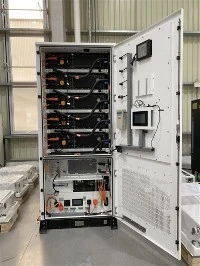
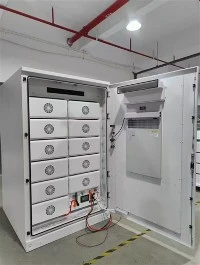
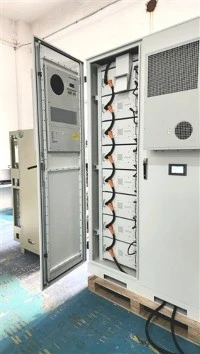
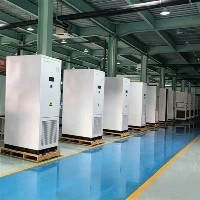
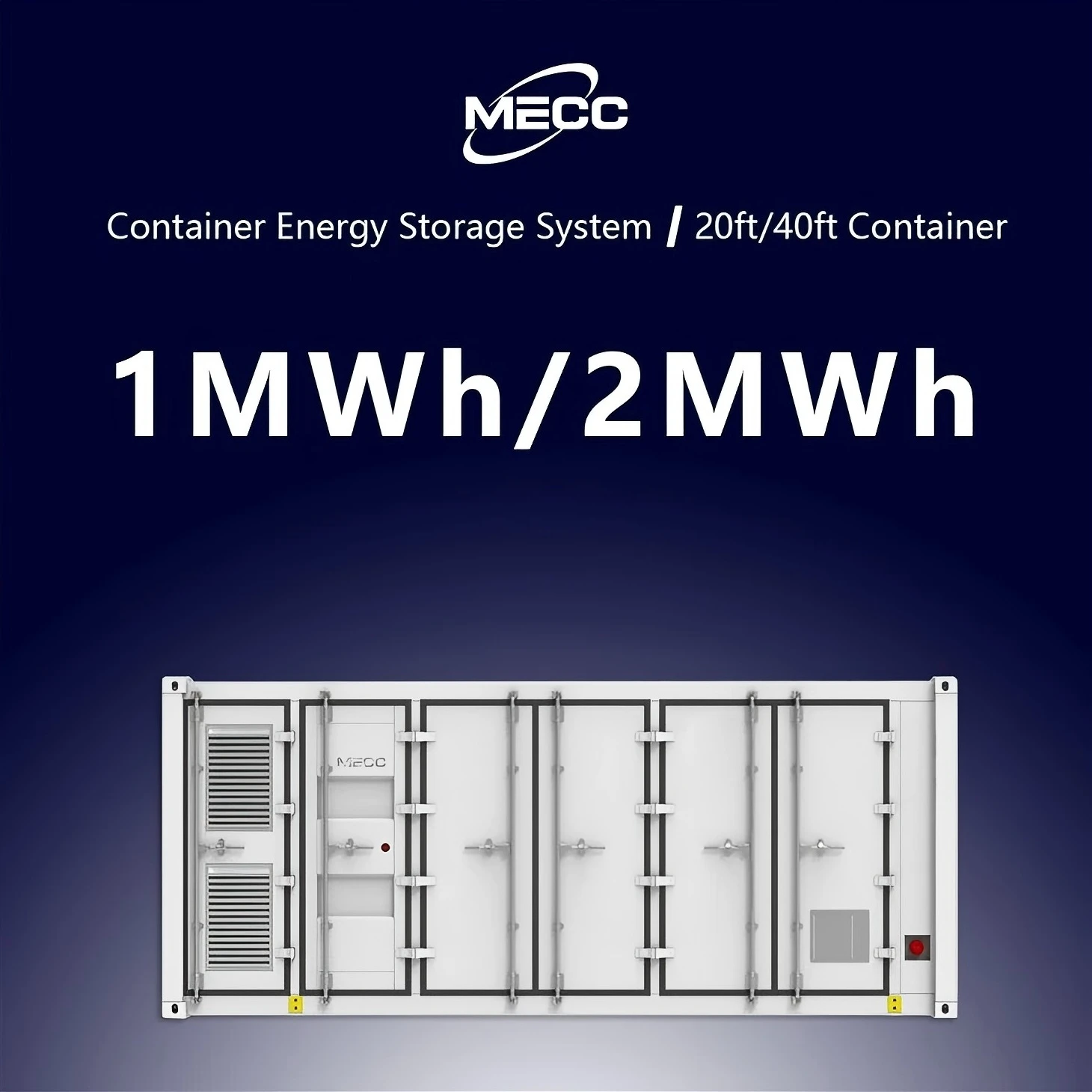
500KW/1MW 1MWh/2MWh Battery Energy Storage System Container


The 500kW/1MW 1MWh/2MWh Battery Energy Storage System Container is a turn‑key utility‑grade energy storage solution housed in standard 20ft or 40ft shipping containers, integrating bidirectional PCS, A‑grade LiFePO4 battery clusters, master BMS, liquid‑cooled thermal management, gas fire suppression, high‑voltage distribution and EMS energy management system with full factory pre‑assembly and pre‑commissioning. Requiring only foundation construction and high‑voltage cable connection for on‑site commissioning, it supports flexible power‑capacity configuration and multi‑container parallel expansion, delivering core capabilities of peak‑shaving and load shifting, renewable energy smoothing, frequency‑voltage grid support, islanded micro‑grid operation and large‑scale emergency backup. Featuring IP54 enclosure protection and comprehensive multi‑layer safety mechanisms, it adapts to diverse harsh outdoor environments, and is widely deployed for ground‑mounted PV power stations, industrial parks, mining operations, island microgrids and grid‑side auxiliary service projects to stabilize grid fluctuations, boost renewable energy utilization and reduce comprehensive energy costs.


Send Inquiry

whatsapp

Phone

E-mail

Inquiry