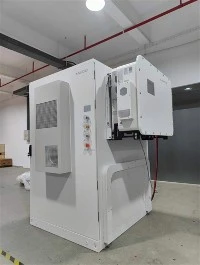
2 System components
Sensors: temperature sensors, pressure sensors, etc., used for real-time monitoring of parameters such as temperature and pressure of batteries and the environment.
Control unit: typically a microcontroller or computer system that controls the operation of thermal management equipment based on sensor data and preset algorithms.
Cooling equipment:
Air cooling system: including fans, air channels, heat exchangers, etc., which dissipate heat through air flow.
Liquid cooling system: including pumps, coolant, radiators, cooling plates, etc., which take away heat through the circulation of coolant.
Heating equipment: such as electric heaters, phase change material heaters, etc., used to heat batteries in low-temperature environments.
Thermal insulation material: used to reduce the impact of external environment on battery temperature and maintain stable internal temperature.
Actuators: such as valves, pumps, etc., used to control the flow of coolant or air.
Connectors: including pipes, cables, etc., connect various components to ensure the normal operation of the system.
Working principle: Temperature monitoring: The sensor continuously monitors the temperature of the battery and the environment, and transmits the data to the control unit.
Data analysis: The control unit analyzes the data to determine whether cooling or heating equipment needs to be activated.
Cooling process:
Air cooling: When the temperature exceeds the set threshold, the fan starts and pushes air to flow over the surface of the battery, taking away heat.
Liquid cooling: The pump pushes the coolant through the cooling plate or directly into contact with the battery, absorbs heat, and flows back to the radiator for heat exchange.
Heating process: In a low-temperature environment, the heating device is activated to release heat through electrical energy or phase change materials, thereby increasing the battery temperature.
Temperature regulation: The control unit adjusts the intensity of cooling or heating based on real-time data to ensure that the battery temperature is maintained within the optimal operating range.
Uniformity of thermal distribution: By designing reasonable air ducts or coolant flow paths, the temperature distribution inside the battery pack is ensured to be uniform.
Security protection: The system also includes safety functions such as overheating protection and leak detection to prevent potential safety hazards.
Intelligent optimization: Modern thermal management systems may integrate artificial intelligence algorithms to optimize control strategies, improve energy efficiency and response speed.
Remote monitoring: The system may support remote monitoring and control functions, making it easy for maintenance personnel to understand the system status in real time and make adjustments.
3 Function of energy storage system

User side:
① Family scenario: Improving power quality
② Business scenario: peak shaving and valley filling, backup power supply
③ Industrial scenarios: peak shaving and valley filling, backup power supply, dynamic capacity expansion
Power generation side:
① Traditional power generation: auxiliary peak shaving and frequency regulation
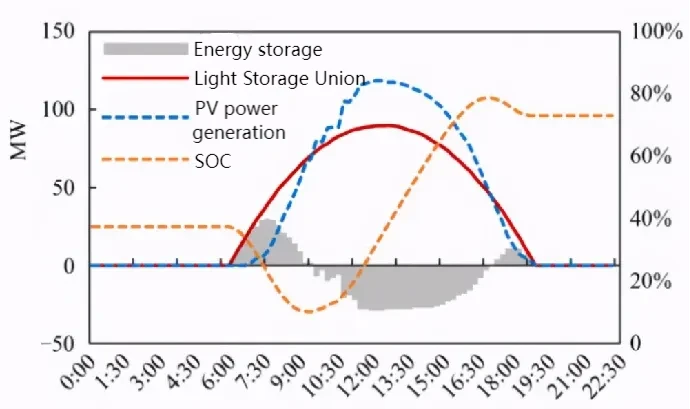
② New energy generation: Smooth output, improved power generation prediction capability, peak shifting to increase utilization rate
Microgrid side:
Load management to maintain balance, smooth fluctuations to improve power quality, microgrid balance control
Grid side:
Predicting load reduces scheduling difficulty, reduces transmission losses, and provides separate backup power for important loads