


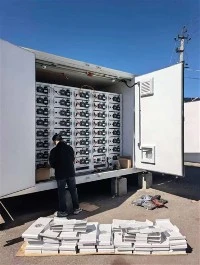
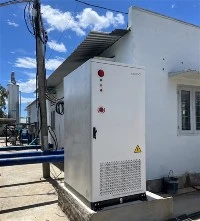
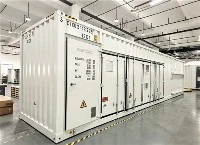
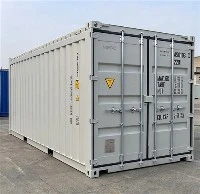
Simply put, energy storage is the process of storing unused energy and reusing it when needed. In the field of energy, energy storage technology plays a crucial role as it enables stable output of unstable renewable energy sources such as solar and wind power, providing a continuous supply of electricity for our daily lives and work. Among them, lithium-ion electrochemical energy storage has become one of the fastest developing energy storage technologies due to its high energy density, long lifespan, and fast response speed.
1 Basic Introduction

The energy storage system consists of a battery, electrical components, mechanical support, heating and cooling system (thermal management system), bidirectional energy conversion system, energy management system, and battery management system. The battery is arranged, connected and assembled into a battery module, and then fixed and assembled together with other components inside the cabinet to form the battery cabinet.

Generalized definition: Energy storage refers to the storage of energy. It refers to the cyclic process of storing energy through a medium or device and releasing it in a specific form based on future application needs.
Narrowly defined: for the storage of electrical energy. A series of technologies and measures that utilize chemical or physical methods to store the generated energy and release it in the form of electrical energy when needed. (All subsequent introductions are limited to the narrow definition of electric energy storage)
1. Terminology and definitions
Battery: As one of the key technological routes for new energy storage, new energy storage batteries play an important role in increasing the proportion of renewable energy consumption and ensuring the safe and stable operation of the power system. Lithium batteries, as key energy storage devices, are the "center" that determines the progress of electrochemical energy storage. Lithium batteries are divided into lithium iron phosphate batteries and ternary lithium batteries according to different positive electrode materials. The energy storage market is mainly dominated by lithium iron phosphate batteries, and eliminating the peak valley difference between day and night is the main application scenario of energy storage systems. The product usage time directly affects project revenue. Energy storage units, usually referring to batteries, are the basic devices used in energy storage systems to store and release electrical energy.
Cell: A single battery, the smallest unit of a battery.

Battery Module/Pack: A standard package for a series of individual batteries.

Battery Rack/Cluster: An energy storage unit composed of a series of battery modules.
Battery Collection Panel (BCP): Located between the battery rack and the energy storage inverter, similar to a photovoltaic DC combiner box.
Power Conversion System (PCS): A bidirectional DC/AC inverter.

Battery Management System (BMS): Intelligent management and maintenance of various battery units to prevent overcharging and overdischarging, extend battery life, and monitor battery status.
Positive electrode material: The part of the battery that undergoes oxidation reactions. Common positive electrode materials include lithium cobalt oxide (LiCoO2), lithium iron phosphate (LiFePO4), lithium nickel manganese cobalt oxide (NMC), etc.
Negative electrode material: The part of the battery that undergoes a reduction reaction. Common negative electrode materials include graphite, silicon, tin, etc. Electrolyte: The medium for ion transport in batteries, which can be liquid or solid (solid electrolyte). Electrolytes allow ions to move between positive and negative electrodes, completing the charging and discharging process.
Diaphragm: located between the positive and negative electrodes, its function is to prevent direct contact between the positive and negative electrodes from causing a short circuit, while allowing ions to pass through.
Current collector: typically made of metals such as copper and aluminum, used to transmit the current of a battery cell to an external circuit.
Battery casing: The external structure of a battery used to protect internal components and provide mechanical support.
Battery Management System (BMS): responsible for monitoring and managing the charging and discharging process of batteries, ensuring their safe operation, and optimizing their performance and lifespan.
Energy Management System (EMS): It is an intelligent system that integrates software and hardware, used to monitor, control, and optimize energy flow and consumption in energy systems. It is based on data collection, analysis, and decision support technology, which can monitor the operating status, energy consumption, and environmental conditions of energy equipment in real time, thereby achieving efficient management and optimization of energy.
Heating, Ventilation, and Air Conditioning (HVAC) system: typically used in battery containers to ensure ventilation, heat dissipation, and insulation of batteries.
Battery Capacity: The amount of charge Q that can be contained or released, i.e., battery capacity (Ah)=current (A) x discharge time (h), typically measured in Ah (ampere hours). For example, if the energy storage battery is labeled as 96Ah, theoretically it can be used for 1 hour at a working current of 96A.
Battery Energy: The energy stored in a battery, measured in Wh (watt hours), where Wh equals the voltage (V) multiplied by the battery capacity (Ah). For example, a 3.2V/96Ah battery has an energy of 307.2Wh, and if we connect four such batteries in series, we form a battery pack with a voltage of 12.8V and a capacity of 96Ah. Although the battery capacity is not increased, the total energy is increased by four times.
Charge discharge rate (C-Rate): Discharge rate refers to the current value required to discharge its rated capacity within a specified time, which is numerically equal to a multiple of the battery's rated capacity. Namely, the charge and discharge current (A) divided by the rated capacity (Ah), with the unit generally being C (short for C-rate), such as 0.5C, 1C, etc.
Guaranteed power capacity (GPC): The minimum capacity released by an energy storage system within a specified usage period.
Round trip efficiency (RTE): The ratio of the total amount of electricity released from the AC terminal when the battery is fully charged to the amount of electricity required to fully charge the AC terminal, taking into account equipment losses and self consumption during charging and discharging.
Cycle life: The lifespan of a battery is divided into two parameters: cycle life and calendar life. Cycle life refers to the number of times a battery can cycle through charging and discharging. Under ideal temperature and humidity conditions, charge and discharge at the rated current, and calculate the number of cycles the battery experiences when its capacity decays to 80%. Calendar lifespan refers to the time span during which a battery reaches the end of its lifespan condition (capacity decay to 80%) under specific usage conditions. Generally, the smaller value of the two may be assessed.