


High electricity expenditure
The plant is subject to two‑part time‑of‑use industrial tariffs with large price gaps between valley and peak hours. During grid‑stress periods, peak‑hour electricity costs surge significantly. Round‑the‑clock production keeps transformer demand at high levels, resulting in considerable maximum‑demand charges in addition to high peak‑period energy bills. Cost uncertainty brings heavy pressure to operational profit.
Unstable power supply
Extensive energy management
MECC engineering teams performed multiple site surveys to verify road load‑bearing capacity, turning radius and foundation bearing capability. The final container location is selected on hardened open ground adjacent to the 10 kV power‑distribution room. This shortens high‑voltage cable routing and maintains code‑compliant fire‑safety spacing away from production buildings and combustible warehouses, with reserved lanes for container hoisting and routine maintenance.
Industrial‑grade energy‑storage containers with enhanced sealing performance are adopted to reduce dust intrusion. The internal closed liquid‑cooling circulation system avoids drawing dust‑laden ambient air, fundamentally preventing radiator blockage caused by textile fibers.
Each container integrates battery modules, BMS, PCS, fire‑protection and thermal management units. A multi‑level fire‑protection system including cell‑level aerosol suppression, multi‑sensors for temperature, smoke and combustible‑gas detection is integrated, together with interlock logics for alarm, ventilation and high‑voltage disconnection. Fire‑protection parameters are configured according to Class‑C workshop specifications, completing simulation and on‑site acceptance tests to satisfy local fire‑safety and grid‑connection regulations.
Challenge 2: High‑power bidirectional charge‑discharge of dual container clusters may induce impact and voltage fluctuation on legacy transformers and busbars; short‑circuit‑capacity matching risks
Existing transformers and switchgears were not originally designed for frequent large‑power bidirectional energy‑storage operation. Joint operation of two large‑capacity containers delivers total power up to 2.15 MW. Rapid power swing between charging and discharging could generate impact on legacy power‑distribution assets, trigger bus‑voltage fluctuation and interfere with sensitive textile motors and dyeing automation equipment. Short‑circuit capacity must be carefully checked to ensure fault current from ESS will not exceed withstand limits of original switchgears.
Solutions
Detailed power‑system simulation and calculation were completed in the design phase. Impedance parameters of factory transformers and short‑circuit capacity of busbars were fully modelled and verified, to guarantee that ESS fault short‑circuit current stays within equipment withstand thresholds and protects legacy distribution hardware.
The MECC Energy Management System (EMS) implements cluster coordinated control for two energy‑storage containers. Ramp‑rate limits are enforced for total charge‑discharge power. Power will rise and fall smoothly instead of instant full‑scale switching, whether for TOU arbitrage, demand management or off‑grid backup mode. This suppresses voltage impact caused by abrupt power variation and secures stable operation of production machinery. SOC equalization between two containers is realized to extend overall system service life.
The EMS continuously monitors transformer loading rate and bus voltage. When approaching safety thresholds, it actively caps maximum input/output power of the whole ESS cluster, giving priority to the safety of factory's original power‑distribution network and realizing friendly interoperation between container‑based energy‑storage cluster and legacy industrial grid.

C&I Energy‑storage Solution
Solution Architecture
The project adopts a 2.15 MW/4.19 MWh energy‑storage system, consisting of two sets of 1 MW/2 MWh energy‑storage containers and one set of 2500 kVA step‑up transformer system.
Each container integrates lithium‑ion battery modules, BMS, PCS, fire‑protection system and thermal‑management system. The MECC EMS platform conducts unified cluster scheduling for two containers, supporting one‑stop monitoring and centralized charge‑discharge management for the whole power station.
The overall system efficiency reaches ≥88 %, cycle life exceeds 8 000 cycles with maximum discharge rate ≤0.5 C, satisfying heavy‑duty industrial‑grade operation requirements.
Over a 12‑year operational lifecycle, cumulative revenue from TOU arbitrage and demand‑side response can reach 7.68 million yuan.
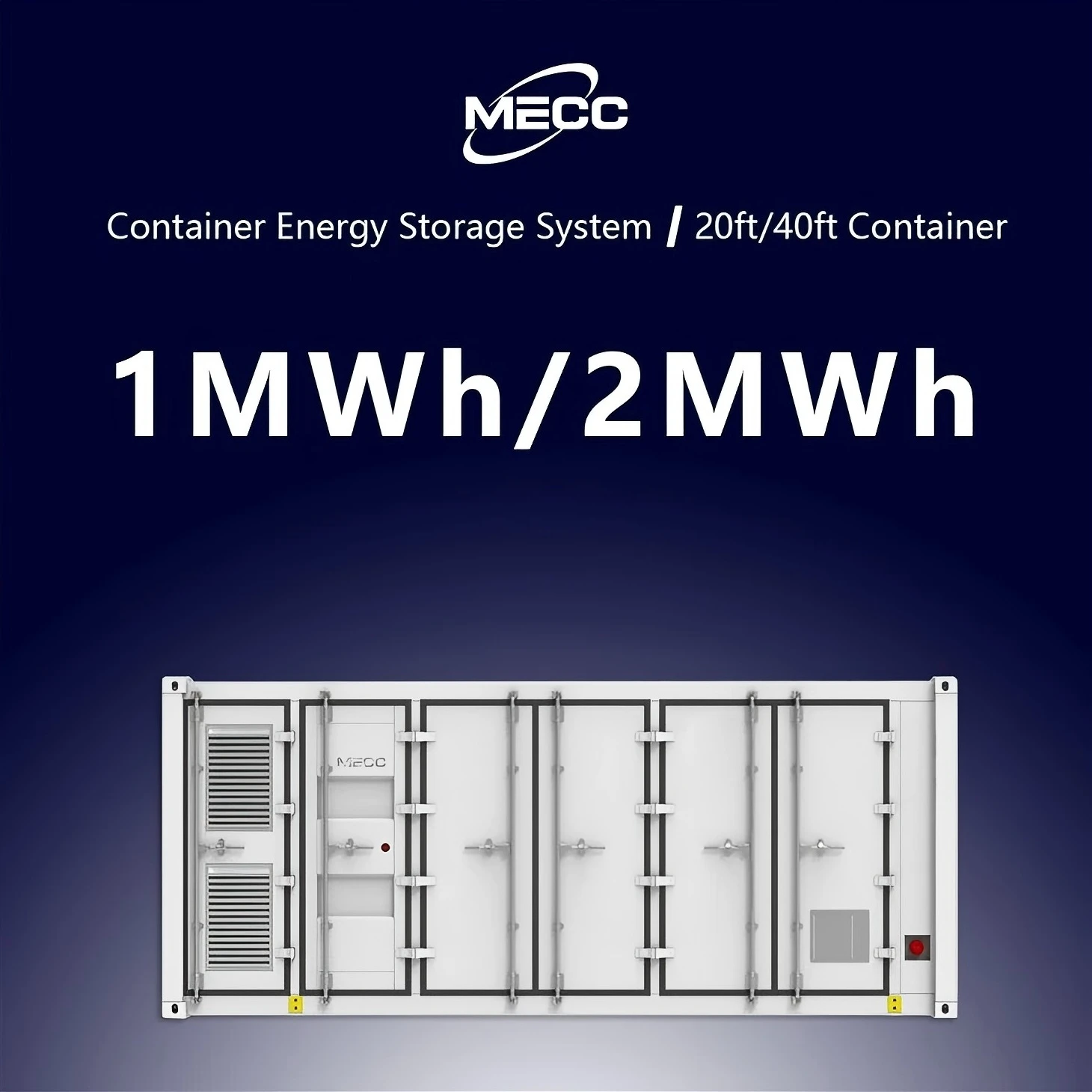
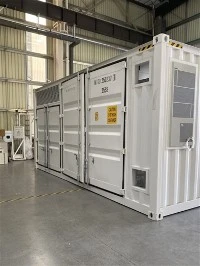
500KW/1MW 1MWh/2MWh Battery Energy Storage System Container
The 500kW/1MW 1MWh/2MWh Battery Energy Storage System Container is a turn‑key utility‑grade energy storage solution housed in standard 20ft or 40ft shipping containers, integrating bidirectional PCS, A‑grade LiFePO4 battery clusters, master BMS, liquid‑cooled thermal management, gas fire suppression, high‑voltage distribution and EMS energy management system with full factory pre‑assembly and pre‑commissioning. Requiring only foundation construction and high‑voltage cable connection for on‑site commissioning, it supports flexible power‑capacity configuration and multi‑container parallel expansion, delivering core capabilities of peak‑shaving and load shifting, renewable energy smoothing, frequency‑voltage grid support, islanded micro‑grid operation and large‑scale emergency backup. Featuring IP54 enclosure protection and comprehensive multi‑layer safety mechanisms, it adapts to diverse harsh outdoor environments, and is widely deployed for ground‑mounted PV power stations, industrial parks, mining operations, island microgrids and grid‑side auxiliary service projects to stabilize grid fluctuations, boost renewable energy utilization and reduce comprehensive energy costs.