


Getting the size wrong is the most expensive mistake in energy storage. Too small, and the system can't shave your peak or carry your loads; too large, and you strand capital on capacity you never cycle. Sizing a commercial battery system is a logical process, not a guess - it starts with your goal, works through your load profile, and ends with a commercial energy storage configuration you can defend to finance. Here's how to do it, step by step.
Step 1: Define the goal (or goals)
Sizing begins with intent, because each goal drives different numbers:
Peak shaving / demand charge reduction: sized to the peak you want to clip.
Time-of-use (TOU) arbitrage: sized to the energy you shift between tariff periods.
Self-consumption of on-site solar: sized to the daily solar surplus.
Backup / resilience: sized to hours of critical load.
Demand response or V2G: sized to the service commitment.
Most C&I battery storage projects stack two or three, but one should lead. Write it down - every later step references it.
Step 2: Gather your load profile
You cannot size without interval data. Pull at least 12 months of 15-minute load profile data. You're looking for:
The monthly peak demand (the number your demand charges are based on).
When peaks occur and how long they last.
Daily and seasonal swings, plus solar generation if applicable.
This curve is the foundation of all commercial energy storage sizing.
Step 3: Set the power requirement (kW)
Power - not energy - decides whether you can catch your peak. From your load data, choose a peak-reduction target, then read off the power needed to hold grid draw below it. That figure sets the C-rate and the PCS (power conversion system) rating. If your site has sharp motor starts or fast EV charging, lean toward a higher C-rate so the BESS can respond in milliseconds.
Step 4: Set the energy requirement (kWh)
Energy - the size of the tank - covers how long you discharge. Multiply the power by the duration you need:
Peak shaving typically calls for 1–2 hours.
TOU arbitrage may need 2–4 hours.
Backup depends on your critical-load list and desired runtime.
This power-plus-duration pair is the heart of the design.
Step 5: Match to real modules
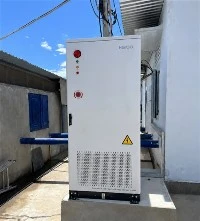
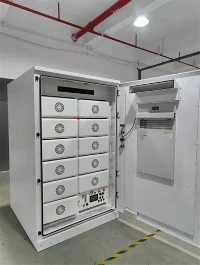
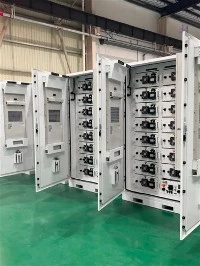
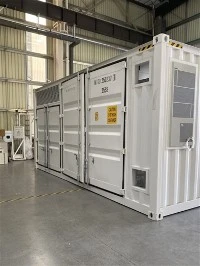
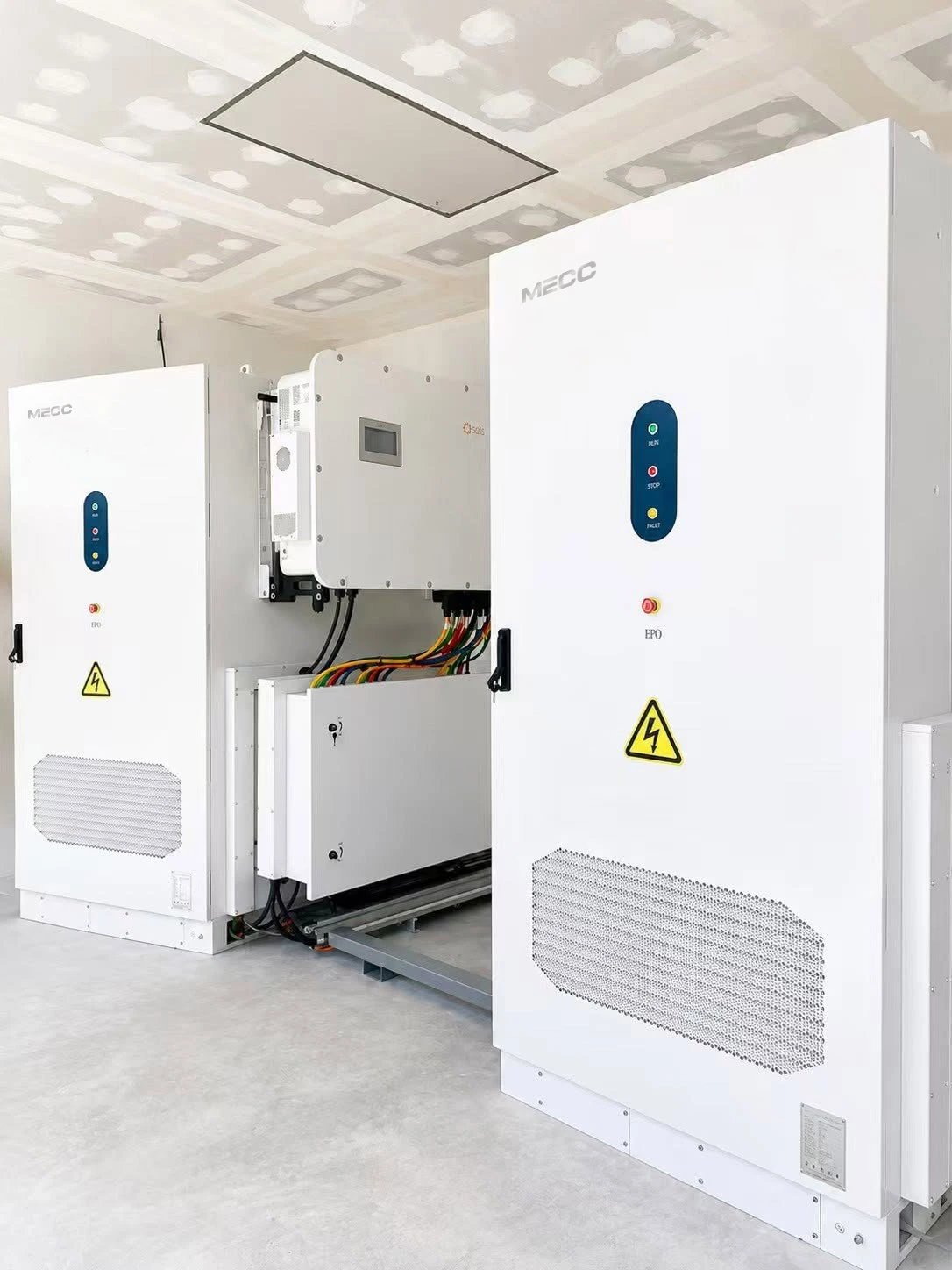
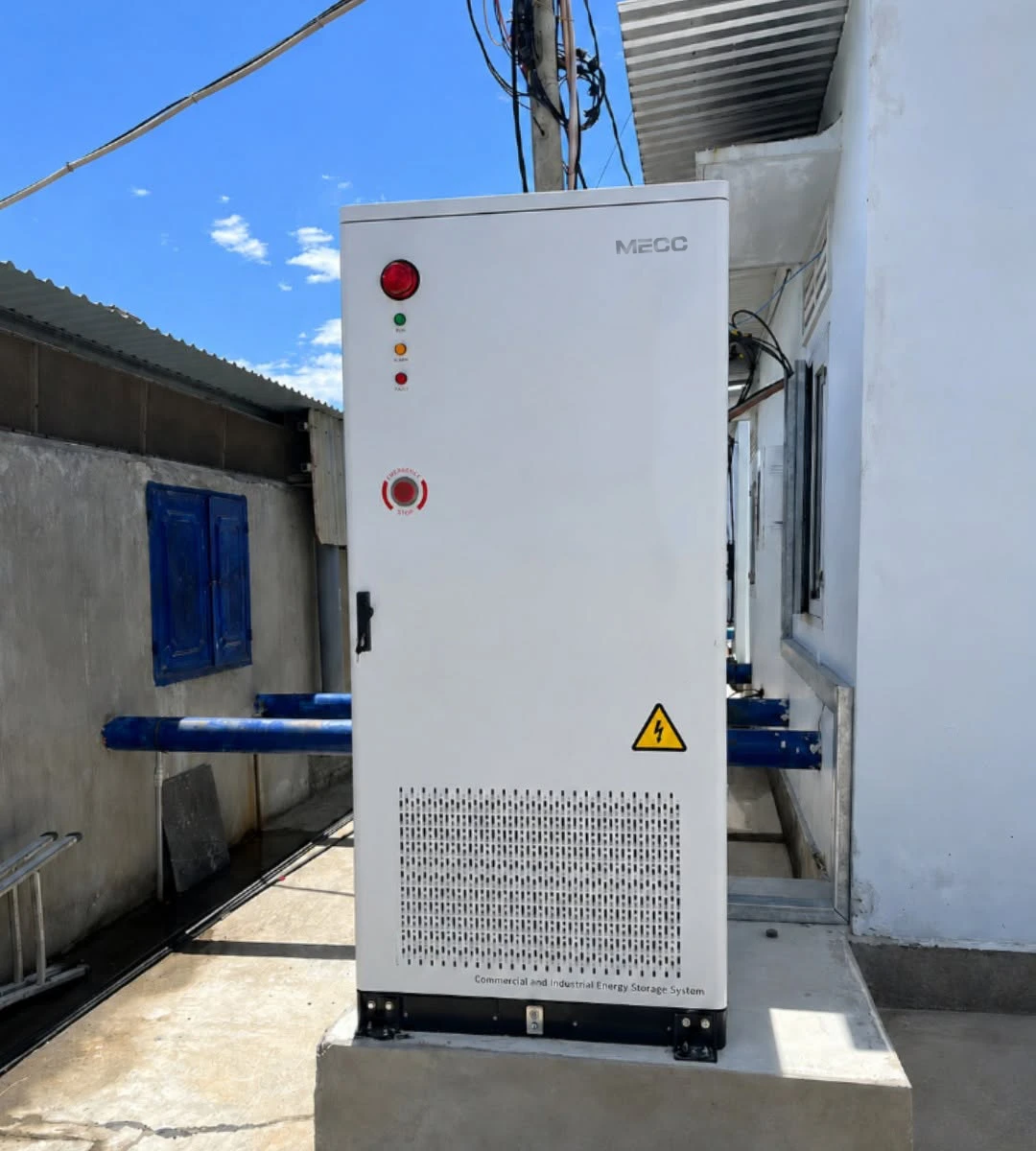
Now convert requirements into hardware. A 215 kWh battery storage module is a common building block; a modular energy storage rack or all-in-one energy storage cabinet lets you combine modules to hit your target without oversizing. Confirm the PCS, BMS (battery management system), and EMS (energy management system) can handle the combined power and energy, and decide early whether an AC coupled or DC coupled architecture fits your generation assets.
Step 6: Account for efficiency and depth of discharge
Nameplate kWh is not usable kWh. Two corrections matter:
Round-trip efficiency: a 90% system returns less energy than it stores - size up accordingly.
Depth of discharge (DoD): usable capacity is a fraction of total; LFP (lithium iron phosphate) chemistry typically allows deeper, safer discharge than legacy options.
Apply both, then add a margin for degradation over the system's life.
Step 7: Check site, thermal, and safety constraints
Physical reality shapes the final number. Confirm footprint, weight loading, and setbacks, then specify:
Liquid-cooled battery storage for tighter thermal control in hot or high-duty sites; air-cooled where climate and duty allow.
Certification to UL 9540 and UL 9540A, compliance with NFPA 855, and IEC 62619 for international sites.
Clean commercial energy storage installation access for serviceability.
Constraints sometimes cap the size - better to discover this before ordering.
Step 8: Model the economics
Finally, test the size against the money. Estimate savings from peak shaving, TOU arbitrage, demand response, and self-consumption, then compare to commercial energy storage cost per kWh and the lifetime LCOS (levelized cost of storage). Check battery storage ROI and commercial battery storage payback at two or three sizes - the biggest system is rarely the best return.
Step 9: Validate with a supplier
Use the numbers you've built as a brief, not a final answer. A credible commercial energy storage manufacturer or commercial energy storage supplier should re-run the model against your data, simulate dispatch, and confirm the design - plus outline battery storage maintenance over the asset's life.
Liquid Cooling 125KW 261kWh Lithium Battery Energy Storage Cabinet
The IP55 Protected All-in-One Solar Energy Storage Cabinet is a high-performance, integrated energy solution engineered for outdoor commercial, industrial, and utility-scale solar applications. It integrates a 125kW Power Conversion System (PCS), a 261kWh lithium iron phosphate (LiFePO4) battery bank, an advanced liquid cooling system, and a intelligent Battery Management System (BMS) into a single cabinet with IP55 weatherproof protection. Designed to withstand harsh outdoor environments while delivering efficient energy conversion and storage, it supports solar energy absorption, peak shaving, load shifting, grid auxiliary services, and emergency backup power. Ideal for utility-scale solar farms, industrial parks, large commercial complexes, and remote microgrids, it provides a reliable, space-saving, and low-maintenance solution for large-scale renewable energy integration.
