


Cold storage operators live with an uncomfortable coincidence: the equipment that preserves your inventory is also the equipment that sets your peak demand. Compressors are large, they start hard, and they run hardest on exactly the hot afternoons when utility rates peak. Meanwhile, the product inside the building is itself a thermal asset - tons of frozen or chilled mass that can absorb cooling in advance. That combination makes cold storage one of the best-fit verticals for C&I energy storage, and increasingly one of the first places a warehouse operator says yes.
This guide covers why refrigeration loads and batteries fit so well, the four value streams specific to cold storage, how thermal mass works as a second (invisible) battery, and what to get right in design and controls.
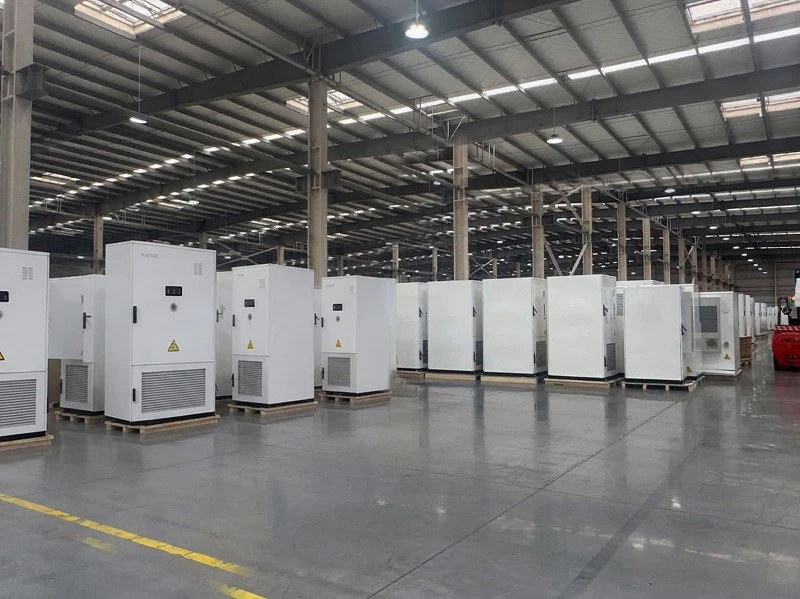
Why Cold Storage Is a Natural BESS Fit
Three load characteristics make refrigeration an ideal anchor for cold storage battery storage:
The load is large and mostly predictable. Refrigeration typically dominates a cold-store's electricity consumption, and its behavior is patterned - driven by product intake, ambient temperature, door traffic, and defrost cycles. A well-studied site yields a reliable forecast, which is the input good dispatch depends on.
Demand charges are punishing. Compressor staging, simultaneous restarts after a power blip, and hot-afternoon duty spikes create billed peaks that dwarf what the average load suggests. Demand charges often represent a third or more of a cold store's bill - exactly the cost a battery attacks directly.
The downside risk is asymmetric. A refrigeration outage is not just downtime; it is spoilage - inventory worth millions in some facilities, plus food-safety documentation and insurance friction. That makes resilience valuable in a way that is easy to quantify and easy to defend to a CFO.
Add the fourth factor - thermal mass, covered below - and cold storage frequently shows the strongest business case of any commercial vertical.
The Four Value Streams
One: demand-charge reduction. The battery shaves the compressor-driven peak: absorbing simultaneous restarts, covering hot-afternoon duty, and holding the billed peak flat month over month. Because refrigeration peaks are large and recurring, the battery works hard every single day - the utilization profile that makes peak shaving battery storage economics work.
Two: pre-cooling and TOU shifting. Here is cold storage's special advantage: the building itself stores energy. Pre-cooling - pulling the warehouse two degrees lower before the expensive window, then letting it drift up - shifts consumption out of peak price hours using the product and the building mass as thermal storage. The BESS and the pre-cool strategy compose: the battery serves load during the peak window while the reduced refrigeration demand stretches its duration. Two storage mediums, one bill.
Three: demand response and flexibility. Refrigeration is a controllable load - defrost cycles, anti-sweat heaters, staging logic, and setpoint latitude all offer temporary curtailment with zero product risk if bounded properly. Cold stores are prized participants in demand response commercial storage programs precisely because their flexibility is large and discreet. The battery extends this: it can commit DR capacity without touching temperatures at all.
Four: resilience and spoilage avoidance. A battery bridging compressors through an outage - especially combined with generator or solar recharge per the multi-day playbook - converts a spoilage event into a non-event. For high-value inventory (pharma cold chain, protein, dairy), the avoided-loss line in the model can exceed every energy-stream combined.
Thermal Mass: The Battery You Already Own
Worth dwelling on, because it changes sizing. Frozen product and the building envelope hold "coldness" the way a battery holds charge - and unlike a battery, this storage is already paid for.
The mechanism: refrigeration does not need to run in real time; it needs to keep temperature inside a band (with a documented food-safety buffer). Widening the usable band - within HACCP and product-quality limits - creates a dispatchable window of hours. Controls that pre-cool before peak and coast through it can cut the refrigeration contribution to peak dramatically before the battery contributes anything.
The design implication: controls first, then battery. A site that integrates the battery dispatch with the refrigeration management system (RMS) - coordinating staging, defrost scheduling, and setpoint latitude - needs a smaller, cheaper battery for the same bill outcome. A site that bolts a battery next to an uncontrolled refrigeration load pays for both redundantly.
Sizing From the Load Profile
Cold storage sizing follows the standard discipline, with two twists. Start from 15-minute interval data and identify what actually drives the billed peak - often a handful of events per month: post-outage restarts, defrost bunching, intake days. Then:
Power must cover the worst synchronous compressor demand you intend to shave, including restart inrush (motors matter here - check PCS surge capability).
Duration follows the shape of the refrigeration peak, which is broad rather than spiky - typically 2–4 hours, longer where DR commitments or pre-cool strategies stretch the window.
Resilience sizing, if included, follows the spoilage model: how long must temperature be held (not necessarily full load - staged operation under battery can be acceptable) before a generator or grid return.
Food-safety compliance is a hard constraint on every strategy: temperature excursions have documentation and audit consequences. The control integration must enforce hard temperature floors that dispatch cannot violate - flexibility is real, but it lives inside the food-safety envelope, not outside it.
Controls and Integration: Where the Value Is Won
The difference between a mediocre and an excellent cold-storage BESS project is almost entirely in the control layer:
RMS/BMS integration: the site controller should read the refrigeration system's state (stage status, defrost schedule, zone temperatures) and dispatch the battery with the refrigeration load, not blindly beside it.
Restart management: after any outage, sequencing compressor restarts (staged, battery-buffered) avoids the single worst demand event most cold stores experience. The battery absorbing that restart is often the fastest measurable saving.
Defrost and anti-sweat scheduling: shifting these into off-peak windows is a controls change with battery-scale savings.
M&V: track demand-charge hit rate and temperature compliance together, so the savings report and the food-safety audit never conflict.
Get the integration layer right and the project's savings report writes itself; get it wrong and the battery fights the refrigeration controls for the same kWh.
The Business Case, Honestly
Cold storage projects tend to pencil well because utilization is high: a load that peaks daily gives the battery daily work. Combine demand-charge savings (the workhorse), pre-cool interaction (which reduces required battery size), DR revenue (where programs exist), and spoilage avoidance (where inventory value justifies resilience sizing), and paybacks frequently land in the best quartile of C&I storage - often strong enough to survive a conservative battery storage business case review without heroic assumptions.
The main modeling warning: do not double-count. Pre-cooling shifts load instead of the battery discharging; value them as one coordinated strategy, not two independent savings streams.
The Bottom Line
Cold storage is close to an ideal BESS customer: a large, predictable, demand-charge-heavy refrigeration load with an asymmetric downside risk - plus a thermal mass that acts as a second battery you already own. Start with controls and pre-cooling, size the battery around what the controls leave behind, integrate dispatch with the refrigeration system, and keep food-safety limits inviolable. Done in that order, cold storage battery storage is less a technology bet than an arithmetic exercise.
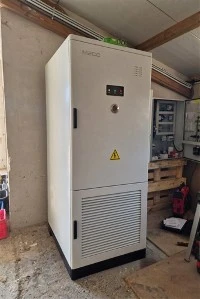
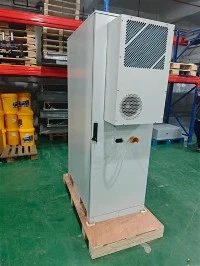
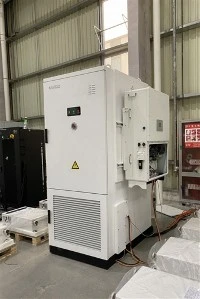
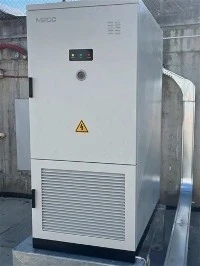
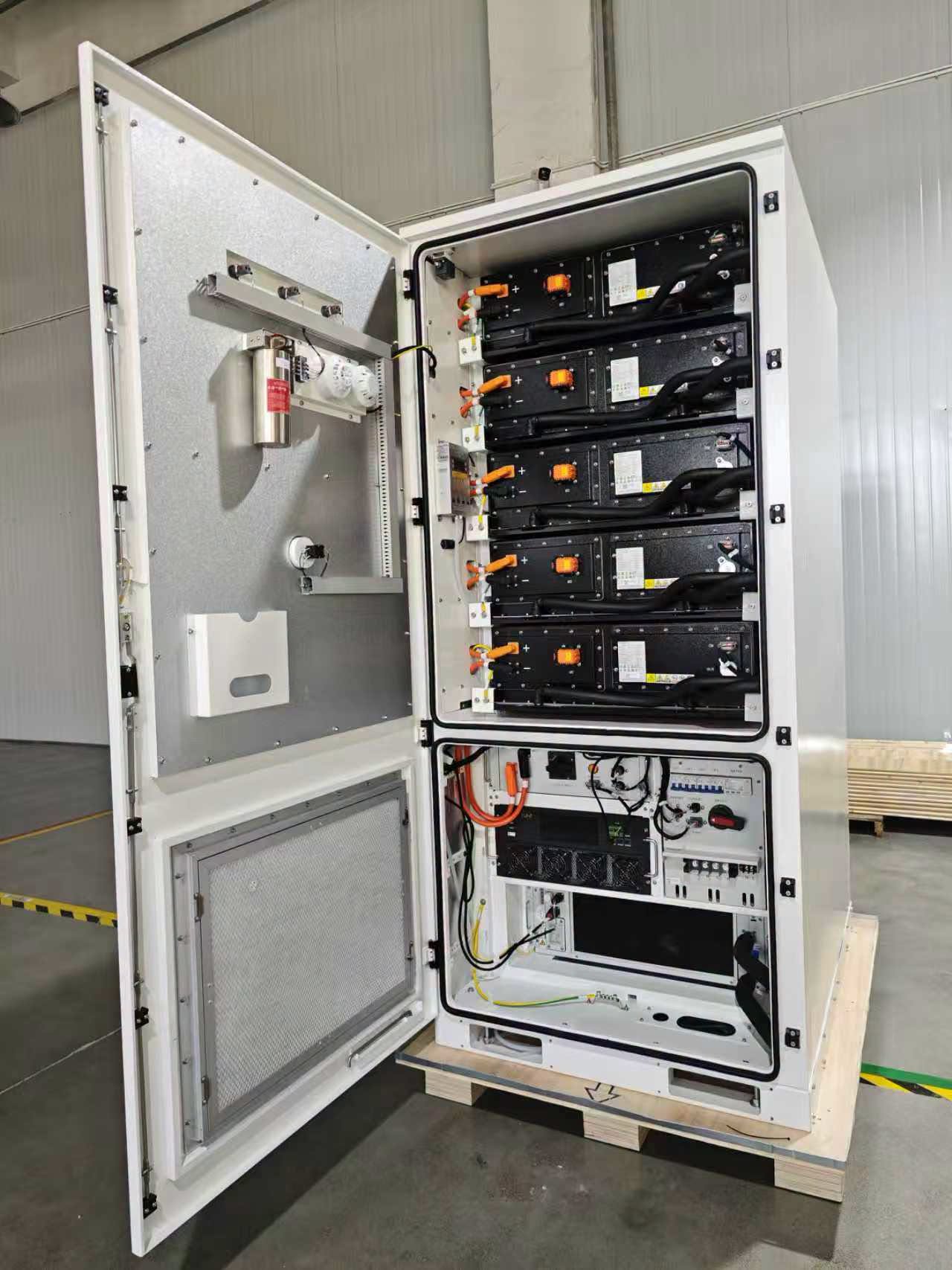
Liquid Cooling 125KW 261kWh Lithium Battery Energy Storage Cabinet
The IP55 Protected All-in-One Solar Energy Storage Cabinet is a high-performance, integrated energy solution engineered for outdoor commercial, industrial, and utility-scale solar applications. It integrates a 125kW Power Conversion System (PCS), a 261kWh lithium iron phosphate (LiFePO4) battery bank, an advanced liquid cooling system, and a intelligent Battery Management System (BMS) into a single cabinet with IP55 weatherproof protection. Designed to withstand harsh outdoor environments while delivering efficient energy conversion and storage, it supports solar energy absorption, peak shaving, load shifting, grid auxiliary services, and emergency backup power. Ideal for utility-scale solar farms, industrial parks, large commercial complexes, and remote microgrids, it provides a reliable, space-saving, and low-maintenance solution for large-scale renewable energy integration.
