


Balcony photovoltaics are no longer limited to individual households' "solo efforts", and a "community collaboration" model is emerging globally - by aggregating dispersed balcony photovoltaic resources within the community, electricity sharing, energy storage mutual assistance, and income sharing can be achieved. This not only solves the problem of surplus electricity waste in individual households, but also provides green electricity for community public facilities, while enhancing community energy resilience, forming a virtuous cycle of "individual power generation community sharing collective benefit", and reshaping the community energy ecology.
1 Electricity sharing: a community network of surplus electricity mutual assistance
China's' Community Photovoltaic Microgrid '. A community in Shanghai has connected 50 households' balcony photovoltaics (with a total power of 25kW) through a microgrid and equipped them with 100kWh of shared energy storage. During the midday photovoltaic peak (with a total output of 20kW and a total household load of 10kW), a portion of the excess 10kW electricity is stored in shared energy storage and directly supplied to community public facilities such as streetlights, garbage sorting stations, and community activity centers; At the peak of household load in the evening (total load of 15kW, photovoltaic output of 5kW), shared energy storage releases 5kW, and at the same time, the public facility electricity stored in the afternoon (5kW) is called upon to achieve power balance within the community. This model has increased the utilization rate of community photovoltaic surplus electricity from 30% to 85%, saved 60000 yuan in annual electricity bills for public facilities, and reduced the purchase of electricity from the power grid by 15%, thereby lowering the overall energy cost of the community.
The "Community Electricity Mutual Aid Platform" in Germany. A community in Berlin has developed a "Photovoltaic Mutual Aid APP", where users can post information on the sale of surplus electricity (priced at 0.2 euros/kWh, 0.3 euros/kWh lower than the grid electricity price), and other households or community merchants can purchase it online. The platform automatically matches supply and demand: for example, if A family has 2 kWh of spare electricity during lunchtime and B family needs 1 kWh of electricity, the APP will automatically complete the transaction, and the electricity bill will be settled through the community account; Priority should be given to purchasing surplus electricity within the community for public facilities, and electricity should be purchased from the power grid when it is insufficient. After one year of operation, the platform has generated 5000 kWh of photovoltaic surplus electricity transactions within the community. The average annual income of participating households has increased by 200 euros, and the community's public facility electricity bills have been saved by 1200 euros. At the same time, it has enhanced the awareness of energy mutual assistance among neighbors.

2 Energy storage mutual assistance: efficiency improvement of shared energy storage
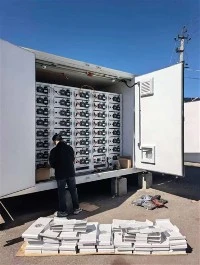
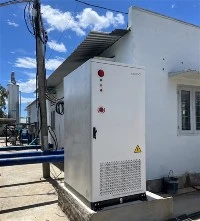
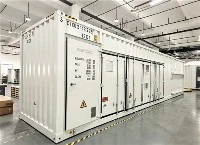
Community shared energy storage stations in the United States. A community in California is building a 200kWh shared energy storage station in a parking lot, connecting 100 households' balcony photovoltaics. When the photovoltaic output exceeds the household demand, the surplus electricity will be prioritized for charging into the shared energy storage (the charging and discharging priority will be determined by the APP vote); When there is insufficient household energy storage or a power outage, electricity can be purchased from shared energy storage at cost price. Shared energy storage adopts a "tiered utilization of batteries" (retired electric vehicle batteries, cost reduced by 40%), while participating in grid frequency regulation (receiving subsidies), and benefiting community residents (reducing the cost of shared energy storage usage). This model reduces the total energy storage capacity of the community by 60% (without the need for large capacity energy storage per household), reduces the cost of energy storage for participating households by 50%, and achieves an annual frequency modulation benefit of $10000 for shared energy storage. The average annual electricity cost savings for community residents are $100.
Japan's' Distributed Energy Storage Cluster '. A community in Tokyo will use blockchain technology to form a "distributed energy storage cluster" consisting of 50 households' balcony photovoltaic supporting energy storage (2kWh per household, total 100kWh). The community energy management platform will centrally dispatch the energy storage of 20 households (a total of 40kWh) during peak load periods of the power grid, participate in grid peak shaving, receive subsidies, and distribute profits according to the contribution of energy storage; When there is a power outage in the grid, dispatch all energy storage to supply power to the community emergency shelter (ensuring lighting and medical equipment). This cluster has increased the utilization rate of community energy storage from 30% to 70%, with an average annual peak shaving income of 12000 yen (about 600 yuan) for participating households. At the same time, during the 2023 typhoon power outage, it provided emergency power supply for shelters for 72 hours, demonstrating the resilience of community energy.

3 Collective benefits: the diverse value shared by the community
The "Community Photovoltaic Dividend" model in Europe. A community in London, UK has established a "photovoltaic cooperative", where residents voluntarily invest in balcony photovoltaics and shared energy storage, and enjoy profit dividends according to investment ratios. The cooperative manages photovoltaic power generation, surplus electricity sales, and grid subsidies, and after deducting operating costs, profits are distributed quarterly; At the same time, the cooperative will use 10% of its profits for community welfare (such as installing free balcony photovoltaics for low-income families). The cooperative has been operating for 3 years, with a cumulative dividend of 150000 pounds. 10 low-income families have received free balcony photovoltaic systems, and the community's green electricity usage rate has increased from 10% to 45%. Carbon emissions have been reduced by 200 tons, achieving the triple value of "economic benefits+community public welfare+environmental benefits".
The "community photovoltaic+employment" model in Africa. A community in Nairobi, Kenya has partnered with Chinese companies to install balcony photovoltaics for 200 households, while training 20 community residents to become "photovoltaic operation and maintenance personnel" (responsible for daily maintenance and troubleshooting). The operation and maintenance costs are covered by the community's photovoltaic revenue. The surplus electricity from community photovoltaics is sold to local telecommunications base stations (at a price of 0.15 USD/kWh), with a portion of the proceeds used to pay for the salaries of maintenance personnel and a portion used to subsidize community medical stations (which provide basic medical services to residents free of charge). This model saves $100 in annual electricity bills for community households, provides stable income for 20 operation and maintenance personnel (with an average monthly income of $200), and increases the coverage of community medical station services from 500 to 2000 people, achieving a win-win situation of "energy popularization+employment income increase+public service improvement".
The "community collaboration" model of balcony photovoltaics is breaking the "island effect" of household energy and building a community energy ecology of "sharing, mutual assistance, and win-win". In the future, with the integration of 5G communication (real-time data transmission), AI scheduling (optimized resource allocation), and blockchain (trusted transactions), community collaboration will achieve "automated matching, intelligent scheduling, and transparent benefits", making balcony photovoltaics a "green link" that connects community residents, enhances community cohesion, and promotes sustainable development of the community.