


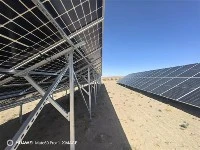
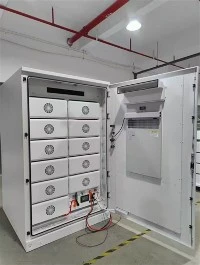

This article will introduce about 70 commonly used professional terms in the photovoltaic industry, with the aim of helping readers gain a deeper understanding of industry knowledge
Photovoltaic materials and battery technology
PV (Photovoltaic)
The technology or device that directly converts light energy into electrical energy
c-Si (Crystalline Silicon)
The most commonly used photovoltaic cell materials include monocrystalline silicon and polycrystalline silicon
mono-Si (Monocrystalline Silicon)
Silicon materials composed of a single crystal structure have high efficiency.
poly-Si (Polycrystalline Silicon)
Silicon materials composed of multiple grains have lower cost but slightly lower efficiency.
a-Si (Amorphous Silicon)
A thin film solar cell material with excellent low light performance
PERC (Passivated Emitter and Rear Cell)
An efficient crystalline silicon solar cell structure
TOPCON (Tunnel Oxide Passivated Contact)
A novel and efficient crystalline silicon solar cell technology
HJT (Heterojunction Technology)
Efficient solar cell technology combining the advantages of crystalline and amorphous silicon
IBC (Interdigitated Back Contact)
An efficient battery structure that places all electrodes on the back of the battery
BSR (Back Surface Reflector)
Battery back structure for improving long wavelength light absorption
EVA (Ethylene Vinyl Acetate)
The commonly used packaging materials in photovoltaic modules have good transparency and weather resistance
TPT (Tedlar-PET-Tedlar)
Common backsheet materials for photovoltaic modules
POE (Polyolefin Elastomer)
A new type of photovoltaic packaging material with excellent weather resistance
CdTe (Cadmium Telluride)
A thin film solar cell material with high conversion efficiency
CIGS (Copper Indium Gallium Selenide)
A high-efficiency thin-film solar cell material
Photovoltaic performance parameters and testing conditions
VOC (Open-Circuit Voltage)
The maximum output voltage of a solar cell when not connected to a load (open circuit state)
ISC (Short-Circuit Current)
Maximum output current of solar cells under short-circuit conditions
MPP (Maximum Power Point)
Operating point at maximum output power of solar cells
STC (Standard Test Conditions)
Standard environmental conditions for testing the performance of photovoltaic modules: irradiance: 1000 W/m ² (1 kW/m ²), cell temperature: 25 ° C (77 ° F), air mass: AM1.5G
NOCT (Nominal Operating Cell Temperature)
Test conditions closer to the real working environment: Irradiance: 800 W/m ², Environmental Temperature: 20 ° C (68 ° F), Wind Speed: 1 m/s

AM (Air Mass)
The path length of sunlight passing through the atmosphere affects the spectral distribution
η (Efficiency)
The ability index of photovoltaic modules to convert light energy into electrical energy.
FF (Fill Factor)
Index for measuring the ratio of actual maximum output power to theoretical maximum output power of solar cells
DNI (Direct Normal Irradiance)
The direct radiation intensity received on a plane perpendicular to the direction of the sun's rays
GHI (Global Horizontal Irradiance)
The total radiation intensity received on the horizontal plane, including direct radiation and scattered radiation
LID (Light Induced Degradation)
Performance degradation of photovoltaic modules during initial use
PID (Potential Induced Degradation)
The performance degradation phenomenon of photovoltaic modules under high voltage environment
LeTID (Light and Elevated Temperature Induced Degradation)
Performance degradation of polycrystalline silicon cells under illumination and high temperature conditions
TC (Thermal Cycling)
Testing method for evaluating the temperature resistance of photovoltaic modules
HF (Humidity Freeze)
Test method for evaluating the resistance of photovoltaic modules to moisture, heat, and freezing
DH (Damp Heat)
Test method for evaluating the high temperature and high humidity resistance of photovoltaic modules
kWp (Kilowatt Peak)
Maximum output power of photovoltaic system under standard testing conditions
kWh (Kilowatt Hour)
An energy unit that represents the energy generated by one kilowatt of power in one hour
Photovoltaic installation
BOS (Balance of System)
Other components of a photovoltaic system other than photovoltaic modules
BAPV (Building Applied Photovoltaics)
The technology of installing solar panels on the surface of existing buildings
BIPV (Building Integrated Photovoltaics)
The technology of integrating solar photovoltaic systems into building structures
EPC (Engineering, Procurement, and Construction)
The overall service model for the construction of photovoltaic power stations
FPV (Floating Photovoltaic)
Photovoltaic systems installed on water surfaces are usually built on lakes, reservoirs, or oceans
CPV (Centralized Photovoltaic)
Large scale ground photovoltaic power stations, usually directly integrated into the power grid
DPV (Distributed Photovoltaic)
Small scale photovoltaic systems are usually installed on or near buildings to consume electricity nearby
String
A circuit formed by connecting multiple photovoltaic modules in series
Array
A larger system formed by multiple photovoltaic strings or modules connected in parallel

Combiner Box
A junction box that combines the outputs of multiple photovoltaic strings
JB (Junction Box)
Sealed box installed on the back of photovoltaic modules for electrical connection

GCR (Ground Coverage Ratio)
The ratio of photovoltaic module area to total occupied area
ATS (Automatic Tracking System)
A system that can automatically adjust the angle of photovoltaic modules based on the position of the sun
TPM (Tilt and Pan Mechanism)
Support system that allows adjustment of the angle and direction of photovoltaic modules
SAT (Site Acceptance Test)
Performance and security testing conducted after installation completion
AOI (Angle of Incidence)
The angle between sunlight and the surface of photovoltaic modules affects the design of the bracket
BOS (Balance of System)
All other components in a photovoltaic system, including brackets, except for photovoltaic modules
Performance and economic indicators of photovoltaic systems
LCOE (Levelized Cost of Energy)
Important indicators for measuring the economic viability of photovoltaic power generation
PR (Performance Ratio)
The ratio of actual power generation to theoretical power generation in photovoltaic systems
ROI (Return on Investment)
Important indicators for evaluating the economic viability of photovoltaic systems
Photovoltaic power system and grid connection
DC (Direct Current)
Current flowing in a single direction, the original output of photovoltaic modules
AC (Alternating Current)
The current that periodically changes direction is converted into output by the inverter
MPPT (Maximum Power Point Tracking)
The technology of adjusting the working state of the system to obtain maximum output power
DG (Distributed Generation)
Small power generation facilities located near the power consumption end, such as rooftop photovoltaic systems
FIT (Feed-in Tariff)
The purchase price of grid connected photovoltaic system power generation by the power grid company
PCC (Point of Common Coupling)
Connection point between distributed generation system and power grid
RPS (Renewable Portfolio Standard)
Policy requiring power companies to use a certain proportion of renewable energy
PPA (Power Purchase Agreement)
Common business models for photovoltaic power generation projects
Electrical safety and protection
RCD (Residual Current Device)
A safety device that detects current imbalance and cuts off the circuit in dangerous situations
MCB (Miniature Circuit Breaker)
Switching device used to protect circuits from overload and short circuit
SPD (Surge Protection Device)
A device for protecting electrical equipment from voltage surge damage
GFDI (Ground Fault Detection and Interruption)
Safety device for detecting and cutting off grounding faults in photovoltaic systems
AFDI (Arc Fault Detectionand Interruption)
Identify and interrupt the safety function of hazardous arcs in photovoltaic systems
ISO (Isolation)
The function of safely disconnecting the photovoltaic system from the grid during maintenance