

With a wide input voltage range, it can handle fluctuations in the DC power source. Whether the battery voltage drops slightly due to age or increases during charging, it can adapt and continue to provide stable AC output. This flexibility is especially valuable in off-grid systems where battery conditions can vary. It eliminates the need for precise voltage regulation of the DC source, simplifying the overall power system design and increasing its robustness.
Energy Harvesting Technology for Low-Power Applications: In some low-power inverter applications, energy harvesting technology is incorporated. This allows the inverter to scavenge energy from its environment, such as solar, thermal, or vibration energy. For example, a small inverter used in a wireless sensor node might have a tiny solar panel attached to it to recharge its battery during daylight hours. By harnessing ambient energy, the inverter can operate for longer periods without the need for external power sources, enhancing its autonomy and sustainability.
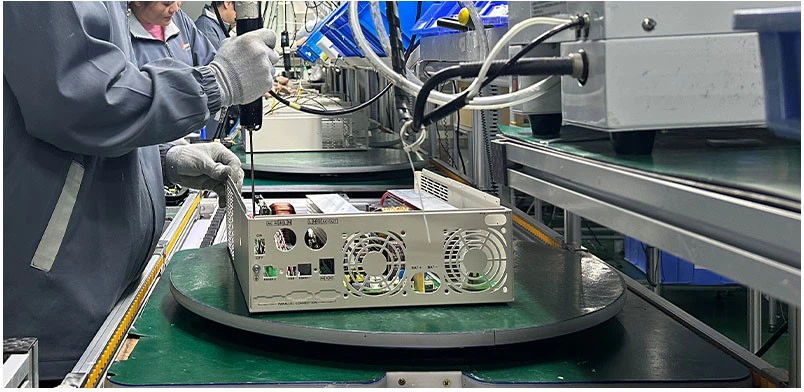
The factory's production process is designed to be modular. Sub-assemblies, like the power conversion module, control module, and cooling module, can be independently produced and tested. This modular approach not only simplifies maintenance and repair but also allows for rapid customization. Customers can choose different combinations of modules to meet their specific application requirements.

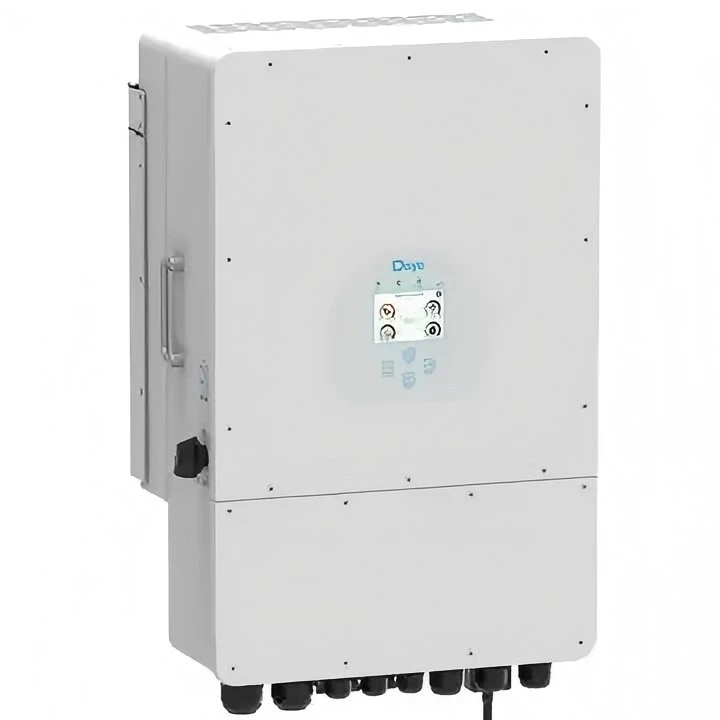
| Model |
SUN-10K
|
|
Battery
|
Lead-acid / Li-lon
|
|
Battery Voltage
|
40~60V
|
|
DC Input Power
|
13000W
|
|
MPPT
|
200-650V
|
|
PV Input Current
|
26+13
|
|
AC Output Power
|
10000W
|
|
Frequency and Voltage
|
50/60Hz; 230/400V
|
|
Efficiency
|
>97% |
|
Grid Regulation
|
CEI 0-21, VDE-AR-N 4105, NRS 097, IEC 62116, IEC 61727, G99, G98,
VDE 0126-1-1, RD 1699, C10-11
|
|
Communication
|
RS485; CAN
|
|
Protection
|
IP65
|