


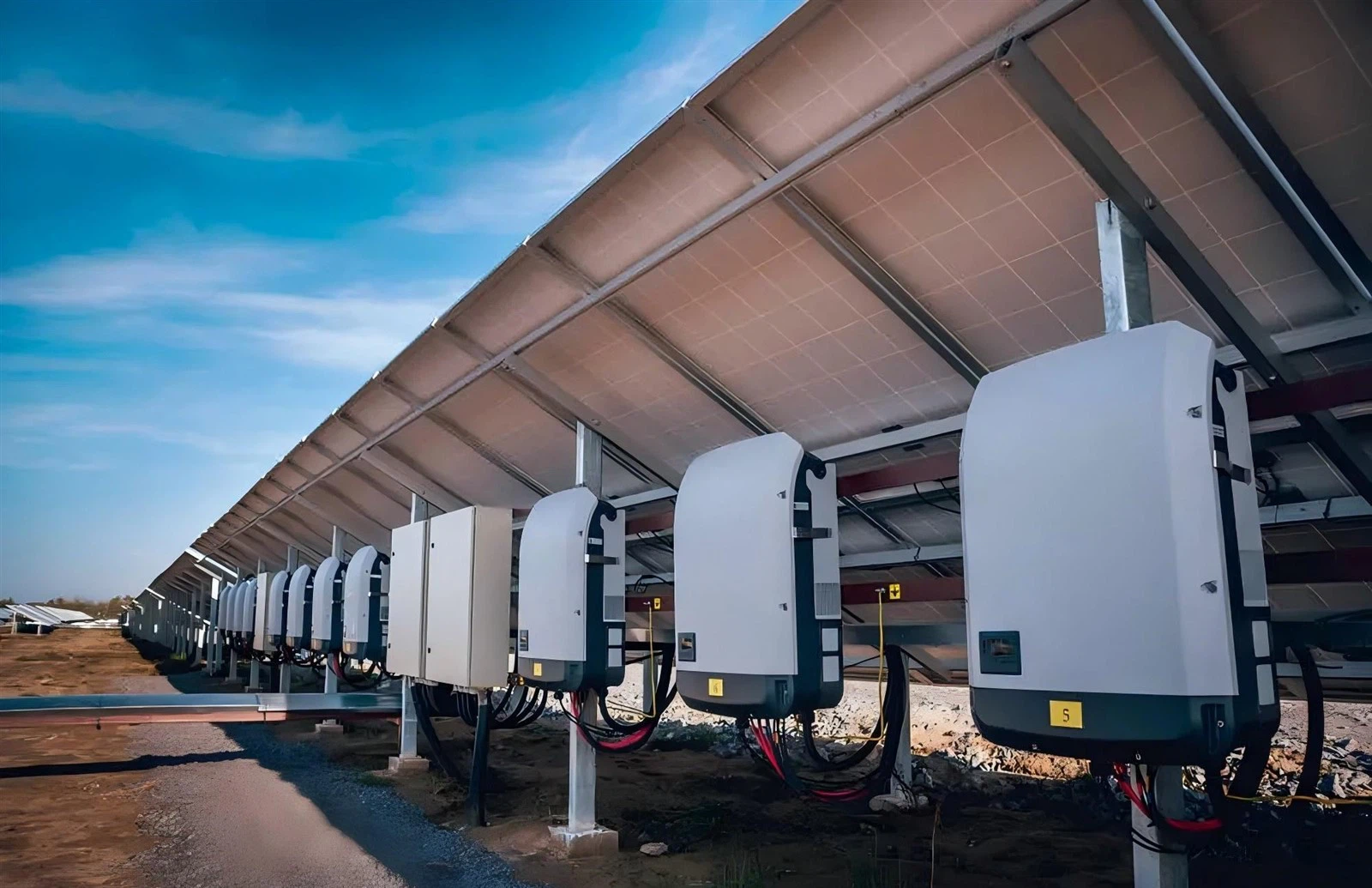
Photovoltaic grid connected inverters are essential key components in photovoltaic power generation systems, mainly used as dedicated inverter power sources in the field of solar photovoltaic power generation. Grid connected inverters convert the AC power generated by solar panels into AC power that can be directly connected to the power grid through power electronic conversion technology. Let's learn about the working principle of photovoltaic grid connected inverters and their role in photovoltaic power generation systems.

1 Working principle of photovoltaic grid connected inverter
When the public power grid is cut off, the grid side is equivalent to a short circuit state, and the inverter connected to the grid will automatically protect itself due to overload. When the microprocessor detects overload, in addition to blocking the SPWM signal, it will also disconnect the circuit breaker connected to the grid. At this time, if the solar cell array has energy output, the inverter will operate in a separate operating state. When running alone, the control is relatively simple, which is the negative feedback state of the AC voltage. The microprocessor detects the output voltage of the inverter and compares it with the reference voltage (usually 220V), and then controls the PWM output duty cycle to achieve inverter and voltage regulation operation.
Of course, the prerequisite for independent operation is that the solar cell array can provide sufficient power at that time. If the load is too large or the sunlight conditions are poor, the inverter cannot output sufficient power, and the terminal voltage of the solar cell array will drop, resulting in a decrease in the output AC voltage and entering a low voltage protection state. When the power grid resumes supply, it will automatically switch to the feedback state.
2 The role of photovoltaic grid connected inverters
Inverters not only have the function of direct to alternating current conversion, but also have the function of maximizing the performance of solar cells and system fault protection. In summary, there are automatic operation and shutdown functions, maximum power tracking control function, anti isolated operation function (for grid connected systems), automatic voltage adjustment function (for grid connected systems), DC detection function (for grid connected systems), and DC grounding detection function (for grid connected systems).
1. Automatic operation and shutdown function
After sunrise in the morning, the intensity of solar radiation gradually increases, and the output of the solar cell also increases accordingly. When the output power required for the inverter to work is reached, the inverter automatically starts running. After entering operation, the inverter constantly monitors the output of the solar cell modules. As long as the output power of the solar cell modules is greater than the output power required for the inverter to operate, the inverter will continue to run; Until sunset, the inverter can still operate even on rainy days. When the output of the solar cell module decreases and the output of the inverter approaches zero, the inverter enters a standby state.
2. Maximum power tracking control function
The output of solar cell modules varies with the intensity of solar radiation and the temperature of the solar cell module itself (chip temperature). In addition, due to the characteristic of voltage decreasing with increasing current in solar cell modules, there exists an optimal operating point that can achieve maximum power. The intensity of solar radiation is constantly changing, and obviously the optimal operating point is also changing. Compared to these changes, keeping the operating point of the solar cell module at the maximum power point, the system always obtains the maximum power output from the solar cell module, and this control is called maximum power tracking control. The biggest feature of inverters used in solar power generation systems is the inclusion of maximum power point tracking (MPPT) function.
3. Grid detection and grid connection function
Before grid connected power generation, the grid connected inverter needs to take power from the grid, detect the voltage, frequency, phase sequence and other parameters of the grid power transmission, and then adjust the parameters of its own power generation to be consistent with the grid electrical parameters. After that, grid connected power generation can be completed.
4. Zero (low) voltage ride through function
When power system accidents or disturbances cause a temporary voltage drop at the grid connection point of a photovoltaic power station, the photovoltaic power station can ensure continuous operation without disconnection within a certain range and time interval of voltage drop.
5. Detection and control of islanding effect
During normal power generation, the photovoltaic grid connected power generation system is connected to the power grid and delivers active power to the grid. However, when the grid loses power, the photovoltaic grid connected power generation system may continue to work and operate independently from local loads, a phenomenon known as islanding effect. When islanding occurs in inverters, it poses a great safety hazard to personal safety, grid operation, and the inverter itself. Therefore, the grid connection standard for inverters stipulates that photovoltaic grid connected inverters must have islanding detection and control functions.