


Against the backdrop of global energy transition, photovoltaic power plants, as the core carrier of solar power generation, are developing rapidly and becoming a key force in promoting the utilization of renewable energy. Understanding the technical principles, system composition, and future development trends of photovoltaic power plants is of great significance for grasping the direction of energy transformation and promoting industrial progress.
1 Technical principles of photovoltaic power plants
The power generation of photovoltaic power plants is based on the photovoltaic effect, which was discovered by French scientist Edmund Becquerel in 1839. When sunlight shines on solar cells made of semiconductor materials, photons interact with electrons in the semiconductor. The energy of photons is absorbed by electrons, allowing them to gain enough energy to break free from the constraints of atoms, thereby producing electron hole pairs. Under the action of the built-in electric field in the PN junction of a semiconductor, electrons and holes move in opposite directions, forming a current. Multiple solar cells are combined in series and parallel to form solar cell modules, further increasing voltage and current and achieving large-scale electrical energy output.
Early solar cells had low conversion efficiency and high costs, which limited their widespread application. But with the continuous progress of materials science and manufacturing technology, crystalline silicon solar cells represented by monocrystalline silicon and polycrystalline silicon have gradually become mainstream. Monocrystalline silicon cells, with their high-purity silicon materials, can achieve a conversion efficiency of over 25%; Although polycrystalline silicon cells are slightly inferior in purity, their conversion efficiency can still reach 20% -23% through optimized production processes. In recent years, emerging perovskite solar cells have developed rapidly, with laboratory conversion efficiency exceeding 25%, demonstrating enormous potential for development.

2 System composition of photovoltaic power station
(1) Power generation unit: collaborative work of core components
Solar cell modules are the core of photovoltaic power generation units. These components can be classified into different types based on different application scenarios and requirements. In large-scale ground photovoltaic power plants, polycrystalline silicon modules with high power and good stability are often used; In distributed photovoltaic projects such as commercial rooftops and residential photovoltaics, monocrystalline silicon modules are highly favored due to their small size and high efficiency. The components are installed in specific positions through brackets to receive sunlight at the optimal angle.
The combiner box plays a role in collecting and distributing current. The direct current generated by multiple solar cell modules is connected to a combiner box through cables. The combiner box aggregates multiple direct currents and monitors and protects each current. Afterwards, the DC power is transmitted to the inverter through the DC distribution cabinet.
(2) Control and conversion unit: ensuring power quality and grid connected operation
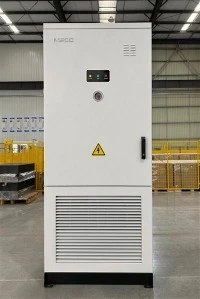
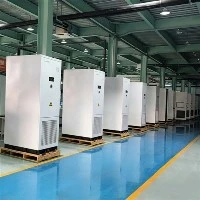
Inverter is one of the key equipment in photovoltaic power plants, which converts direct current into alternating current that meets the requirements of the power grid. The performance of inverters directly affects the power generation efficiency and power quality of photovoltaic power plants. Modern inverters adopt advanced digital control technology and have maximum power point tracking (MPPT) function, which can adjust the working state of solar cell modules in real time to always be in the maximum power output state. At the same time, the inverter can also filter and stabilize the output AC power to ensure that the power quality meets the grid access standards.
In addition to the inverter, the monitoring system is also an important component of the control and conversion unit. Through sensors and data acquisition devices, the monitoring system monitors the real-time operation status of various equipment in the photovoltaic power station, including component temperature, voltage, current, inverter working parameters, etc. These data are transmitted to the central monitoring room, and management personnel can remotely monitor and manage the power station through monitoring software, timely detect and handle equipment failures, and ensure the stable operation of the power station.
(3) Energy storage unit: solving the intermittent problem of photovoltaic power generation
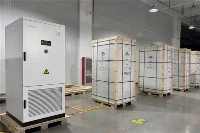
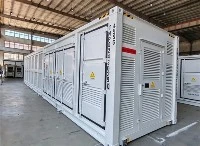
In order to solve the intermittent and fluctuating problems of photovoltaic power generation, the application of energy storage units in photovoltaic power plants is becoming increasingly widespread. Common energy storage technologies include lead-acid batteries, lithium-ion batteries, and flow batteries. Lithium ion batteries have become the mainstream choice for energy storage in photovoltaic power plants due to their high energy density, high charging and discharging efficiency, and long cycle life.
When there is sufficient sunlight during the day, the excess electricity generated by photovoltaic power plants is stored in energy storage batteries; At night or when there is insufficient light, the energy storage battery releases electrical energy to ensure a stable supply of electricity. Energy storage units can also participate in auxiliary services such as peak shaving and frequency regulation of the power grid, improving the stability and reliability of the power grid.

3 The development trend of photovoltaic power plants
(1) Technological innovation drives efficiency improvement and cost reduction
In the future, photovoltaic power station technology will develop towards higher efficiency and lower cost. In terms of battery technology, perovskite solar cells are expected to achieve large-scale industrial applications, further improving the power generation efficiency of photovoltaic power plants. Meanwhile, by improving manufacturing processes and optimizing component design, the production cost of photovoltaic modules can be reduced. In terms of inverter technology, the application of new topology structures and power devices will improve the conversion efficiency and reliability of inverters, and reduce operation and maintenance costs.
(2) Distributed and centralized collaborative development
Distributed photovoltaic power stations have developed rapidly in recent years due to their advantages of being close to users, flexible construction, and on-site consumption. In the future, distributed photovoltaics will develop in synergy with centralized photovoltaic power stations. In urban and commercial areas, distributed photovoltaics will fully utilize spaces such as building roofs and walls to achieve nearby energy production and consumption; In remote areas with abundant solar energy resources, centralized photovoltaic power stations will continue to leverage their scale advantages to provide large-scale clean energy for the power grid. At the same time, through smart grid technology, the interconnection between distributed photovoltaic and centralized photovoltaic power stations can be achieved, optimizing the allocation of energy resources.
(3) Integrated development with other industries
Photovoltaic power stations will be deeply integrated with industries such as agriculture, fisheries, and animal husbandry, forming innovative development models such as "agricultural photovoltaic complementarity", "fishery photovoltaic complementarity", and "animal husbandry photovoltaic complementarity". In the "agricultural photovoltaic complementary" mode, photovoltaic modules are installed above farmland, and the land below can continue to be used for agricultural planting, achieving efficient utilization of land resources; The "fishery photovoltaic complementary" model involves building photovoltaic power stations on the surface of fish ponds, underwater aquaculture, and increasing the comprehensive income per unit area of land. This industrial integration development model not only expands the application scenarios of photovoltaic power plants, but also promotes the green and sustainable development of related industries.