


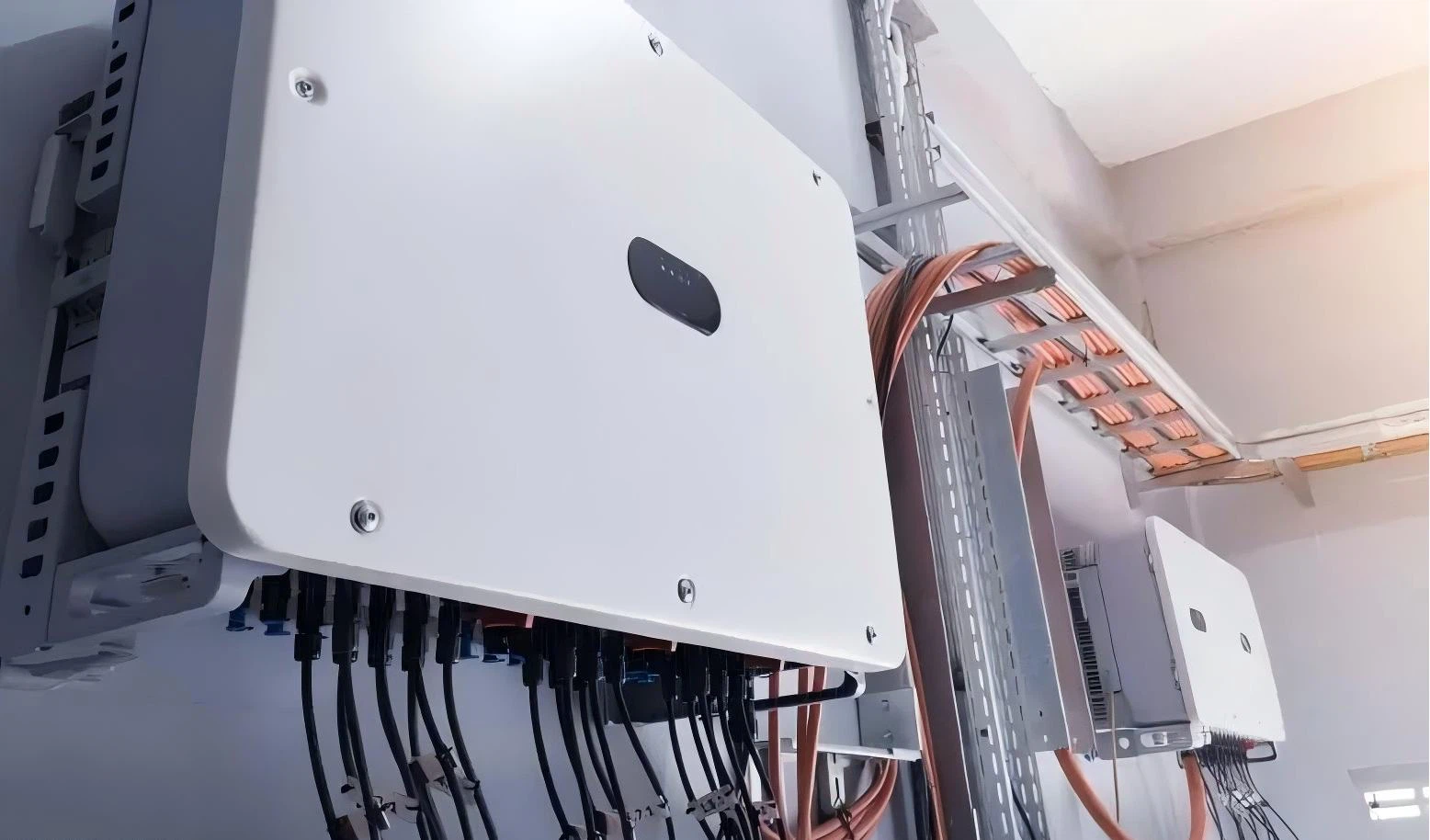
In photovoltaic power generation systems, inverters play a crucial role in converting the direct current generated by photovoltaic modules into alternating current to meet the electricity needs of households, businesses, or the power grid. However, inverters may encounter various faults during operation. The following is an in-depth analysis of the three common problems with inverters, aimed at providing practical technical support for photovoltaic operation and maintenance personnel.
1 Abnormal input voltage
1. Fault manifestation: The inverter cannot start normally or suddenly stops working during operation, displaying fault codes indicating high or low input voltage, which affects the normal power generation of the photovoltaic power generation system.
2. Possible reasons:
Photovoltaic module issues: The module may be obstructed by shadows, accumulate excessive dust on the surface, or have damaged internal cells, resulting in unstable or below normal output voltage. In addition, loose or poorly connected junction boxes of components can also affect voltage output.
Connection line fault: The DC cable between the component and the inverter may be damaged, short circuited, open circuited, or have poor contact, causing voltage transmission to be obstructed or abnormal drops to occur.
Grid voltage fluctuation: Sudden increase or decrease in grid voltage beyond the allowed input voltage range of the inverter can also cause this fault.
3. Solution:
Check photovoltaic modules: Regularly clean the dust and debris on the surface of the modules to ensure that there are no shadows or obstructions. Use professional photovoltaic testing equipment, such as IV curve tester, to check the output characteristics of the components. If there are damaged components, replace them in a timely manner. At the same time, tighten the connection terminals inside the component junction box to ensure reliable connection.
Check the connection line: Carefully inspect the appearance of the DC cable to see if there are any signs of damage or aging. For loose connection points, tighten them again; For short circuits or broken circuits, repair or replace cables in a timely manner.
Monitoring grid voltage: Install grid voltage monitoring devices to real-time understand changes in grid voltage. If frequent fluctuations or abnormalities in the power grid voltage are found, communicate with the local power grid department in a timely manner to seek solutions.
MECC Hybrid Inverter Supplier
Single Phase/Split Phase/Three Phase Inverter to meet different using environment, with IP65/IP66 Protection Level


2 Abnormal output voltage or frequency
1. Fault manifestation: The AC voltage output by the inverter is too high or too low, the frequency is unstable, and exceeds the normal allowable range, which may cause the connected electrical equipment to not work properly, even damage the equipment, and may also affect the stability of the power grid.
2. Possible reasons:
Internal control circuit failure of inverter: Electronic components in the control circuit, such as capacitors, resistors, transistors, etc., may experience aging, damage, virtual soldering, and other issues, affecting the precise control of output voltage and frequency by the inverter.
Load mutation or mismatch: When the load connected to the inverter suddenly changes significantly, such as a large number of loads starting or stopping at the same time, or the power factor of the load is too low or the harmonic content is too high, exceeding the regulation capacity of the inverter, it will lead to abnormal output voltage and frequency.
3. Solution:
Check the internal control circuit of the inverter: Open the inverter casing (under the guidance of a professional to ensure safety), use tools such as oscilloscopes and multimeters to detect key components in the control circuit. For the damaged components found, replace them according to the original model and specifications, and carefully inspect the solder joints on the circuit board to ensure no virtual soldering.
Optimize load configuration: Reasonably arrange the access and use of loads to avoid simultaneously starting or stopping a large number of high-power loads. For inductive loads with low power factor, installing reactive power compensation devices such as capacitor compensation cabinets can be considered to improve the power factor of the load; For nonlinear loads with high harmonic content, filters can be installed at the front end of the load to reduce the impact of harmonics on the inverter output.
3 Low insulation impedance or leakage current fault
1. Fault manifestation: The inverter displays an alarm message indicating low insulation impedance, or during electrical safety testing, leakage current is found in the inverter. This not only affects the normal operation of the inverter, but may also pose a threat to personal safety.
2. Possible reasons:
DC cable damage: During long-term use, DC cables may be subjected to external forces such as compression, wear, aging, and rodent bites, which can damage the insulation layer and reduce the insulation performance between the positive and negative DC poles or between the DC pole and the ground, leading to leakage current faults.
Poor grounding of components: Loose or corroded metal frame grounding connections of photovoltaic components, or excessive grounding resistance, can cause a potential difference between the components and the ground, resulting in leakage current. In addition, the component installation bracket is not reliably connected to the grounding system, which may also lead to poor grounding.
Installation environment is humid: The inverter is installed in a humid and water rich environment, where moisture can easily enter the interior of the inverter or adhere to the surface of DC cables and components, reducing the insulation performance of the insulation material, causing a decrease in insulation impedance and leakage current faults.
3. Solution:
Check the DC cable: Along the direction of the DC cable, carefully inspect the appearance of the cable to see if there are any signs of damage, scratches, aging, etc. For slightly damaged areas, insulation tape can be used to wrap and repair them; For severely damaged cables, new cables should be replaced in a timely manner. At the same time, regularly use an insulation resistance meter to measure the insulation resistance of DC cables to ensure that they meet the requirements.
Ensure good grounding of components: Check whether the grounding connection of the components is firm, and whether the grounding wire is broken, corroded, or not. Use a grounding resistance tester to measure the grounding resistance of components, which generally requires a grounding resistance of no more than 4 ohms. If the grounding resistance is too high, the number of grounding electrodes can be increased, the grounding electrode burial method can be improved, or the grounding material can be replaced to reduce the grounding resistance.
Improve installation environment: Install the inverter in a dry and well ventilated location, avoiding direct sunlight and rainwater immersion. For inverters installed in humid environments, moisture-proof measures can be taken, such as installing them in waterproof cabinets and placing desiccants inside the cabinets. Regularly clean the inverters and cables to keep the equipment dry.
4 Conclusion
In summary, in the actual operation and maintenance process, for the fault diagnosis and elimination of photovoltaic inverters, operation and maintenance personnel need to have solid electrical knowledge and rich practical experience, accurately judge faults, and take solutions.