


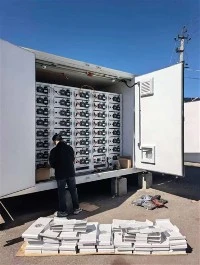
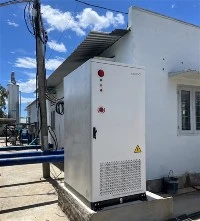
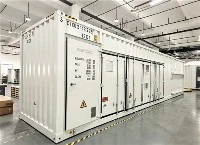
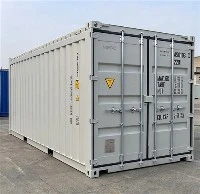
The energy storage battery cabinet industry, as an important component of the energy storage field, is entering a period of rapid development driven by the global energy transition. However, while the industry is expanding in scale, it also faces various challenges such as cost, technology, and market. Thoroughly analyzing the current situation and trends of the industry is of great significance for seizing development opportunities and promoting healthy and sustainable development of the industry.

1 Current situation of industrial development
(1) Rapid growth in market size
In recent years, with the increasing demand for renewable energy consumption and power system stability worldwide, the market size of energy storage battery cabinets has shown explosive growth. Driven by the "dual carbon" target, domestic industrial and commercial energy storage and grid side energy storage projects are accelerating their implementation, driving the continuous increase in demand for energy storage battery cabinets.
(2) The competitive landscape of enterprises is beginning to emerge
At present, the competition in the energy storage battery cabinet market is fierce, forming a diversified enterprise pattern. Leading companies in the battery industry, such as CATL and BYD, dominate the market with their advantages in battery technology and supply chain. They provide solutions for large-scale energy storage projects by developing high-performance battery products and integrated energy storage systems. Meanwhile, companies such as Sunac and Huawei focus on energy storage system integration and intelligent management technology, and have strong competitiveness in areas such as inverters and monitoring systems. In addition, some emerging enterprises focus on specific niche markets through differentiated competition strategies, such as small household energy storage battery cabinets, modular containerized energy storage, etc., injecting new vitality into the market.

2 Facing challenges
(1) Cost pressure constrains industrial development
In the cost of energy storage battery cabinets, battery costs account for as much as 60% -70%. In recent years, the prices of battery raw materials such as lithium, cobalt, and nickel have fluctuated dramatically. For example, the price of lithium carbonate has skyrocketed and plummeted between 2022 and 2023, bringing enormous cost pressure to enterprises. In addition, the research and development, production, installation, and operation costs of energy storage battery cabinets cannot be ignored. The higher initial investment results in insufficient economic viability for some projects, especially in the field of user side energy storage, where the investment payback period is longer and affects the speed of market promotion.
(2) Technical standards and safety regulations urgently need to be improved
Energy storage battery cabinets involve multiple fields such as electricity, batteries, and communication, and currently lack unified technical standards and safety regulations. There are differences in performance indicators, interface protocols, security protection, and other aspects among products from different enterprises, which increases the difficulty of system integration and security risks. At the same time, with the continuous expansion of energy storage projects, safety accidents such as battery thermal runaway and fires occur from time to time, which puts higher demands on the safety of energy storage battery cabinets and urgently requires the establishment of a sound safety testing and certification system.
(3) Insufficient innovation in business models
At present, the business model of energy storage battery cabinets is relatively single, mainly relying on income sources such as peak valley electricity price arbitrage and power auxiliary services. In some regions, the peak valley electricity price difference is small, and the auxiliary service market mechanism is not perfect, resulting in unstable project revenue. In addition, the integrated development model of energy storage, renewable energy, and smart grid is still in the exploratory stage. How to achieve diversified profits of energy storage battery cabinets through business model innovation is an important issue facing the industry.

3 Future prospects
(1) Technological innovation drives cost reduction and performance improvement
In the future, energy storage battery cabinets will continue to innovate in materials, structures, and control technologies. The industrial application of new battery materials such as solid-state batteries and sodium ion batteries is expected to further reduce costs, improve energy density, and enhance safety. In terms of structural design, modular, lightweight, and highly integrated battery cabinets will become mainstream, making them easy to transport, install, and maintain. At the same time, the deep integration of intelligent control technology with the Internet of Things, big data, and artificial intelligence will achieve precise management and optimized operation of energy storage battery cabinets, improving system efficiency and reliability.
(2) Policy support and market mechanism improvement promote industrial development
Governments around the world will continue to introduce policies to support the development of the energy storage industry, reducing project investment costs and stimulating market vitality through measures such as subsidies, tax incentives, and access policies. At the same time, the reform of the electricity market will be accelerated, improving the peak valley electricity pricing mechanism, establishing auxiliary service markets, exploring capacity pricing mechanisms, etc., to create more profit space for energy storage battery cabinets. In addition, with the gradual clarification of the trading rules for energy storage participating in the electricity market, the business model of energy storage battery cabinets will become more diversified, and the industrial development environment will be further optimized.
(3) Multi domain integration expands application scenarios
The energy storage battery cabinet will be deeply integrated with renewable energy, smart grid, electric vehicles and other fields, expanding its application scenarios. In the integrated wind solar energy storage project, the energy storage battery cabinet achieves stable output of renewable energy; In V2G mode, electric vehicles and energy storage battery cabinets work together to achieve bidirectional power flow; In the construction of virtual power plants, energy storage battery cabinets are an important component and participate in power system scheduling. These integrated developments will bring new growth points to the energy storage battery cabinet industry and promote its development towards scale and intelligence.