



During the global popularization of balcony photovoltaics, unique technological routes have been formed. China is dominated by efficient rigid components, emphasizing power density and rapid installation; Europe and America focus on the integration of flexible films and architecture, emphasizing aesthetic design and leasing models. This difference is not only due to differences in living environments, but also reflects the differentiation between energy policies and market demand, jointly promoting the diversified evolution of distributed photovoltaic technology.
1 Material selection: a game between efficiency priority and flexible adaptation
Efficient rigid components dominate the Chinese market. Thanks to the maturity of crystalline silicon technology, 182mm and 210mm large-sized PERC cell modules have become the preferred choice for balcony photovoltaics, with a conversion efficiency of 23% -25% and a power generation per square meter 15% higher than small-sized modules. The "balcony specific component" launched by a certain brand adopts a half piece design, which improves the anti shadow ability by 30%. Even if some areas are blocked by balcony guardrails, it can still maintain a power generation efficiency of over 80%. This efficient route highly matches the demand of Chinese households for "maximizing power generation". According to data from an e-commerce platform, rigid components account for 90% of the top 10 balcony photovoltaic products sold in 2024.
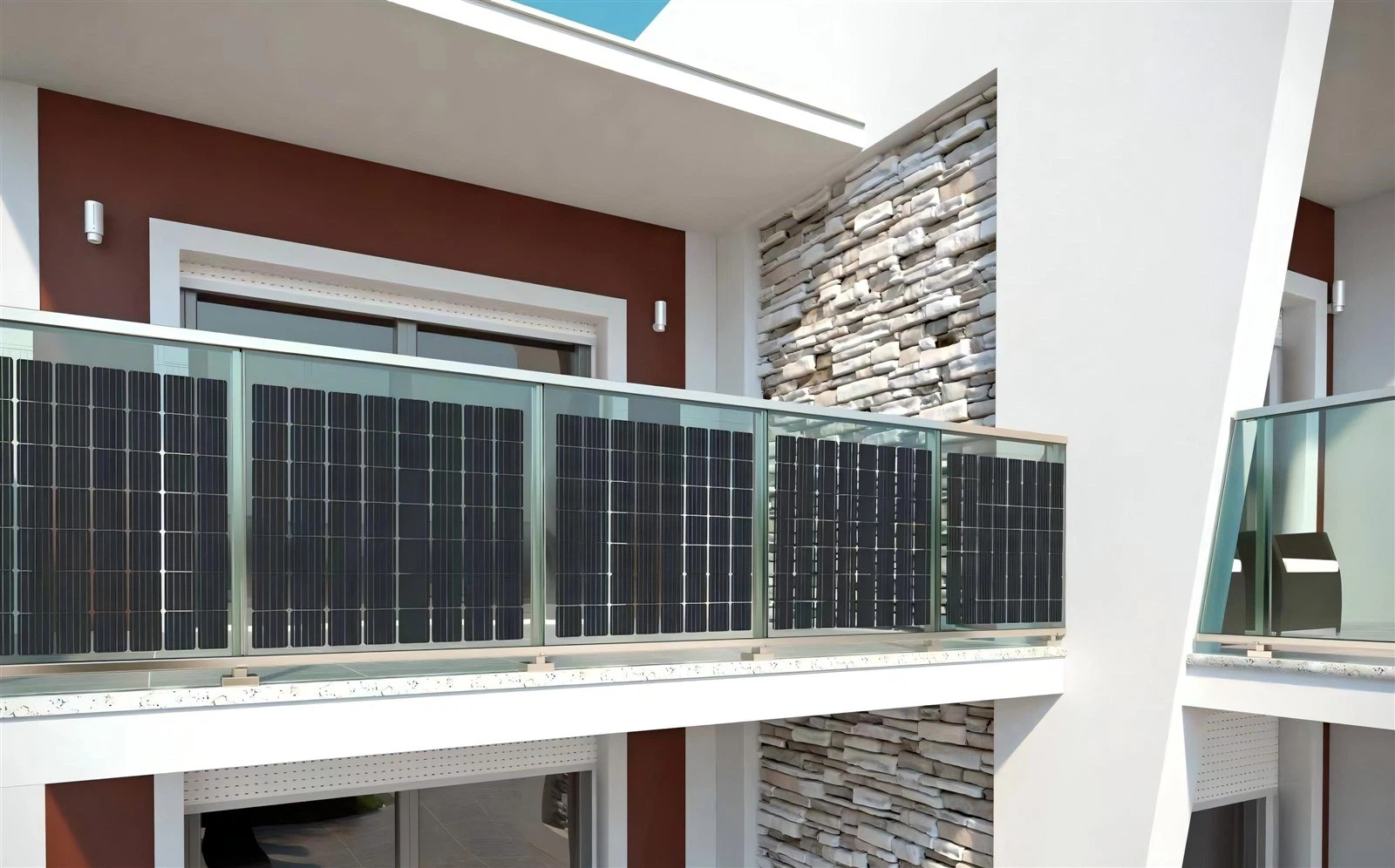
The European and American markets prefer flexible film technology. The balconies of apartments in countries such as Germany and the Netherlands are mostly glass enclosed structures. Flexible cadmium telluride film components (with a thickness of only 1mm) can be directly attached to the glass, with a light transmittance of 50%, without affecting indoor lighting. Its weight is only 1.5kg/m2, and it can be installed without a bracket, perfectly adapting to Europe's strict building appearance standards. The "photovoltaic louvers" developed by a certain company in the United States combine thin film modules with louvers, and the rotating blades can adjust the power generation efficiency and shading angle. The popularity rate in apartment buildings in California has reached 20%. The weak light response of flexible components is better, and in foggy weather in Northern Europe, the power generation is 10% -15% higher than that of crystalline silicon components.
2 System Design: Differences between Centralized Grid Connection and Micro Reverse Distributed Mode
China's centralized grid connection scheme emphasizes cost control. Balcony photovoltaics often adopt a design of "multi module series+centralized inverter", where 3-5 modules are connected in series and connected to a 220V power grid, resulting in a 20% lower system cost compared to distributed solutions. The "plug and play" package launched by a household photovoltaic enterprise includes components, inverters, and smart sockets. Users can install them without the need for electricians, and the grid connection application can be completed through a mobile app within 3 days. This design is suitable for the rapidly growing household market in China. In 2024, centralized solutions will account for 75% of the newly installed capacity of household balcony photovoltaics.
In Europe and America, decentralized grid connection of micro inverters is the mainstream. Each component is equipped with an independent micro inverter (such as Enphase's IQ7), which can optimize the maximum power point separately. The actual test of a German apartment shows that this scheme generates 8% more electricity than centralized inverters. Micro inverter has islanding protection function, which automatically cuts off the output when the power grid is cut off, complying with strict safety standards in Europe. More importantly, Microreverse supports a "leasing model" - users rent equipment with zero down payment and pay fees based on electricity generation (about 0.1 euros/kWh), which is extremely popular in high rent European cities such as Paris and London, with 40% of leasing users.

3 Scene adaptation: Regional characteristics of space utilization and policy response
China's "photovoltaic+storage" design caters to the needs of small-sized apartments. In urban residential buildings with limited balcony space, photovoltaic brackets are designed in a storable form: a certain brand's "folding bracket" can be retracted when not generating electricity, releasing 1.5 square meters of balcony space; The back of the photovoltaic panel is equipped with hooks, which can be used to hang clothes racks or storage bags. This multifunctional design has increased the penetration rate of balcony photovoltaics in small-sized residential units in first tier cities such as Shanghai and Shenzhen to 15%. At the same time, in response to the shadow problem in high-rise residential buildings, the company has developed a "diagonal bracket" that can adjust the component angle to 30 ° to avoid obstruction from adjacent buildings.
The "photovoltaic+community" model in Europe and America responds to energy policies. The "Citizen Energy Community" in Germany allows multiple balcony photovoltaic users to form a consortium, with surplus electricity sold to the grid and profits distributed proportionally. A community in Berlin has increased residents' annual income by 300 euros through this model. The Netherlands has implemented the "Photovoltaic Balcony Subsidy Program", providing a 30% cost subsidy to users who install BIPV (Building Integrated Photovoltaics), promoting the integrated design of photovoltaic panels with balcony railings and sunshades. In newly built apartments in Amsterdam, BIPV balconies account for 60%.
The technological difference between Chinese and foreign balcony photovoltaics is essentially a precise response to localized needs. With the integration of global supply chains, these technologies are gradually crossing and penetrating - Chinese companies are beginning to launch flexible components to adapt to overseas markets, and European and American brands are also developing cost-effective centralized solutions. This diverse and coexisting technological ecosystem will promote balcony photovoltaics from a "niche choice" to an important force in the global urban energy transformation.