


The demand for lithium battery cells varies greatly in different application scenarios - power batteries pursue high energy density and fast charging capability, energy storage cells focus on long cycle and low cost, while consumer electronics cells emphasize small size and safety. Global enterprises have developed targeted battery cell solutions through a differentiated design strategy of "scenario customization", and this precise matching ability has become the key to opening up segmented markets.
1 Power battery cells: a dual breakthrough of high energy and fast charging
China's' Long Range Battery Cell 'Solution. To meet the demand for a 1000 kilometer range of electric vehicles, a company has developed a 5600mAh cylindrical battery cell (with a diameter of 21mm and a length of 70mm) that uses NCM811 positive electrode and silicon carbon negative electrode, with an energy density of 300Wh/kg. Through the "pre lithiation" technology (compensating for the first cycle loss), the first charge and discharge efficiency reaches 95%, and the capacity retention rate is 85% after 1000 cycles. Its "4C fast charging" design (charging up to 80% in 15 minutes) is achieved through thickening the negative electrode coating (increasing lithium insertion channels) and high conductivity electrolyte (ion conductivity 15mS/cm), and has been applied to a high-end electric vehicle.
The design of "high safety power batteries" in Europe. In response to collision safety requirements, a square battery cell adopts a "hard shell+explosion-proof valve" structure: the shell thickness is 1.2mm (tensile strength 300MPa), and the top is designed with dual explosion-proof valves (opening pressure 0.3MPa), which can be directed to release pressure in case of thermal runaway. The battery cell adopts a dual protection of "isolation film+flame retardant coating" inside, and there was no fire or explosion during needle puncture testing. Although the energy density of this battery cell is only 200Wh/kg, it has passed UL 2580 safety certification and is suitable for new energy commercial vehicle scenarios.

2 Energy Storage Cells: Balancing Long Cycle and Low Cost
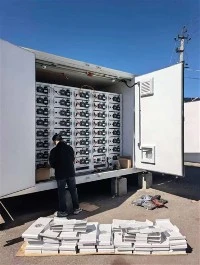
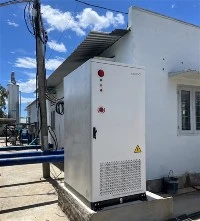
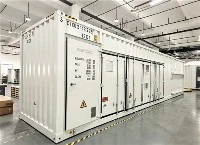
The technology of "long-life energy storage cells" in the United States. For energy storage in the power grid (requiring a 20-year lifespan), a certain enterprise's LFP battery cells adopt a "thick electrode design" (positive electrode thickness of 150 μ m, traditional is 100 μ m), reducing material consumption per unit capacity and lowering costs by 15%. Through the optimization of "shallow charging and shallow discharging" (SOC 20% -80%), the cycle life has exceeded 15000 times, and the capacity retention rate is 80%. Calculated based on one cycle per day, it can operate stably for 40 years. Its "wide temperature design" (-20 ℃~60 ℃) eliminates the need for constant temperature devices in the energy storage system, further reducing costs.
India's' low-cost energy storage battery 'solution. To meet the low budget requirements of off grid energy storage, a certain manufacturer adopts a "recycling of positive electrode materials+simplified process": the positive electrode materials (remaining capacity of 80%) of retired power batteries are regenerated and reused, reducing costs by 40%; Excluding the coating process, the diaphragm is directly made of PP substrate (temperature resistant to 130 ℃). Although the battery cell has a cycle life of only 3000 times, its cost is only 0.1 USD/Wh, which is 50% lower than the new product. Its popularity rate in off grid photovoltaic systems in rural India has reached 60%.

3 Consumer electronics battery cells: the ultimate in miniaturization and safety
South Korea's innovation in ultra-thin flexible battery cells. For wearable devices, develop a flexible battery cell with a thickness of 0.5mm, using soft packaging and lamination technology, with a bending radius of up to 5mm (no performance degradation after 1000 bends). Its' high voltage design '(3.85V) achieves an energy density of 700Wh/L, which is 4% higher than traditional 3.7V cells. Through the dual safety mechanism of "overcharge protection chip+fused pole ear", it can automatically power off during 5V overcharge testing, avoiding the risk of explosion.
Japan's "micro cylindrical battery cell" scheme. In order to adapt to TWS earphones, a miniature cylindrical electric core with a diameter of 4mm and a length of 10mm was developed, with a capacity of 50mAh and a weight of only 0.5g. With "nano electrode" (5 μ m thick) and "solid electrolyte" (gel polymer), the volume energy density reached 600Wh/L, and there was no risk of leakage. Its "pulse discharge" capability (10C discharge for 5 seconds) meets the instantaneous power consumption requirements of headphone noise reduction function, with a cycle life of 500 times, which is twice that of traditional button batteries.
The customization of lithium battery cells is essentially a "demand-oriented" technological differentiation. In the future, with the scenario based implementation of new technologies such as solid-state batteries and sodium ion batteries, the differentiated design of battery cells will become more precise, shifting from "one battery cell adapted to multiple scenarios" to "one scenario, one exclusive battery cell", providing tailored solutions for the energy needs of various industries.