


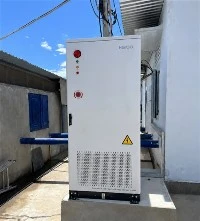
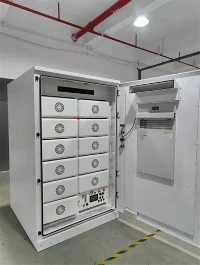
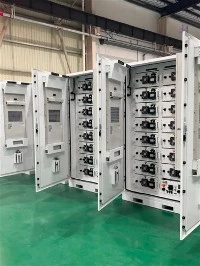
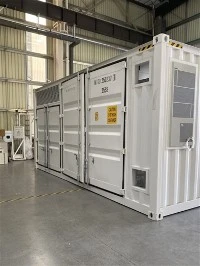
In high-density energy storage scenarios, the heat dissipation efficiency of rack mounted lithium batteries directly determines their safety and lifespan. When the power density of a single cabinet jumps from 5kW to 20kW, traditional passive heat dissipation is no longer sustainable. The industry is upgrading liquid cooling technology, intelligent temperature control algorithms, and thermal simulation design to build a "prevention oriented, precise control" heat dissipation system, so that the battery can maintain an ideal working range of 25-35 ℃ throughout its entire life cycle, providing stable energy support for key scenarios such as data centers and communication base stations.
1 Liquid cooling technology iteration: efficiency leap from cold plate to immersion
Cold plate liquid cooling is currently the mainstream solution, and its core lies in "precise contact" with the heat source. Inside the 19 inch rack, copper microchannel cold plates are tightly attached to the side of the battery module, with a channel diameter of only 3mm. The coolant (50% water+50% ethylene glycol) carries away heat at a flow rate of 0.8L/min. A certain brand of 20kW rack mounted lithium battery adopts this design, with thermal resistance reduced to 0.1 ℃/W, which is 60% lower than traditional air-cooled systems. The temperature difference of the battery is controlled within ± 3 ℃ during full load operation. In order to avoid the risk of liquid leakage, the cold plate and the module are sealed with thermal conductive gel, the protection level reaches IP65, and no leakage is found after 1000 hours of vibration test.
Immersion liquid cooling is the ultimate solution for high-power scenarios. Immerse the battery module completely in non-conductive fluorinated liquid, which absorbs heat and cools it down through an external heat exchanger. The heat transfer efficiency is twice that of a cold plate. In a 40kW energy storage cabinet of a certain supercomputer center, the boiling point of fluorine liquid reaches 60 ℃, which can take away some heat through natural evaporation. With the help of a pump circulation system, the cabinet's energy consumption (PUE) is reduced to 1.05, which is 30% more energy-efficient than that of a cold plate. The difficulty of this technology lies in the sealing design. The cabinet adopts a stainless steel shell welded by laser, and the pressure test shows that it can withstand an internal pressure of 0.5MPa, ensuring that the liquid does not leak.

2 Intelligent temperature control algorithm: temperature balance technique with predictive regulation
AI based predictive temperature control system shifts heat dissipation from "passive response" to "active prevention". The system establishes a thermal behavior prediction model by analyzing over 100 parameters such as battery charging and discharging rate, ambient temperature, and historical thermal runaway data, and adjusts the heat dissipation power 15 minutes in advance. The actual measurement of a certain communication base station shows that this algorithm can reduce the ineffective energy consumption of the cooling system by 40%. When the upcoming charging peak is predicted, the coolant temperature is lowered by 2 ℃ in advance to avoid a sudden rise in battery temperature.
The dynamic traffic allocation technology realizes the principle of 'sending heat wherever it is'. Each branch of the liquid cooling system is equipped with an electric regulating valve, which automatically adjusts the flow rate based on the real-time temperature (accuracy ± 0.5 ℃) of each module. When the temperature difference exceeds 3 ℃, deviation correction is initiated. In an energy storage cluster of a data center, this dynamic adjustment reduces the temperature difference between the hottest and coldest points from 8 ℃ to 2 ℃, and extends the battery cycle life by 15%.

3 Thermal simulation and structural optimization: reducing heat dissipation pressure from the source
In the design phase, thermal simulation technology has become a powerful tool for "virtual trial and error". By using CFD (Computational Fluid Dynamics) software to simulate the temperature field distribution under different cell arrangements and air duct structures, it is possible to detect heat dissipation blind spots in advance. When a certain manufacturer was developing a 3U battery module, it was found through simulation that the traditional "tight arrangement" would cause a temperature increase of 5 ℃ in the central area. Therefore, it was adjusted to a "staggered arrangement" and added flow channels to control the internal temperature difference of the module within 4 ℃, eliminating the need for additional heat dissipation components.
The innovation of structural materials also contributes to heat dissipation. The rack frame is made of 6061 aluminum alloy, with a thermal conductivity of 160W/(m · K), which is four times that of ordinary steel. It can quickly transfer the heat generated by the module to the cabinet shell; The shell of the battery module is made of thermally conductive plastic (with added graphene), which not only provides insulation but also accelerates heat dissipation, resulting in a 50% increase in heat dissipation efficiency compared to traditional ABS plastic. A certain 2U module uses this material combination to reduce the temperature by 3 ℃ under the same operating conditions, without the need for additional heat dissipation area.
The heat dissipation revolution of rack mounted lithium batteries is essentially a collaboration of "hardware innovation+software intelligence". When the cooling system can be as accurate and efficient as the body temperature regulation mechanism, the energy density and safety of lithium batteries will no longer be a contradiction, which not only clears the technical barriers for high-density energy storage, but also enables rack mounted lithium batteries to support flexible scheduling of distributed energy in a more reliable manner in the energy Internet.