



"Scalable" is the most abused word in storage procurement. Suppliers use it to mean "we sell more than one size," which is not scalability - it is a product catalogue. Buyers use it to mean "we might expand later," which is not a requirement - it is a hope.
Real scalability has three measurable dimensions, and they matter far more than the maximum capacity on a datasheet:
Granularity - how finely you can match capacity to need, and how much capital sits idle when you guess wrong. Marginal cost - what the second, third and fourth increment actually cost per kilowatt-hour once civil works, electrical infrastructure and commissioning are amortised. And time to add - how long it takes from decision to energised capacity, including delivery, installation, commissioning and any incremental approval.
Judged on those three, the choice between modular battery storage and a containerized system is not a question of which is bigger. It is a question of which growth curve you are on. This article sets out the comparison, and distinguishes it from our earlier piece on all-in-one cabinets versus modular systems, which is about physical form and site fit rather than expansion economics.
The Two Architectures, Precisely
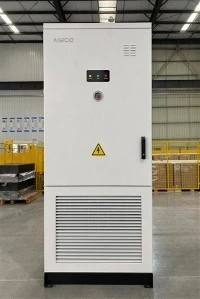
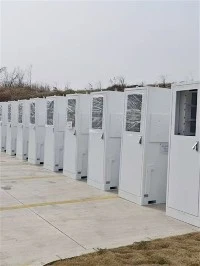
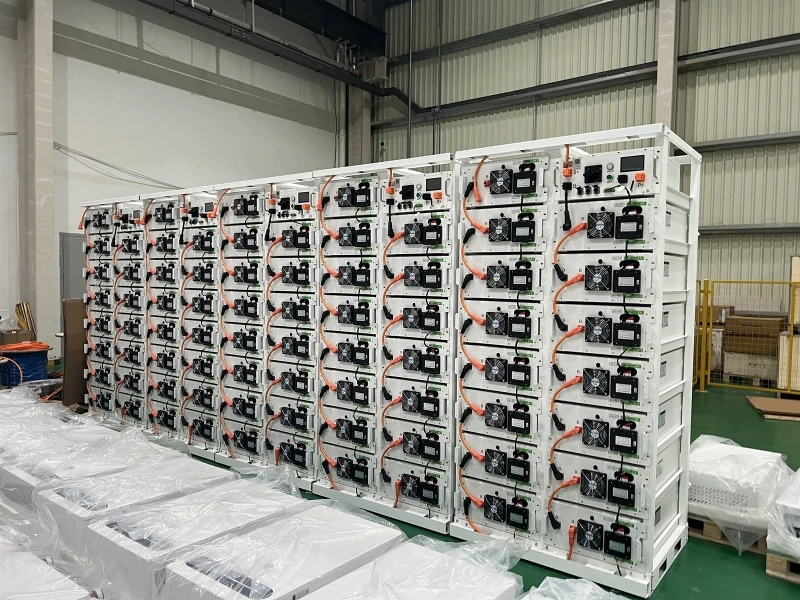
Modular systems scale in rack or cabinet increments - typically 100 to 500 kWh per unit, each with its own BMS and often its own PCS, paralleled at the low-voltage bus or the AC bus. The unit is the module, and capacity grows by adding modules.
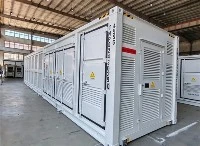
Containerized systems package the same equipment into a 20- or 40-foot enclosure, typically 1 to 5 MWh per container, with a shared thermal management system, shared fire detection and often a central PCS or a small number of large converters. The unit is the container, and capacity grows by adding containers.
The important structural difference is not the size but the ratio of shared infrastructure to capacity. A container amortises cooling, fire suppression, enclosure, controls and civil works over several megawatt-hours. A modular cabinet carries its own share of each, per unit. That single difference generates most of the trade-offs that follow.
Granularity: The Cost of Being Wrong
Forecasts are wrong. The question is what a wrong forecast costs.
A modular system lets you buy 300 kWh today when the study says 280 and the optimism says 400. If the load grows as forecast, you add a cabinet. If it does not, you have bought 300 kWh and no more. Stranded capacity is limited to the smallest increment.
A containerized system forces a step change. If the smallest sensible unit is 1 MWh and your year-one requirement is 400 kWh, you either buy a container and run it at 40 percent utilisation, or buy a smaller cabinet and accept a mixed fleet later. Neither is fatal, but the first ties up capital and the second creates the control-integration problem discussed below.
For sites with genuine uncertainty - a new production line not yet commissioned, a fleet transitioning to electric on a multi-year schedule, a building whose tenant mix may change - granularity is worth paying for. It is effectively an option premium: a modest cost per kWh in exchange for the right to stop expanding.
For a site with a firm, contracted load - a data centre with a known IT load, a utility-scale-adjacent project, a factory with signed production capacity - the uncertainty premium buys nothing, and the container's lower cost per kWh wins.
Marginal Cost: Where the Curve Bends
The intuitive expectation is that bigger is cheaper per kilowatt-hour, and for the equipment itself that is generally true. The container's shared cooling, enclosure and controls do cost less per kWh than twelve cabinets each carrying their own.
But total installed cost per kWh does not follow the equipment curve, and this is where comparisons go wrong.
The first increment on any site carries costs that do not repeat: the transformer, the switchgear, the protection study, the interconnection application, the civil pad or the plant room, the fire assessment, the commissioning and the utility witness test. Those costs are largely fixed and are amortised across whatever capacity you install first.
The second increment carries a smaller fixed component - the switchgear may have spare ways, the pad may have space, the protection study may already cover it. The third increment often carries almost none, provided the original design anticipated it.
This produces a marginal cost curve that falls steeply from the first to the second increment and then flattens. Which means the comparison is not "modular versus containerized" in the abstract, but "how many increments will this site actually take, and does the first one carry fixed costs the later ones avoid?"
A site that will end at 400 kWh should compare a single container against four cabinets at full installed cost. A site that will end at 4 MWh should compare four containers against forty cabinets, and at that scale the container's advantage in shared infrastructure becomes large - but so does the modular advantage in not having to buy 4 MWh on day one.

Time to Add: The Most Underrated Dimension
The third dimension is speed, and it frequently decides projects in markets where the constraint is schedule rather than capital.
Adding a modular cabinet is a comparatively light operation: delivery, set on a pad or into a room, DC and AC connection, commissioning, integration with the existing controller. Weeks, not quarters, provided the original design left space, switchgear ways and control headroom.
Adding a container is a heavier operation: heavy haulage, crane, larger pad, more extensive interconnection, a commissioning campaign, and often a fresh review by the authority having jurisdiction because the installation's total capacity has crossed a threshold in the fire code.
That last point is the sleeper. Fire codes and interconnection rules often apply thresholds - capacity per fire area, capacity per point of interconnection, aggregate limits triggering additional studies. A modular expansion that stays below a threshold avoids re-approval entirely. A container expansion that crosses one may reopen permitting, and the schedule consequence can be a year.
The design implication is to know your thresholds before you size the first increment, and to leave headroom in the electrical design even if you do not leave headroom in the battery.
Control Architecture and the Mixed-Fleet Problem
Modular systems scale electrically but can strain computationally. Every cabinet brings a controller, and the site's EMS must coordinate them. Most vendors support a defined maximum number of parallel units - commonly eight to sixteen, sometimes more - and beyond that limit you need a hierarchical control layer or a second plant controller. Confirm the limit before committing to a growth path that exceeds it.
Containerized systems centralise control: one plant controller, one point of interface, fewer devices to coordinate. That simplicity is real, and it is worth something in operations.
The mixed-fleet problem arises when a site starts modular and later adds a container, or changes vendor generations mid-expansion. Two control systems, two firmware lineages, two warranty counterparties and a dispatch layer that must arbitrate between them. It is solvable - Modbus and IEEE 2030.5 exist for this reason - but it is work, and it belongs in the expansion plan rather than in the post-purchase surprise.
A practical rule: if expansion is likely, choose a family that spans the range you need, even if the first unit is small. Paying slightly more per kWh for a coherent family is cheaper than integrating strangers later.
Availability, Redundancy and the Operations View
Scalability is also about keeping the system running while it grows, and here the architectures differ in a way that favours modular.
Modular systems degrade gracefully. One cabinet failing removes its share of capacity; the rest continue. With N+1 sizing, the site may not notice. Maintenance can be scheduled one unit at a time, during operating hours, without shutting the plant down.
Containerized systems are more monolithic. A fault in the shared thermal system or the central PCS can take the whole container offline. Some designs mitigate this with multiple PCS per container and partitioned cooling, but the general tendency holds: larger units mean larger outage domains.
Counterbalancing that, containers are simpler to operate. One system, one set of alarms, one maintenance regime. A fleet of twelve cabinets means twelve sets of filters, twelve controllers, twelve firmware update targets - and twelve opportunities for a minor fault to generate a truck roll. For an owner with a thin O&M team and a distant service provider, that operational complexity has a real cost, and it is often underestimated at procurement.
Logistics and Site Reality
Physical delivery constrains the theory.
Modular cabinets move on standard flatbeds, can be forklifted or pallet-trucked, and fit through doors and into plant rooms. Containerized units need heavy haulage, crane, and a route survey - and on constrained urban or remote sites, the logistics can dominate the schedule.
Conversely, at large capacity, modular means many deliveries, many lifts and more site traffic. A 4 MWh project as eight containers is eight heavy lifts; as forty cabinets it is forty smaller ones. Neither is free; the question is which disruption the site can absorb.
The Honest Answer
Containerized systems are more scalable within a single large step. Modular systems are more scalable across
many uncertain small steps.
If the growth path is lumpy and committed - one big expansion, funded and dated - a container wins on capital cost per kWh and on operational simplicity. If the growth path is continuous and uncertain - capacity added as load materialises, in increments whose timing nobody can forecast - modular wins on capital efficiency and on the cost of being wrong.
Many mature projects end up hybrid: a containerized base sized to the firm load, with modular cabinets added later to cover peak growth or a specific new load. That works, provided the control architecture is designed for it from day one rather than retrofitted.
The question to ask in the procurement meeting is therefore not "which is more scalable" but "what does our capacity look like in years one, three and five, and what is the cost of each increment under each option?" Answer that with numbers, and the architecture chooses itself. Ask the first question, and you will get whichever answer the sales team finds easier to defend.

125KW 241kWh Battery Energy Storage System Cabinet
The BESS 125KW 241kWh Lithium Battery Energy Storage Cabinet is a high-power, large-capacity integrated energy storage solution engineered for medium-to-large commercial, industrial, and utility-scale applications. It integrates a 125kW high-performance bidirectional inverter, a 241kWh lithium iron phosphate (LiFePO4) battery bank, and a full-featured intelligent energy management system (EMS) into a modular cabinet design. This system enables efficient renewable energy storage, peak shaving, load shifting, grid frequency regulation, and emergency backup power supply. Ideal for large factories, shopping malls, industrial parks, utility-scale solar/wind farms, and microgrids, it enhances energy independence, reduces high grid demand charges, and supports the stable integration of high-penetration renewable energy into the grid.