


Main keyword: mining battery storage
At a remote mine, diesel is more than a fuel - it is a logistical lifeline. Every litre must be trucked in, often over hundreds of kilometres of unpaved road, and every litre burned carries a cost far above the pump price. Generators run around the clock to power crushers, conveyors, ventilation, and camps, and the site's electricity budget is usually one of its largest operating expenses. This is why mining battery storage - hybridising existing diesel generation with batteries and controls - has moved from an environmental pilot to a hard-nosed cost-reduction strategy. In the most remote locations, the business case is less about decarbonisation than about burning less fuel that is expensive and difficult to deliver.
This article examines why diesel hybrid systems work so well at mines, the architectures that deliver the savings, how the economics are calculated, and what the harsh operating environment demands of the equipment.

Why Mines Are the Ideal Hybrid Candidate
Remote mining sites share a set of characteristics that make storage unusually valuable.
Fuel delivered at a premium. The true cost of diesel at a mine includes transport, storage, security, and the risk of supply interruption - a landslide, a flooded road, or a strike can cut the fuel line. Every litre avoided saves not just the fuel price but a slice of that entire logistics chain.
Generators running inefficiently. Mine loads fluctuate constantly - crushers start and stop, hoists cycle, drills surge. To cover peaks, sites run more generators than average demand requires, and those generators spend much of their time at partial load, where fuel efficiency is poorest. A generator at 30–40% load burns disproportionately more fuel per kWh than one at 70–80%. This is the central inefficiency storage exploits.
Harsh duty, high maintenance. Generators at mines run thousands of hours per year in dust and heat, driving up overhaul costs and unplanned downtime. Every hour a battery can offload from the genset is an hour of engine wear avoided.
Carbon and social pressure. Mining faces scrutiny over emissions, and remote sites often sit near communities sensitive to air quality and noise. Diesel reduction is both a cost and a licence-to-operate issue.
The Hybrid Architecture: How the Savings Are Made
A mine hybrid system is built on a simple principle: let the generators run at their efficient point, and let the battery handle everything variable.
Battery as the dynamic buffer. The battery supplies the fast swings - crusher starts, hoist peaks, sudden load steps - so generators can be dispatched at steady, efficient output. Instead of spinning up a sixth generator for a two-minute peak, the site draws from storage. The genset fleet shrinks to the average-plus-reserve requirement, not the instantaneous maximum.
Peak shaving on the generator. In diesel terms, "peak shaving" means flattening the load each generator sees. Batteries absorb transients and fill gaps, so engines operate in a narrow efficient band. The fuel saving from this alone is frequently substantial - commonly cited project results land in the 10–30% range depending on load volatility and prior generator scheduling.
Generator auto-start and optimal loading. A hybrid controller decides how many generators to run and at what output, starting and stopping units based on state of charge and load. Combined with storage, this "gen-set management" avoids the classic waste of idling spare capacity.
Renewables integration. Many remote mines have excellent solar or wind resources but limited ability to absorb them on a diesel-dominated system. Storage makes high renewable penetration feasible: solar charges the battery by day, the battery supports load into the evening, and generators back up the residual. Hybrid renewable-plus-storage-plus-diesel systems are now routinely displacing a significant share of mining diesel consumption, with the most ambitious projects targeting near-continuous renewables supplemented by storage and a small generator reserve.
This layered coordination is what a site microgrid controller does - and the same dispatch discipline described in our guide to C&I energy management systems applies here, with the added constraint that there is no utility to fall back on. Like an islanded port or a remote industrial campus, the mine is its own grid.
Running the Numbers: Fuel Savings and Payback
The evaluation for mining battery storage is unusually concrete because the savings are physical - litres of fuel not burned.
Build the baseline. Meter generator fuel consumption and electrical output across representative operating weeks, noting how many machines run and at what loading. This establishes the litres-per-kWh baseline that the hybrid system must beat.
Model the hybrid dispatch. Simulate how storage would flatten the load curve: how many generators could be off-loaded, how much renewable energy could be absorbed, and how much fuel would be saved at each point. The largest gains typically come from (a) avoiding inefficient low-load operation and (b) cutting peak generator count.
Price the fuel at delivered cost. Use the fully landed cost of diesel at the site - purchase, freight, handling, and inventory carrying - not the regional wholesale price. This is where remote projects reveal their strongest economics; a litre saved at a remote mine can be worth double its city price.
Add non-fuel benefits. Reduced engine hours extend overhaul intervals, lower maintenance spend, and cut the frequency of fuel deliveries. Where carbon pricing or emissions reporting applies, avoided CO₂ adds further value.
Size for the operating pattern. Unlike a grid-connected site, a mine cannot export or import freely - the battery must be sized against the site's generation and load profile, with enough reserve to ride through a generator trip. This resembles the autonomy planning used for extended outages at remote industrial sites, where the critical load and the endurance requirement define capacity.
Projects with volatile loads, high delivered fuel costs, and good solar resources routinely reach payback periods that grid-connected C&I storage cannot match - sometimes in three to five years.
Selecting Equipment for Harsh Conditions
Mining environments are among the toughest for electrical equipment, and specification must reflect that reality.
Dust. Open-pit mines generate pervasive abrasive dust. Enclosures need high ingress protection and robust filtration or sealed cooling loops - the same IP-rating logic used for outdoor storage cabinets, applied at the severe end of the spectrum. Filter maintenance becomes a daily operational discipline, not an occasional task.
Vibration and shock. Heavy machinery, blasting, and mobile equipment create constant vibration. Internal bracing, secure module restraint, and ruggedised connections are essential - the same structural concerns that drive seismic design, but as a continuous rather than an occasional load.
Heat and altitude. Many mines operate in hot climates and at high altitude, both of which derate battery and power electronics performance. Cooling capacity and rating margins must account for the real site conditions, not sea-level laboratory figures.
Corrosion and water. Where mining intersects coastal or wet environments, corrosion protection matters - the C4/C5 corrosion classes discussed for coastal battery storage are directly relevant to processing plants and tailings areas.
Safety. Dust explosion risk in some handling areas, high-energy DC systems, and remote emergency response all demand careful fire strategy, segregation, and remote monitoring.
A Phased Path to Adoption
Mines rarely switch to hybrids overnight, and a staged approach reduces risk:
Instrument the site. Meter generation, load, and fuel at high resolution - the data is the business case.
Start with gen-set optimisation. Even before large storage, better dispatch of existing generators saves fuel.
Add a right-sized battery targeting the observed peaks and renewable curtailment, with a controller that coordinates it against the generator fleet.
Layer in renewables as the storage platform proves itself, expanding the diesel displacement year by year.
Plan for augmentation. Mining loads evolve as pits deepen and plants expand; designing for modular growth from the start avoids stranded capacity.
The Bottom Line
Mining and remote sites represent one of the clearest economic cases for battery storage anywhere. Where diesel is expensive to deliver, generators run inefficiently, and loads swing violently, a hybrid system that lets engines rest at efficient output while the battery absorbs the variability saves fuel, cuts maintenance, and improves reliability - all at once. Add solar or wind, and the same battery becomes the backbone of a genuine transition away from diesel dependence. For remote operations, mining battery storage is not a sustainability gesture layered onto the operation; it is a practical engineering response to the highest energy cost and the weakest supply chain in the business. The sites that move first will be those that measure their fuel at landed cost and recognise that every avoided litre is worth far more than the price at the pump.

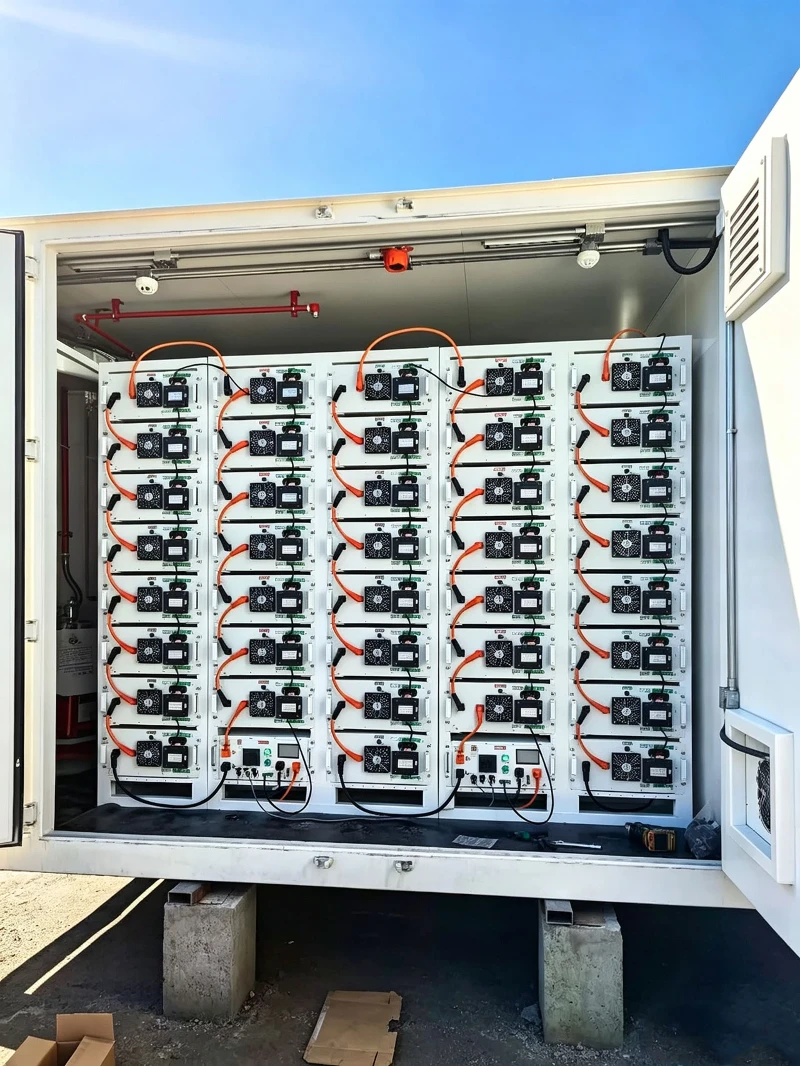
500KW/1MW 1MWh/2MWh Battery Energy Storage System Container
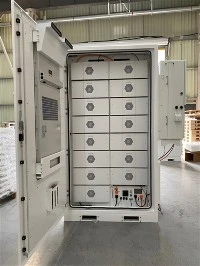
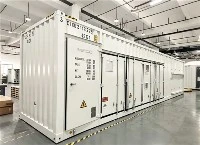
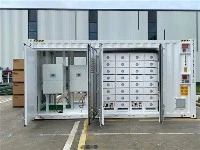
The 500kW/1MW 1MWh/2MWh Battery Energy Storage System Container is a turn‑key utility‑grade energy storage solution housed in standard 20ft or 40ft shipping containers, integrating bidirectional PCS, A‑grade LiFePO4 battery clusters, master BMS, liquid‑cooled thermal management, gas fire suppression, high‑voltage distribution and EMS energy management system with full factory pre‑assembly and pre‑commissioning. Requiring only foundation construction and high‑voltage cable connection for on‑site commissioning, it supports flexible power‑capacity configuration and multi‑container parallel expansion, delivering core capabilities of peak‑shaving and load shifting, renewable energy smoothing, frequency‑voltage grid support, islanded micro‑grid operation and large‑scale emergency backup. Featuring IP54 enclosure protection and comprehensive multi‑layer safety mechanisms, it adapts to diverse harsh outdoor environments, and is widely deployed for ground‑mounted PV power stations, industrial parks, mining operations, island microgrids and grid‑side auxiliary service projects to stabilize grid fluctuations, boost renewable energy utilization and reduce comprehensive energy costs.