


Main keyword: industrial battery storage
Ask a plant manager what costs them the most money and they will rarely say "electricity." They will talk about the line that stopped when a nearby fault caused a voltage sag, the batch ruined by a momentary dip, the welders that trip breakers when they fire together, the arc furnace that makes the lights flicker across town. For manufacturers, electricity problems are rarely about the price per kilowatt-hour - they are about power quality and the enormous cost of interruption. This is where industrial battery storage proves its worth in a way that a simple peak-shaving calculation misses: as a fast, dynamic buffer that stabilises the plant's electrical system and keeps production running.
This article examines the specific power disturbances that plague manufacturing plants, how storage addresses them, the difference between power-quality support and backup, and how to size and specify a system for a factory floor.
The Disturbances That Stop Production
Manufacturing loads are demanding in ways that utilities and ordinary batteries are not built for.
Voltage sags from external faults. A fault anywhere on the upstream network - a tree branch, a lightning strike, a short circuit on a neighbouring feeder - causes a brief voltage dip. For sensitive equipment, a sag of a few tenths of a second is enough to drop contactors, trip drives, and stop a production line. The plant did not lose power; it merely saw a dip, and that dip cost a shift of output. Voltage sags are widely regarded as the single most costly power-quality event in manufacturing.
Motor inrush. Large motors draw six to eight times their running current at startup. When several start together, the resulting current surge causes a local voltage dip that can disturb other equipment on the same bus. Soft starters and variable-frequency drives help, but the underlying surge remains.
Welding loads. Welders are impulsive, non-linear loads: current spikes erratically, harmonics flow back into the system, and multiple welders firing in sequence create a jagged demand profile. They are hard on transformers and are a classic source of local power-quality problems.
Arc furnaces. Electric arc furnaces are among the most aggressive loads in industry. The arc is inherently unstable, causing rapid, random swings in active and reactive power - flicker, harmonics, and large current variations that propagate into the grid and disturb other customers. Steelmakers have managed this for decades with static var compensators and other devices; storage offers a new, faster tool.
Storage as a Dynamic Power-Quality Buffer
The common thread in all these disturbances is that they are fast and transient - lasting milliseconds to seconds. That is precisely the regime where batteries, and especially power electronics coupled with them, excel.
Ride-through for sags. A battery inverter with a fast control loop can detect an incoming sag and inject power within milliseconds, holding the plant's voltage up while the upstream fault clears. To the production line, the dip never happens. This "low-voltage ride-through" and dynamic voltage support is a fundamentally different job from energy arbitrage: it is about power and speed, not kilowatt-hours.
Buffering motor starts and welder spikes. Storage on the plant bus can supply the transient current that a motor start or a bank of welders demands, so the upstream transformer and feeders do not see the full surge. The battery acts as a local shock absorber, flattening the load the utility sees.
Flicker compensation at arc furnaces. For arc furnaces, storage can inject or absorb power on the sub-second timescale, counteracting the arc's random swings and reducing flicker. This is a specialised application where very high power and extremely fast response matter more than energy capacity - and where supercapacitors or hybrid systems are often preferred over pure lithium-ion.
Harmonic filtering. Advanced inverters can also actively compensate harmonics produced by non-linear loads like welders and drives, improving power factor and reducing heating in transformers and cables.
Power Quality vs Backup: Two Different Jobs
A crucial distinction for plant buyers: a system that improves power quality is not automatically a backup system, and vice versa.
Power-quality support is about millisecond-to-second responses, high power, frequent cycling, and small energy depth. The battery handles thousands of tiny events and returns to neutral, barely cycling in energy terms.
Backup power is about sustaining load for minutes to hours during an outage - the territory covered by UPS and generator systems in data centres and hospitals.
The best industrial systems do both. A single industrial battery storage installation can sit on the plant bus, providing continuous power-quality support while holding a reserve energy block for outage ride-through and peak shaving. The control system allocates capacity between these duties: fast transient response always takes priority, while slower value streams use whatever energy headroom remains. This layered approach is a practical application of the multi-layer control architecture described in our EMS/BMS/PCS explainer, where the energy management system arbitrates between competing demands on the same asset.
The Economics: More Than Demand Charges
Manufacturers do have meaningful energy costs, and storage addresses them alongside the quality issues.
Demand charge reduction. Plants with welders, furnaces, and large motors have spiky demand profiles and pay high demand charges. Clipping those peaks with storage reduces the bill - the same mechanism used in ports and cold storage, but driven by different equipment.
Avoided production loss. This is the large, often hidden number. If voltage sags cost a plant a few stoppages a year, and each stoppage costs a known amount in lost output, rework, and cleanup, the value of ride-through can dwarf the energy savings. A disciplined study quantifies this from historical events and equipment sensitivity - not from a general estimate. Manufacturers who measure it are often surprised by how fast the payback becomes.
Time-of-use arbitrage. Where tariffs vary, charging off-peak and discharging on-peak adds a steady return, layering onto the quality and demand benefits.
Deferred capacity upgrades. Plants growing their load often face transformer or feeder upgrades. Storage that caps peak draw can defer that capital expenditure.
Sizing and Specifying for a Factory
Factory storage is sized differently from a plain energy project:
Instrument before sizing. Record voltage events, current transients, and load profiles at the main bus and critical sub-buses. You cannot size for sags you have not measured.
Define the critical process. Identify which lines or batches cannot tolerate a dip and what the financial consequence of a stoppage is.
Separate power from energy. Size inverter power for the worst transient (motor inrush, welder surge, furnace swing); size energy for the ride-through and peak-shaving duty. These two numbers often diverge sharply in manufacturing.
Choose the technology mix. For sub-second, high-cycle flicker and transient work, supercapacitors or hybrid systems may outperform a lithium-only design; for deeper energy duties, lithium-ion is the workhorse. Hybridisation lets each technology serve its best regime - the same logic used in crane and port applications.
Integrate with plant systems. The storage controller must coordinate with existing protection, drives, and the plant's energy management system, and it must respect the tight timing requirements of industrial processes.
Design for the environment. Factories mean heat, dust, vibration, and sometimes corrosive processes - enclosure protection, cooling, and mounting need industrial-grade specification, as covered in our guides to cabinet IP ratings and seismic design.
A Note on Protection Coordination
Adding a fast inverter to a plant's electrical system changes fault currents and protection behaviour. Protection settings, relay coordination, and anti-islanding logic must be reviewed by the plant's electrical engineer - the storage system must not mask a fault, prevent a breaker from clearing correctly, or energise a line during maintenance. This is a design-review item, not a commissioning surprise, and it belongs in the specification from day one.
The Bottom Line
In manufacturing, the value of electricity lies less in its price than in its continuity and quality. Welders, motor starts, and arc furnaces create fast, violent disturbances that stop lines and ruin batches, and a battery system with the right power electronics is uniquely suited to absorb them. A well-designed industrial battery storage installation does far more than cut demand charges: it rides through voltage sags, buffers transients, suppresses flicker, and holds reserve for outages - turning the plant's most expensive power events into non-events. For plant managers who have long treated power quality as an unavoidable cost of doing business, the message is practical: measure the disturbances, price the stoppages, and the case for storage becomes hard to ignore.

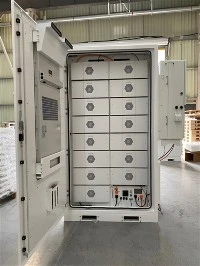
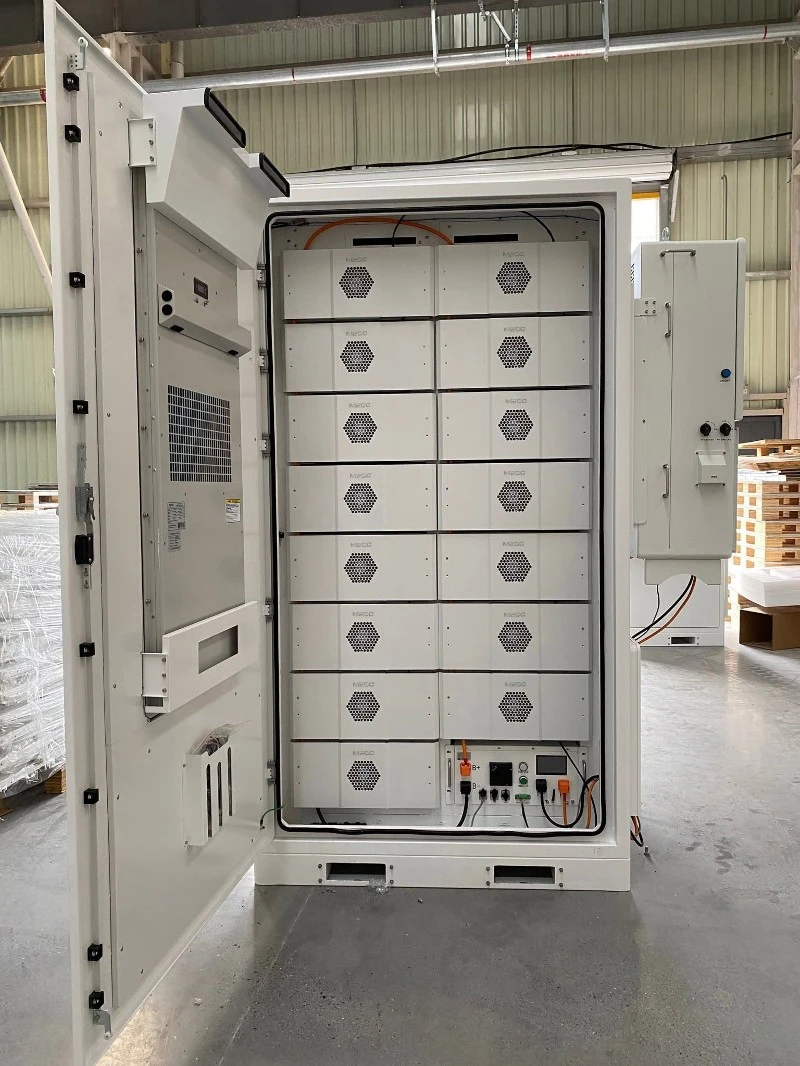
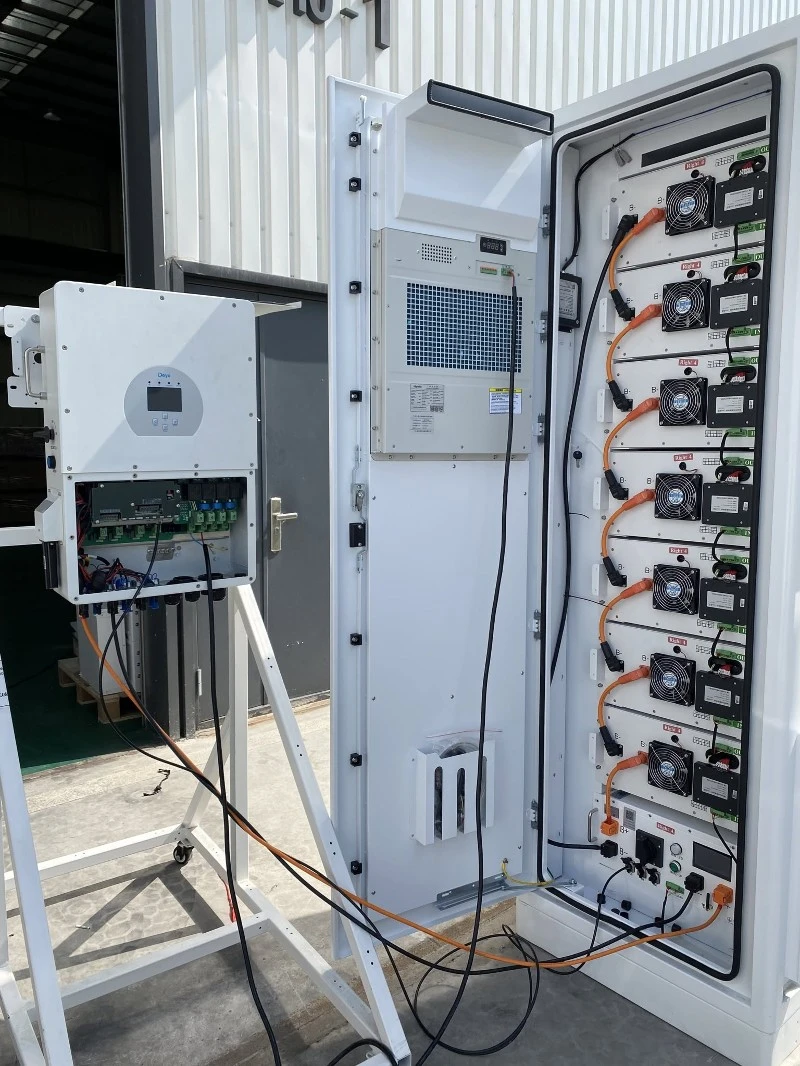
125KW 241kWh Battery Energy Storage System Cabinet
The BESS 125KW 241kWh Lithium Battery Energy Storage Cabinet is a high-power, large-capacity integrated energy storage solution engineered for medium-to-large commercial, industrial, and utility-scale applications. It integrates a 125kW high-performance bidirectional inverter, a 241kWh lithium iron phosphate (LiFePO4) battery bank, and a full-featured intelligent energy management system (EMS) into a modular cabinet design. This system enables efficient renewable energy storage, peak shaving, load shifting, grid frequency regulation, and emergency backup power supply. Ideal for large factories, shopping malls, industrial parks, utility-scale solar/wind farms, and microgrids, it enhances energy independence, reduces high grid demand charges, and supports the stable integration of high-penetration renewable energy into the grid.