


Main keyword: port battery storage
Ports are among the most demanding electrical environments on Earth. A single container terminal can draw power like a small city one minute and nearly nothing the next - ship-to-shore cranes hoisting containers, rubber-tyred gantry cranes sprinting across yards, refrigerated containers humming in rows, and, increasingly, docked vessels plugged into the shore instead of burning fuel aboard. This volatile, high-power profile makes ports a natural - and unusually valuable - application for port battery storage. Storage here does not just shave a peak; it solves a grid-connection problem, recovers energy that was previously thrown away, and helps terminals meet emissions mandates that are tightening fast.
This article looks at why port loads are so hard to serve, how storage addresses shore power and crane dynamics, the peak-demand economics, and the design demands of a marine environment.
Why Port Loads Are Unusual
Most commercial facilities have a relatively smooth load curve. Ports have the opposite.
Impulsive, high-power demand. A ship-to-shore (STS) crane lifting a container draws a sharp burst of power; when it lowers a load, the motor becomes a generator. Multiply that by dozens of cranes working in shifting coordination and the site's demand trace becomes a forest of spikes. Peak power can be several times the average - the exact profile that punishes demand charges and stresses grid connections.
Concentrated duty cycles. Port operations are intense but intermittent: a vessel berths, the cranes work around the clock for a day or two, then the berth goes quiet. Installed grid capacity must cover the peak even though it is used a fraction of the time - an expensive asset sitting idle.
Multiple simultaneous loads. Cranes, reefer (refrigerated container) blocks, cold storage, yard lighting, and shore power all overlap. Their peaks rarely coincide neatly, which is precisely why a flexible buffer between the grid and the loads has value.
Shore Power: The Grid-Connection Problem
Shore power - also called cold ironing - supplies a docked vessel with electricity from the land grid so it can shut down its auxiliary diesel engines. Ports worldwide are installing it under mounting regulatory pressure: the EU's Alternative Fuels Infrastructure Regulation and similar rules in California and China require shore power at major berths, and emissions-control areas are expanding.
The problem is that a large container ship's hotel and cargo load can reach several megawatts, and it arrives all at once when the vessel plugs in. Connecting a berth with, say, 10 MW of shore-power capability often means a utility upgrade measured in years and millions of dollars - even though any single berth uses that full capacity only part of the time.
Storage changes the arithmetic. A port battery storage system at the berth can sit between the grid and the ship: charge slowly from a modest grid connection when no vessel is docked, then discharge at high power during the short, intense period of shore supply. The grid connection is sized for average energy, not peak power - potentially a fraction of the otherwise required upgrade. The same buffer also handles the abrupt load steps when a ship connects or disconnects, which are hard on both the grid and the vessel's systems.
For terminals facing a shore-power mandate and a constrained grid, this "energy time-shift at the berth" is frequently the difference between a feasible project and an unaffordable one.
Cranes and Regenerative Energy: Power You Were Throwing Away
Modern electric cranes are regenerative. When a crane lowers a loaded container or decelerates a trolley, the drive motors operate in reverse as generators, producing electricity. In older installations, that energy is dissipated as heat through braking resistors - wasted, and a source of heat and maintenance in the crane room.
A storage system connected to the crane's DC bus or the terminal's distribution network can capture this regenerative energy and reuse it for the next lift. Since a container terminal's cranes lift and lower constantly, the recovered energy is substantial - commonly cited figures suggest recovery can offset a meaningful share of a crane's net consumption. The battery acts as a shared energy bucket across the crane fleet: one crane's descent helps power another's ascent.
This is where hybrid storage architectures shine. Supercapacitors handle the very fast, high-power transients of individual crane moves (thousands of cycles, near-instant response), while lithium-ion batteries handle the larger energy shifts across the berth and the shore-power duty. Each technology works in the regime where it excels, and the terminal's overall demand from the grid flattens. The result is lower peak demand, less stress on electrical infrastructure, and reduced fuel use where cranes are still diesel-powered.
Peak Demand: The Hidden Cost at the Gate
For a port, demand charges are not a minor line item - they can be one of the largest components of the electricity bill, because the spikes are so extreme. A terminal that draws 25 MW for ten minutes may pay demand charges on that 25 MW for the entire month, even if its average load is a fraction of it.
Storage attacks this directly. By metering the same point the utility bills on and discharging during the highest-demand intervals, a BESS clips the peaks that set the charge. The economics resemble peak shaving at other large C&I sites but are amplified by the port's spike-to-average ratio: the same kilowatt-hours of battery deliver more demand-charge reduction here than in almost any other setting.
The control logic has to be genuinely predictive. Reactive threshold-based dispatch fails when a burst of crane activity drains the battery before the true peak arrives - a problem familiar from predictive peak-shaving systems that budget energy across an interval rather than reacting to a single instant. The energy management system layer must forecast crane schedules, berth activity, and reefer loads, and allocate storage accordingly. Our guide to what a C&I EMS must do covers the underlying control requirements; at a port, the forecasting is simply more dynamic.
Resilience, Emissions, and the Regulatory Push
Ports cannot stop. A power interruption during container handling stops the berth, delays vessels, and ripples through supply chains with contractual penalties. Storage provides ride-through for short grid disturbances and, paired with generation, a path to extended operation - a resilience role that overlaps with the critical-load planning used at other continuous facilities.
The stronger driver, however, is emissions. Ports are under intense pressure to decarbonize: to electrify cranes that once ran on diesel, to supply shore power, and to meet local air-quality rules in densely populated coastal cities. Electrifying everything increases electrical load - and increases the value of storage that makes the increased load affordable and grid-compatible. Port battery storage is thus not a standalone green project; it is the enabling infrastructure that lets the rest of the electrification program work without overwhelming the grid connection.
Designing for the Marine Environment
A port is a punishing place for electrical equipment, and storage specifications must reflect it.
Corrosion. Salt-laden air drives aggressive chloride corrosion. Coastal installations generally need C5-class corrosion protection - heavier coating systems, stainless hardware, sealed penetrations - as detailed in our article on C4 vs C5 corrosion protection for coastal battery sites. Ignoring this turns a fifteen-year asset into a premature maintenance problem.
Vibration and mechanical stress. Cranes and heavy equipment create vibration; mobile machinery creates impact risk. Rigid enclosures, robust internal bracing, and physical protection from vehicle traffic are not optional.
Space and logistics. Terminals are space-constrained and busy. Containerized systems fit the environment - but delivery, lifting, and placement must be coordinated around live operations, with the same planning discipline covered in our guide to transport and site logistics for containerized BESS.
Safety and segregation. High-power DC systems, fuel handling, and dense operations demand careful fire strategy and clear separation from Container traffic and stored cargo.
Sizing and Implementation: A Practical Sequence
Port projects are complex enough to benefit from a staged approach:
Profile the loads. Meter crane cycles, shore-power events, and reefer demand over weeks, not days - the spike-to-average behavior only reveals itself with time.
Fix the grid constraint first. Determine the interconnection capacity available and the cost of expanding it; this defines how much "peak shaving" the battery must do.
Choose the architecture. Separate the fast crane-regeneration duty from the slower berth-level energy shift; decide whether supercapacitors and batteries share the task.
Specify for the environment. C5 corrosion protection, vibration design, and physical protection written into the contract.
Validate the control strategy. Scenario-based commissioning against real crane and vessel schedules, with demand-charge measurement agreed in advance.
The Bottom Line
Ports and logistics hubs are emerging as one of the strongest business cases for battery storage - not because the technology is novel, but because the load profile is almost perfectly suited to it. Spiky crane demand, sudden shore-power connections, punishing demand charges, and a constrained grid all point to the same conclusion: a buffer between the grid and the terminal creates value several times over. Add regenerative-energy recovery, tightening emissions rules, and a harsh marine environment that rewards robust design, and it becomes clear that port battery storage is not an accessory to terminal electrification but its foundation. Terminals planning shore power or crane electrification should treat storage as part of the core electrical design, not an afterthought added once the grid connection runs out of capacity.

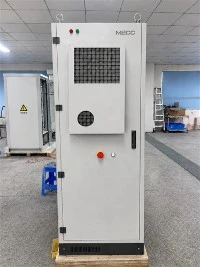
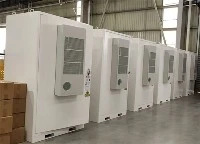
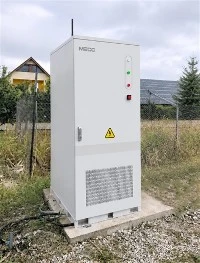
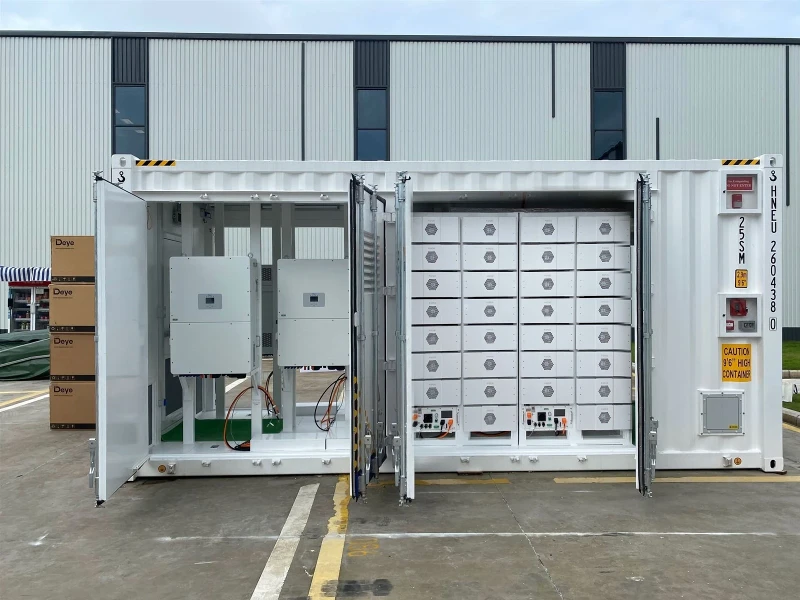
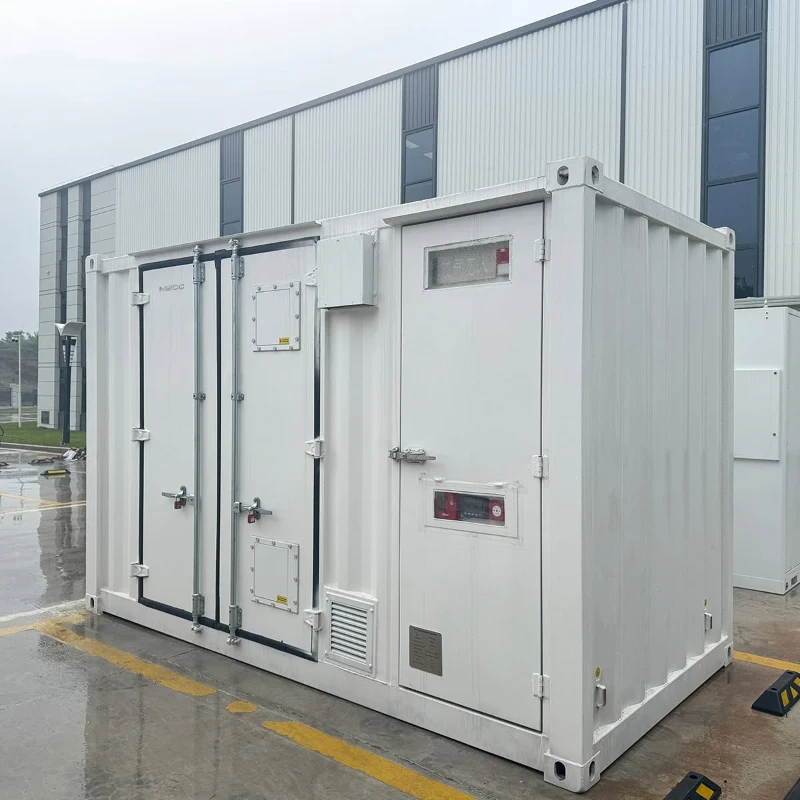
500KW/1MW 1MWh/2MWh Battery Energy Storage System Container
The 500kW/1MW 1MWh/2MWh Battery Energy Storage System Container is a turn‑key utility‑grade energy storage solution housed in standard 20ft or 40ft shipping containers, integrating bidirectional PCS, A‑grade LiFePO4 battery clusters, master BMS, liquid‑cooled thermal management, gas fire suppression, high‑voltage distribution and EMS energy management system with full factory pre‑assembly and pre‑commissioning. Requiring only foundation construction and high‑voltage cable connection for on‑site commissioning, it supports flexible power‑capacity configuration and multi‑container parallel expansion, delivering core capabilities of peak‑shaving and load shifting, renewable energy smoothing, frequency‑voltage grid support, islanded micro‑grid operation and large‑scale emergency backup. Featuring IP54 enclosure protection and comprehensive multi‑layer safety mechanisms, it adapts to diverse harsh outdoor environments, and is widely deployed for ground‑mounted PV power stations, industrial parks, mining operations, island microgrids and grid‑side auxiliary service projects to stabilize grid fluctuations, boost renewable energy utilization and reduce comprehensive energy costs.