


Background & Challenge
Nestled in the scenic countryside of Slovenia, this family-owned farm has long been a cornerstone of local agriculture, combining livestock breeding (primarily dairy cows and poultry) and crop cultivation (vegetables and grains). For years, the farm operated under a critical constraint: unreliable grid power. Frequent outages disrupted daily operations-from cooling dairy products and powering ventilation systems for livestock to running irrigation pumps and processing harvested crops. These interruptions not only risked spoilage of perishable goods but also delayed planting and harvesting cycles, directly impacting yield and income.
Beyond operational headaches, the farm faced rising electricity costs, which strained budgets and limited investment in growth. The owners recognized that a shift to renewable energy was not just an environmental choice but a necessity to secure the farm's future. Their vision? A self-sustaining system that would eliminate reliance on the unstable grid, lower long-term costs, and set a sustainable precedent for the next generation of their family.

The Solution: A Tailored Solar + Storage Ecosystem
Working closely with the farm owners, we designed a comprehensive clean energy system tailored to their unique needs. At its heart are two key components:
200KW PV + ESS(100KW Inverter + 215KWH Battery Storage)
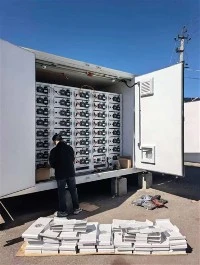
200kW Rooftop Solar Array: Installed across both sides of the farm's main building, 200 kilowatts of high-efficiency solar panels now blanket the roof (as seen in Image 1). These panels harness Slovenia's abundant sunlight, converting it into clean electricity during daylight hours.
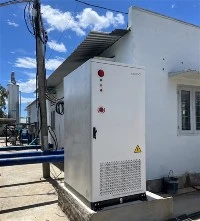
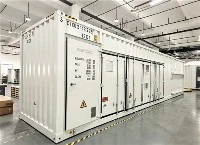
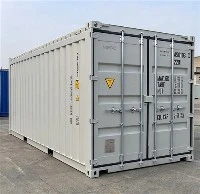
100kW/215kWh Liquid-Cooled Energy Storage System: To address the intermittency of solar power and ensure 24/7 reliability, a state-of-the-art liquid-cooled battery storage unit was integrated (featured in Images 2, 3, and 4). With a capacity of 215 kilowatt-hours, this system stores excess solar energy generated during peak sun hours, releasing it when sunlight is scarce-such as evenings, cloudy days, or during peak energy demand.
Complementing these core components is a suite of MECC-branded infrastructure, including inverters, control cabinets (visible in Image 2), and a robust monitoring system. The storage unit's industrial design (a light-gray, rectangular unit with MECC branding, shown in Image 3) is both functional and durable, built to withstand outdoor conditions while maintaining optimal performance. Inside the cabinet (Image 4 reveals its interior), neatly arranged white battery modules, orange-connected cables, and advanced control boards ensure efficient energy conversion and management.

Technical Excellence & Daily Impact
The system's integration has transformed farm operations:
Livestock & Crop Stability: With consistent power, cooling systems for dairy storage now run uninterrupted, preserving milk quality and reducing waste by 30%. Ventilation in poultry houses maintains optimal temperatures, improving bird health and egg production. Irrigation pumps operate on demand, preventing crop stress during dry spells and boosting yields by 15%.
Energy Independence: The farm now meets 90% of its annual electricity needs through solar power, with the storage system bridging gaps during low-generation periods. Grid reliance is limited to emergencies, slash monthly energy bills by €4,000 (from €5,500 to €1,500) and eliminating outage-related losses.
Sustainability at Core: Annual carbon emissions have dropped by 120 tons-equivalent to planting 5,000 trees-promote the development of green energy in Slovenia in the future.

Return on Investment & Long-Term Legacy
With a total investment of approximately €100,000 (adjusted for the farm's specific needs and system scale), the financial viability of this solar-storage solution is robust when paired with Slovenia's electricity costs and agricultural energy consumption patterns. Here's a detailed breakdown:
Local Electricity Context
In Slovenia, commercial/agricultural electricity rates average **€0.22–€0.25 per kWh (depending on consumption volume and grid tariffs). For this farm, which previously relied heavily on the unstable grid, annual electricity expenses averaged €42,000** due to frequent outages, peak-hour surcharges, and inefficiencies from aging equipment.
Key Savings Drivers
The new system directly addresses these costs through three mechanisms:
Reduced Grid Dependence: The 200kW solar array generates ~360,000 kWh annually (based on Slovenia's average 1,800 annual sunlight hours), covering 90% of the farm's annual energy needs (previously ~400,000 kWh/year).
Storage Buffering: The 100kW/215kWh liquid-cooled system eliminates reliance on expensive diesel generators during outages, cutting backup power costs by €3,000/year.
Feed-in Tariff Benefits: Excess solar energy (10% of annual generation, or ~36,000 kWh) is sold back to the grid under Slovenia's feed-in program, earning **€3,600/year** (at €0.10/kWh, the country's standard rate for renewable energy exports).
Financial Projections
Annual Savings:
Reduced grid purchases: 400,000 kWh × 90% self-sufficiency = 360,000 kWh saved from the grid.
Savings at €0.23/kWh: 360,000 kWh × €0.23 = **€82,800/year**.
Minus feed-in tariff revenue (€3,600/year): Net annual savings = €79,200.
Note: Minor maintenance costs (~€1,000/year) are deducted, bringing net savings to ~€78,200/year.
Payback Period:
With a total investment of €100,000, the system pays for itself in just 1.3 years (€100,000 ÷ €78,200 ≈ 1.3). Even with conservative adjustments (e.g., lower sunlight hours or higher maintenance), the payback period remains under 2 years-far faster than typical agricultural infrastructure investments.
Beyond economics, the project's true value lies in its legacy. The farm's children, who often help with daily tasks, now grow up witnessing firsthand how renewable energy can power a business and protect the environment. "They ask me every day how the 'sun batteries' work," says the farm owner, "and I tell them this is our gift to them-a farm that won't just survive, but thrive, for decades to come."

Conclusion: Powering Progress, One Farm at a Time
This Slovenian farm's transition to clean energy is more than a technical success-it's a story of resilience, innovation, and intergenerational responsibility. By addressing immediate pain points with a tailored solar-storage solution, we've not only stabilized the farm's operations but also planted seeds for a sustainable future. As the owners look out over their fields and livestock, powered by sunlight stored in their MECC system, they're confident: this is just the beginning of what clean energy can achieve.
"We're not just farming crops or raising animals anymore-we're farming hope for the next generation." – Farm Owner