Rural electrification remains one of the most critical energy challenges across Southeast Asia, especially in remote regions of Malaysia. Many isolated villages are located far from municipal power grid infrastructure, resulting in limited grid coverage, frequent blackouts, severe voltage instability and unreliable power supply. For decades, local communities have relied heavily on diesel generators to meet basic electricity demands. However, traditional diesel power generation suffers from high fuel costs, loud operational noise, heavy carbon emissions and frequent maintenance requirements, making it an uneconomical and unsustainable long-term solution. Grid extension projects are also impractical due to complex terrain, huge construction investment and long project cycles. To address these persistent energy pain points, MECC successfully implemented a reliable Malaysia remote village 30KW 172KWh integrated energy storage cabinet solution, deploying three sets of 30KW/172KWh integrated ESS cabinets to deliver stable, green, and self-sufficient power for an off-grid rural community.
This rural energy project targets the core energy dilemmas prevalent in Malaysian remote villages. Unlike urban areas with stable grid support, rural off-grid regions face unpredictable power interruptions that affect daily household lighting, communication devices, domestic appliances and basic local commercial activities. In addition, Malaysia's abundant solar energy resources have long been underutilized due to the lack of matched energy storage systems. Without effective energy storage equipment, intermittent solar power cannot be stored for nighttime or cloudy-day usage, resulting in severe renewable energy waste. By adopting a professional off grid energy storage solution for rural Malaysia, the village completely breaks away from reliance on fossil fuel power generation and unstable public grid power, achieving independent and sustainable green power supply.
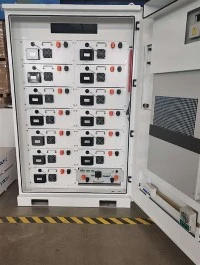
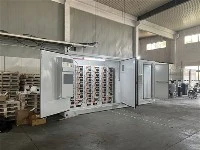
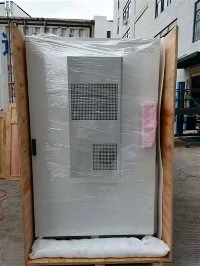
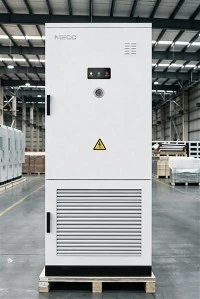
The finalized system solution adopts three sets of 30KW 172KWh integrated ESS cabinet for remote community, forming a parallel-operated off-grid energy storage system with a total power of 90KW and a total capacity of 516KWh. Each cabinet is an all-in-one integrated device that independently integrates lithium battery clusters, high-efficiency PCS power conversion system, intelligent BMS battery management system, EMS energy management system and multi-level safety protection modules. This highly integrated structure eliminates the need for complicated on-site assembly, auxiliary equipment configuration and professional wiring construction. It supports plug-and-play rapid deployment, which is extremely suitable for remote rural areas with inconvenient transportation and limited construction conditions, greatly shortening the project implementation cycle.

Operating in a fully off-grid and solar-coupled mode, this standalone battery energy storage for remote village realizes intelligent energy scheduling and 24-hour stable power guarantee. During sunny daytime, the system collects and stores excess photovoltaic power generated by local solar facilities inside the 172KWh battery clusters of each cabinet. The intelligent EMS system uniformly schedules the three parallel ESS units to balance charge and discharge efficiency, ensuring consistent power output and stable voltage and frequency. At night or during continuous cloudy weather with insufficient solar generation, the system automatically discharges stored electricity to continuously supply power for the entire village. Equipped with independent single-unit protection and overall system linkage protection functions, the system effectively avoids full-system shutdown caused by single equipment failure, greatly improving operational stability and reliability.
MECC's integrated ESS cabinets show unique advantages adapted to Malaysian tropical rural scenarios. First, the compact integrated design realizes rapid deployment and zero complex construction, perfectly fitting remote rural construction conditions. Second, the system supports unattended intelligent operation and remote real-time monitoring, greatly reducing daily operation and maintenance pressure in remote areas lacking professional technical personnel. Third, the parallel scalable design allows flexible capacity expansion, enabling the system to continuously match the growing power demand of rural residents and small businesses in the future. Moreover, the equipment features high temperature resistance, moisture resistance, dustproof and corrosion-resistant performance, fully adapting to Malaysia's high-temperature and humid tropical climate, ensuring long-term stable outdoor operation.
After long-term grid-free operation, the project has achieved remarkable rural electrification results and social value. The system completely eliminates frequent power outages and voltage fluctuations, providing 24-hour uninterrupted stable power supply for local residents. It thoroughly replaces high-cost diesel generators, significantly reducing daily energy costs and carbon emissions for the village. Stable power supply not only improves residents' daily living quality but also supports the development of small rural processing industries and basic service industries, activating local rural economic vitality. As a mature rural electrification energy storage system Malaysia, this project builds a replicable green energy self-sufficiency model, conforming to Malaysia's strategic goals of rural energy upgrading and low-carbon environmental development.
FAQ
What energy challenges do remote villages in Malaysia face?
Most remote Malaysian villages suffer from insufficient grid coverage, frequent power blackouts and unstable voltage. Traditional diesel power generation is costly, high-polluting and unsustainable, restricting local living standards and rural economic development.
Why use integrated energy storage cabinets for off-grid villages?
Integrated ESS cabinets feature plug-and-play deployment, low maintenance and strong climate adaptability. The all-in-one design suits remote rural construction conditions and delivers stable off-grid power supply with lower long-term operational costs.
What are the benefits of multiple parallel ESS cabinets for remote areas?
Parallel cabinet operation increases total system power and capacity, enhances operational redundancy to avoid single-point failures, and supports flexible capacity expansion to meet growing rural energy demand.
Conclusion
This successful off-grid energy storage project in a remote Malaysian village fully demonstrates how scalable integrated ESS solutions can solve typical rural energy bottlenecks in tropical Southeast Asian regions. By deploying three sets of 30KW/172KWh integrated energy storage cabinets, MECC effectively resolved the village's long-standing problems of grid unavailability, power instability and high diesel energy consumption. Compared with traditional power supply methods, this green energy storage solution offers higher stability, lower operational costs, simpler maintenance and zero carbon pollution, making it an ideal replacement for rural diesel generators. The flexible parallel cabinet design proves that modular ESS systems can perfectly adapt to small and medium-sized rural power demands while reserving space for future capacity expansion. As a proven renewable power solution for rural Southeast Asia, this case provides a standardized and replicable reference for remote village electrification projects across Malaysia and neighboring tropical regions, helping more off-grid communities achieve reliable, sustainable and eco-friendly energy independence.