


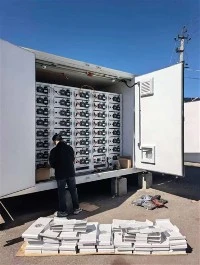
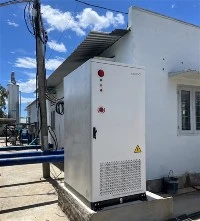
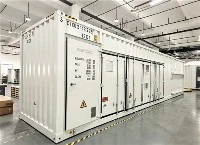
Home energy storage devices are devices that store electrical energy and use it when needed - also known as electric energy storage products or "battery energy storage systems" (BESS), hereinafter referred to as home energy storage. The core component of home storage is rechargeable batteries, usually lithium-ion batteries or lead-acid batteries. The other components are inverters, which can intelligently control the charging and discharging control system.
With energy storage entering ordinary households, we can implement the concept of distributed power generation, alleviate the pressure of power grid transmission, reduce the use of fossil fuels, which is a necessary decentralized measure to achieve carbon neutrality or zero neutrality.
1. How to configure a household energy storage system

In household energy storage systems, the main components are components, energy storage machines, and batteries; The form shown in the picture is to set up energy storage in the garage for our electric vehicles to use.
Energy storage systems are divided into single-phase and three-phase; The following image is a simple energy storage system diagram, which includes not only the three major components but also the electricity meter, household load, etc. Whether it is single-phase or three-phase, there are corresponding solutions.


2. Introduction to energy storage inverters

ES/ET energy storage machines are both bidirectional energy storage, support off grid integration, UPS function, mobile APP control, and can achieve anti backflow and power limitation. However, there is also a difference between ES and ET. ES is a single-phase bidirectional energy storage inverter, while ET is designed for three-phase power grids; And it supports unbalanced three-phase output and single-phase load;
In addition, ES is connected to a low-voltage battery, while ET has a higher voltage range and is connected to a high-voltage battery; So their charging and discharging currents are also different. This will also be reflected on the interface of the inverter.
Due to the fact that the charging and discharging current of ES can reach 100A, the corresponding battery interface is also larger, requiring a 25 square cable. The charging and discharging current of ET is only 25A, and a 6-square cable is sufficient.
So the biggest feature of these two machines is that they are integrated with the grid, and they also have the function of UPS. If the grid suddenly loses power, the inverter will automatically switch to battery power supply, and the off grid switching time is less than 10ms. The UPS level response time belongs to uninterruptible power supply; And many inverter manufacturers use EPS energy storage inverters, which are emergency power sources with a switching time of less than 5 seconds.
3. Introduction to Energy Storage Batteries
It is recommended that everyone use lithium batteries, which are currently compatible with many battery brands such as BYD, Wotai, and Paineng; In addition, there are still some batteries being matched. Before customers purchase the machine, they must first confirm whether they are using compatible battery brands.

Lithium batteries are batteries made of lithium metal or lithium alloy as negative electrode materials and use non-aqueous electrolyte solutions. They have multiple advantages such as high energy, long service life, and light weight, and are widely used in energy storage power systems such as hydraulic, thermal, wind, and solar power plants.
Lithium iron phosphate (LFP)
Three element lithium battery (NCM/NCA)
Lithium cobalt oxide (LCO) battery
Other lithium batteries, such as lithium manganese oxide, lithium titanate batteries, etc
4. Costs of various components in the energy storage system

5. Working mode one

Load consumption priority:
PV - Battery - Grid
The electricity generated by photovoltaics is prioritized for use by loads, with excess electricity stored in batteries and sold to the grid; When PV is insufficient, the battery discharges for use by the load
When there is a power outage in the grid, the load at the grid connected output end cannot work; But the load at the off grid output end can work normally, powered by PV and batteries

Electric vehicles use the battery's electricity to charge at night, and the shortfall is supplemented by the power grid
The electricity generated by photovoltaics is supplied to electric vehicle shed sockets, lighting, electric vehicle charging stations, and energy storage batteries
This application mode is mainly used in villa projects, in addition to light storage and charging applications. Currently, the cases of this mode are mainly focused on villas and demonstrations.
6. Working Mode Two

Explanation: The general mode power grid does not charge the battery. Setting it to economy mode allows for the setting of battery charging and discharging periods.
The main function of the economic model is peak shaving and valley filling. It can use the electricity from the power grid to charge the battery during the valley at night and to supply the load during the peak hours during the day; This mode can reduce the peak valley difference, thereby saving electricity costs.

Explanation: Off grid loads can be powered by photovoltaics and batteries without interruption during power outages; The off grid end is switched from the power grid to battery power supply for UPS power supply.
When the power grid is disconnected, the on grid end runs out of power, and the device switches modes at a speed of 10 milliseconds to ensure the normal use of important loads on the back up end. The location of this load should be noted, as important liabilities need to be connected to the off grid end.
For example, 5G communication base stations are generally built in remote locations where the power quality of the grid is not high. In order to meet uninterrupted electricity demand, the load can be connected to the back up end, and the energy storage machine can be set to the back up backup mode. It is usually supplemented by the photovoltaic power supply grid and switched to battery power supply in case of emergency power outage.
7. How to transform an already installed project into energy storage
Next, let's take a look at another form. The energy storage renovation project requires the use of renovation machines SBP and BT, without changing the original layout of the photovoltaic system. Energy storage installed on top of the photovoltaic system is connected to our communication side. Under normal circumstances, the priority of electricity consumption is the same from photovoltaics to batteries to the grid. After a power outage, the grid can only rely on the battery's electricity to supply power to off grid loads.

8. How to configure battery capacity
Battery selection should consider the load, whether it is used daily or backed up; Choosing too large a battery capacity can lead to waste, and if all the stored electricity is used up, the battery may not be fully charged.
Energy storage equipment manufacturers also provide customers with different battery capacity options through various forms. Various forms of flexible energy selection solutions, such as stacked installation, modular all-in-one machines, and multi power/energy matching of integrated products.

So, how to quickly and directly select the best battery capacity solution in the home energy storage scenario?
At present, most households use energy storage as a way to regulate the power supply and utilization of the grid, which we habitually call grid connected energy storage. For grid connected energy storage, the main purposes can generally be divided into three categories: photovoltaic self use (with high electricity costs or no subsidies), peak and valley electricity prices, and backup power sources (with unstable power grids or important loads).
1. Improve the self use rate of photovoltaics
The main purpose of this scenario is to install photovoltaic energy storage systems to reduce electricity costs when electricity prices are high or photovoltaic grid subsidies are low (without subsidies), so that the remaining electricity in the photovoltaic system can be stored and used at night except for daytime use.
We divide household electricity consumption into daytime electricity consumption (high-power photovoltaic generation period) and nighttime electricity consumption (low-power or no power photovoltaic period). According to the above purpose, the most ideal state should be that the electricity generated by photovoltaics can meet the daytime electricity demand, and after storage, it can just meet the nighttime electricity demand.
That is to say, the effective capacity of the battery should be approximately equal to the photovoltaic power generation minus daytime electricity consumption. But this is just an ideal state. To avoid redundancy in battery capacity (to prevent it from not being fully consumed at night), we also need to ensure that the effective power of the battery does not exceed the nighttime electricity consumption.

2. Peak shaving and valley filling to reduce electricity expenses
The main purpose of this scenario is to charge the battery during low electricity prices during the day and discharge it during high electricity prices at night, in order to reduce overall electricity expenses.
We divide household electricity consumption into daytime electricity consumption (low electricity price period) and nighttime electricity consumption (high electricity price period). In this scenario, the most ideal state is to use photovoltaic power to supply surplus electricity to the load during the day and charge the battery with the grid, and the battery power is just enough to meet the demand at night (during peak electricity prices).
That is to say, the effective capacity of the battery is approximately equal to the nighttime electricity consumption of the household. However, calculating battery capacity based on nighttime electricity consumption is only a maximum demand value.
When considering battery costs, it is generally necessary to comprehensively consider three aspects: photovoltaic system capacity, battery investment, and electricity price savings, and determine the optimal ratio. At the same time, it is necessary to ensure that the battery discharge time is not longer than the nighttime electricity consumption time.
3. As a backup power source in areas with unstable power grids
Pure light systems on the market can only generate electricity during the day, but cannot provide backup power. In the event of a sudden power outage, the integrated light storage system can continue to support the operation of household appliances such as fish tanks, sprinklers, refrigerators, monitoring, lighting, and other important power supplies, ensuring the safety of household property.
When designing battery capacity with backup power as the main purpose, the main consideration is the amount of electricity required by the battery to supply important loads separately during the longest off grid time (expected longest power outage time), including the need to consider the situation of no PV at night.
In this scenario, battery capacity is relatively easy to calculate. Simply list all important loads and calculate the total power consumption of all loads during the longest power outage time to preliminarily determine the battery capacity.
The above three situations are the most common requirements for installing grid connected energy storage systems, and there are also rules to follow when selecting battery capacity. However, in practical applications, there may be a situation where two or more requirements overlap, which requires us to analyze them specifically based on the requirements and ultimately clarify the optimal selection capacity for the battery.
In addition, in the above analysis, we mentioned the effective power of the battery, and in actual battery selection, various factors such as the impact load of the load, the depth of discharge (DOD) of the battery, system efficiency loss, energy storage equipment performance, and expected investment returns need to be considered.
So when choosing battery capacity, it is necessary to consider the electricity of the entire household or usage scenario as a whole system, and it is particularly important to choose the best equipment and system integration supplier.