


Under the global climate crisis, replacing fossil fuels with clean energy has become the fundamental path for humanity to achieve carbon neutrality goals. However, with the continuous increase in the proportion of unstable wind and solar clean energy connected to the power grid, it poses huge challenges to the stable operation of the power grid. Energy storage technology solves the problem of spatial and temporal imbalance in wind and solar clean energy, ensures the safe and stable operation of the power grid, and forms a new type of power system with the basic structure of "source grid load storage", becoming an important support for humanity to achieve sustainable energy solutions.
Looking ahead to the energy storage industry in 2025, the continuous emergence of system integration solutions is the main theme that runs through both the user side and the source network side. How to integrate key components such as battery packs, energy storage converters (PCS), battery management systems (BMS), and energy management systems (EMS) through effective solutions to maximize system economy and safety has become the first principle of industry development. The complex product form of energy storage combined with complex application modes has laid the foundation for the integration technology revolution. So, the question is, what kind of integration route should be chosen for different application scenarios now? Where will the future technological roadmap go?
1. First generation energy storage integration: centralized solution
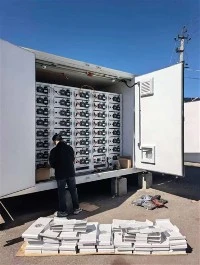
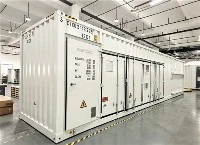
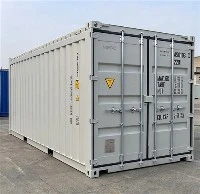
Centralized energy storage is the first generation mainstream integration route in the industry, which connects multiple battery clusters in parallel on the DC side, and forms a battery container with BMS, temperature control system, automatic fire protection system, and AC/DC distribution device. At the same time, in the converter and boost section, the PCS and transformer are combined into a power container, and the two containers are connected by a DC cable.

Due to the advantages of low cost and low technological threshold, it quickly occupied the energy storage market and became the first generation mainstream energy storage integration route, mainly targeting large-scale energy storage power stations on the source grid side.
However, after a large number of grid connected operations, centralized solutions also face numerous problems. We need to reinforce a concept here, the full lifecycle electricity cost, which is influenced by two core factors: the full lifecycle investment cost and the full lifecycle electricity throughput capacity. The biggest problem with centralized solutions is the inability to achieve optimal full lifecycle power throughput capacity.
After parallel connection of batteries on the DC side, due to the differences in electrical performance between different batteries, each battery may not be fully charged or discharged, which can also cause serious circulation problems. In order to avoid system safety issues caused by circulation, a 10% margin will be reserved during charging and discharging, which reduces the storage and discharge depth. In terms of heat dissipation design, containers usually use 1-2 centralized air conditioners and require longer air ducts, resulting in low refrigeration efficiency and large temperature differences inside the container. This exacerbates the inconsistency of battery cells and reduces the number of system cycles. For the conversion process, there are many battery clusters connected to a single PCS, and once a fault occurs, the capacity loss is significant, affecting system efficiency. The reduction in full lifecycle power throughput capacity means that centralized solutions can only maintain good economic efficiency through cost reduction. However, cost reduction also brings more safety issues. So far, most energy storage power stations that have encountered safety problems have also adopted centralized solutions. At the same time, from the perspective of operation and maintenance, large prefabricated cabin units occupy a large area, have poor flexibility, do not support the mixing of new and old batteries, and have difficulty replenishing power. These problems will gradually become apparent in the later operation process.
At this stage, the energy storage industry is still pursuing the optimal investment cost, and cost reduction is the core factor of technical consideration. The reasons behind this are twofold: firstly, the unclear profit model of energy storage, and secondly, the fact that most projects are new energy distribution and storage, and many power stations are aimed at achieving corresponding targets.
2. Second generation energy storage integration: distributed solution
The core reason for the low power throughput capacity throughout the entire lifecycle of centralized solutions is actually the inconsistency of battery cells. If each battery pack is not precisely controlled, it will inevitably lead to a decrease in storage depth, system efficiency, and battery life.
To solve this problem, everyone thought of connecting an energy optimizer to each battery module
The battery cluster is connected to the DC bus through this energy optimizer (DC/DC), and then connected to the grid through PCS, which is a distributed solution. From centralized to distributed, the entire system can accurately control the power of each battery cluster, solving the problems of insufficient charging, incomplete discharge, and circulating current caused by parallel connection on the DC side, greatly improving the storage and discharge depth of the system, and ensuring battery life. However, due to the addition of DC/DC modules, equipment costs have increased, and the two-stage inverters of DC/DC and PCS have reduced system cycle efficiency and increased grid connection debugging time.

At the level of physical integration, the distributed solution still adopts container layout, which cannot achieve flexible equipment layout, partition safety isolation, and a large number of batteries connected to a single PCS, and the problem of significant capacity loss after failure has not been solved.
With the emergence of distributed solutions, people have shifted from simply pursuing optimal investment costs to pursuing optimal electricity costs per kilowatt hour. The full lifecycle power throughput capacity has become increasingly important, and the gradual clarification of energy storage profit models has also upgraded industry demand from "completing distribution and storage targets" to "how to make profits through energy storage power stations".
3. Third generation energy storage integration: distributed solution
Whether it is a centralized or distributed solution, its core is to use parallel convergence on the DC side and then invert through PCS, making the container a necessary physical form. However, it has never been able to solve the problems of low system efficiency and high electricity cost throughout the entire life cycle. On the other hand, with the continuous increase in the price difference between industrial and commercial electricity and the rapid increase in distributed photovoltaic installations, a large number of user side demands have begun to emerge. At this time, there is a pain point of incompatibility between the physical form of containers and the complex terrain of industrial and commercial plants. At the same time, the capacity of container batteries, which can easily reach several MW, cannot match the electricity load of users. We need a more flexible energy storage integration solution to address the pain points of user side energy storage systems.

The small cabinet has become the physical form of the third-generation energy storage integration solution
On the basis of a small cabinet, if the DC side parallel connection is still used, a large PCS cabinet is still needed to complete the inverter work, which involves two issues. One is that high-capacity PCS occupy a large area and have high requirements for users' site, which is still not suitable for many scenarios; The second point is that in the industrial and commercial sector, with the continuous changes in user electricity load, it is necessary to improve the flexibility of power replenishment and expansion operations. Large capacity PCS are difficult to maintain the system efficiency after power replenishment and expansion, and cannot meet the needs of users in terms of flexibility.
Product systematization has become the core concept of the third-generation energy storage integration solution
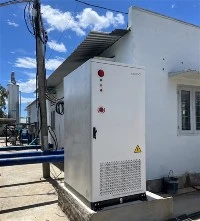
Therefore, some manufacturers have proposed to use highly integrated battery clusters, PCS, BMS, and temperature control fire protection systems to create integrated small cabinets, making the products systematic. By using small cabinets, not only can the limitations of application scenarios be overcome, but flexible expansion can also be achieved, solving the problem of power replenishment. Each small cabinet is controlled by independent BMS and PCS, and the storage depth can reach 100%. The height coordination between PCS and battery clusters has also broken through new heights in system efficiency.

Distributed solutions also have significant breakthroughs in safety, as the physical design of small cabinets and the increase in control accuracy enable the system to quickly and accurately locate problematic batteries in case of safety risks. At the same time, the risk of thermal runaway is also controlled within a single cabinet. As long as the fire and explosion resistance of the cabinet is improved, the impact area can be effectively reduced, allowing firefighters enough time to deal with the fire scene. Singularity Energy was the first to propose distributed solutions and has now become a rising unicorn in the industry. Various manufacturers have also adopted distributed integration solutions for new products on the user side.
With the emergence of third-generation integrated solutions, distributed energy storage systems are not only widely used on the user side, but also frequently used in large-scale source network projects. The increase in full life cycle storage and discharge capacity, safety, and operational convenience brought by distributed solutions has made more and more owners and design institutes willing to adopt this new model. Although it may bring some initial investment increases, the full life cycle benefits are still better than container solutions. Taking Ningxia Autonomous Region, which has the highest increase in new energy storage on the source grid side in 2024, as an example, we have seen the monthly energy storage report released by Ningxia Power Grid and visited many local energy storage power stations with institutions. The comprehensive utilization hours of power stations using distributed solutions are in the leading position in the current month, and the average AC side conversion efficiency is over 90%. According to feedback from on-site personnel, EPC, and the owner, due to the use of a distributed system, monitoring has become more refined and security has been improved. In fact, on-site personnel are not required to be on duty at the power station, truly achieving comprehensive online operation and maintenance.
