



Every grid-tied inverter you have ever installed has one thing in common: it needs the grid to tell it what to do. A grid-following inverter measures the utility's voltage and frequency and injects current in step with them. Take the grid away, and a grid-following device has nothing to follow. A grid-forming microgrid solves this at the system level: one or more inverters stop following and start leading - creating the voltage and frequency reference that every other source and load on the site synchronizes to. That single capability is what lets a commercial or industrial site keep running, indefinitely, with the utility absent.
This article explains what grid-forming actually means, how the roles divide inside a microgrid, what operating states a system must master, and the four engineering challenges that decide whether the site stays up - or trips in the dark.

What "Grid-Forming" Actually Means
In a conventional grid-tied system, the utility behaves like an enormous spinning machine: it sets system voltage and frequency, and everything else conforms. Inverters in this world are grid-following - current sources that synchronize to an existing waveform.
A grid-forming inverter inverts that relationship. Acting as a controlled voltage source, it establishes the waveform itself - holding frequency and voltage steady regardless of what the loads do - and other sources synchronize to it. In a microgrid, the battery energy storage system almost always takes this anchor role, because a BESS can absorb or deliver power instantly, which is exactly what voltage and frequency regulation requires.
The distinction matters because it is a system architecture question, not a component feature. Two grid-following inverters cannot share the anchor role reliably; a microgrid needs at least one grid-forming source (or a rotating machine doing the equivalent job) to define the electrical "heartbeat."
For a deeper component-level comparison, see our guide to grid-forming vs grid-following inverters - this article stays at the system level.
The Roles Inside a Grid-Forming Microgrid
A functional off-grid microgrid assigns four jobs:
The anchor (grid-forming BESS). Sets voltage and frequency, handles second-to-second balance, absorbs load steps. Its capacity defines both the power ceiling of the island and how long it can hold it.
Energy sources (grid-following). Solar inverters, secondary batteries, and even diesel generators in inverter-based configurations follow the anchor's waveform. A conventional diesel genset can also serve as a grid-forming source - rotating machines form grids naturally - but then the BESS coordinates with it rather than leading it.
The dispatcher (microgrid controller). Decides when to island, manages state transitions, dispatches sources, and sheds load. Controller capability - not inverter hardware - is usually what separates a real grid-forming microgrid from a demo.
The loads. Organized into priority tiers so the controller knows what to shed first when generation is short.
This division of labor is what distinguishes a behind-the-meter microgrid from a simple backup system: backup keeps a building alive; a grid-forming microgrid runs it as a miniature utility.

The Four Operating States
A well-designed system moves through four states, and each transition is where projects fail.
Grid-connected. Normal operation: the microgrid trades power with the utility, does peak shaving and arbitrage, and keeps a reserve charged for contingencies.
Transition to island. When the utility fails (or a planned disconnection occurs), the controller opens the point of interconnection and the grid-forming source takes the load. The hard part is the seam: the transition must happen fast enough that sensitive equipment rides through, and the island must emerge with the right reserve to hold frequency. This switching sequence - and its cousin, deliberate grid islanding for planned events - is where most commissioning time goes.
Islanded operation. The state this whole article is about. The site is now a utility of one. The controller balances generation and load continuously, keeps spinning reserve in the battery for contingencies, sheds discretionary load when the reserve thins, and manages recharge from solar or a generator.
Resynchronization and black start. When the utility returns, the island must match the grid's voltage, frequency, and phase before closing back in - closing out of sync is a violent event no breaker enjoys. And if the island collapsed entirely, the system must rebuild it from a de-energized bus: the black start sequence, which deserves its own deep dive.
The Four Challenges That Decide Success
Running without the utility surfaces problems that never appear in grid-tied operation. Design for these four from day one.
Challenge one: reserve management. On the grid, frequency support is effectively infinite. In an island, the anchor battery is the grid, and it must always hold reserve - headroom to cover the loss of your largest single source or step change in load. If the battery is 80% full powering the load, there is little headroom to absorb a shock. Reserve policy (how much, always or time-varying, what to shed when it erodes) is a control philosophy decision, and it directly inflates the required C-rate and duration of the storage. A system that looks generously sized on paper can be reserve-starved in practice.
Challenge two: protection coordination. Utility grids clear faults with enormous fault current - a transformer can feed a short with 5–10 times rated current, enough to trip breakers fast. Inverters limit fault current to roughly 1.1–1.5 times rated, which is often not enough to trip conventional protection. An islanded grid-forming site therefore needs a protection study: different relay settings, possibly different protective devices, and a grounding scheme reviewed for inverter-fed sources. Skipping this step is how islands trip themselves offline at the first real fault.
Challenge three: load steps and rotating machines. Starting a large motor on a grid is routine; on a battery-anchored island it is a designed event - inrush can drag frequency and voltage down before the controller reacts. Large loads should start in sequence, and big rotating loads need soft-starters or VFDs. Conversely, losing a large load abruptly can push voltage high; the battery must absorb it or the controller must dump generation.
Challenge four: power quality in a small system. A utility grid is massive and damps disturbances; an island of one building is electrically tiny. Harmonics from drives, resonance between inverters and capacitors, and unbalanced single-phase loads all have outsized effects. Specify power-quality requirements explicitly and test them under islanded conditions - not just grid-tied.
What This Means for C&I Buyers
Grid-forming capability is now commercially real for commercial and industrial sites - the hardware exists, standards like IEEE 2030.7 (microgrid controller testing) and IEEE 2030.8 provide reference frameworks, and multi-mode systems ship today. The practical questions are about scope and honesty:
Reserve sizing that reflects your real contingency, not a generic percentage.
A protection study for islanded operation, delivered as a document, not a promise.
Demonstrated transitions: island, run, resync - witnessed in commissioning, on your load.
Load-prioritization logic you can inspect and change as the business evolves.
Cost-wise, grid-forming adds a premium over grid-tied-plus-backup - more controller intelligence, more engineering, more testing. But for sites with meaningful outage exposure, the premium buys something a UPS and generator cannot: a site that operates as a coherent, self-managing electrical system rather than a building waiting for the lights to flicker.
The Bottom Line
A grid-forming microgrid replaces the utility's electrical authority with an inverter-led anchor - usually the battery - and manages everything else around it. The concept is mature, but the execution lives in the details: reserve policy, protection coordination, load-step handling, and rehearsed transitions. Buy the system architecture, not the brochure feature, and the site will genuinely run without the utility - which is the entire point.

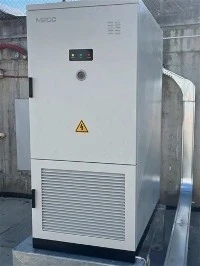
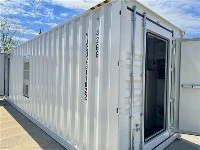
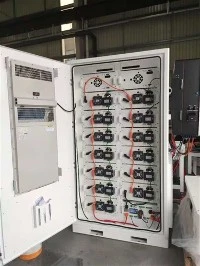
125KW 241kWh Battery Energy Storage System Cabinet
The BESS 125KW 241kWh Lithium Battery Energy Storage Cabinet is a high-power, large-capacity integrated energy storage solution engineered for medium-to-large commercial, industrial, and utility-scale applications. It integrates a 125kW high-performance bidirectional inverter, a 241kWh lithium iron phosphate (LiFePO4) battery bank, and a full-featured intelligent energy management system (EMS) into a modular cabinet design. This system enables efficient renewable energy storage, peak shaving, load shifting, grid frequency regulation, and emergency backup power supply. Ideal for large factories, shopping malls, industrial parks, utility-scale solar/wind farms, and microgrids, it enhances energy independence, reduces high grid demand charges, and supports the stable integration of high-penetration renewable energy into the grid.