


Commercial battery storage has crossed a threshold. Five years ago, a C&I installation was a pilot project, justified by a subsidy or a sustainability mandate, and usually engineered by a team learning on the job. In 2026, it is a standard capital asset with a competitive supplier market, established safety codes, financing structures and a decade of operating data behind it.
That maturity changes the buyer's problem. The question is no longer "does this technology work?" It is "which configuration of commercial battery storage fits this site, this tariff, and this operating team - and how do I avoid paying for capabilities I will never use?"
This guide is the entry point to our entire library. It covers what C&I storage is, the forces driving adoption in 2026, how a system is built, where the value comes from, how to size it, what to specify, and how to buy it. Each section points to a deeper article on that specific subject. If you read only one page on this site, read this one.
What Counts as C&I Storage
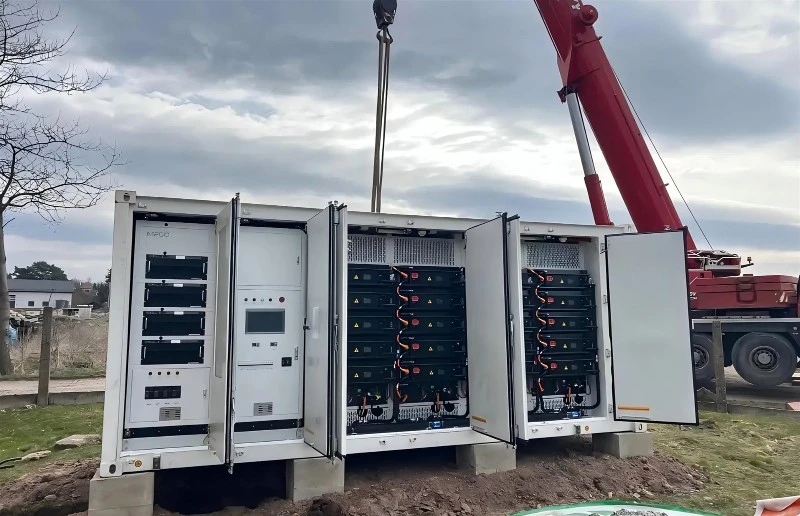
C&I stands for commercial and industrial - the segment between small residential batteries and utility-scale plants. In practice it spans systems from roughly 30 kWh behind a retail unit to multi-megawatt installations at factories, logistics hubs, campuses and substations.
Three characteristics define the segment, and each shapes the engineering.
It sits behind a customer meter, or at least serves a specific customer's load, rather than participating directly in wholesale markets. The value is captured through a retail tariff, a demand charge, a resilience requirement, or a power-quality need - not through merchant energy trading.
It is modular and prefabricated. A C&I system is assembled from cabinet- or container-based units, factory-integrated with cells, thermal management, fire detection and controls. Site work is mostly civil, cabling and interconnection, which compresses installation timelines to weeks rather than the years a thermal plant requires.
It is operated by non-specialists. A factory's maintenance team, a facility manager, a depot supervisor. This is why serviceability, remote diagnostics and clear alarm handling matter as much as cell chemistry - a technically superior system that requires a specialist on site every month is a worse product than a slightly lesser one that runs unattended.
Why 2026 Is Different
Four forces have converged, and understanding them explains why storage economics now work in places that were marginal three years ago.
Demand charges and network tariffs have risen faster than energy prices. In many markets, the fixed and capacity components of a commercial bill now exceed the volumetric energy cost. That inverts the classic storage value proposition: the money is no longer primarily in arbitraging cheap versus expensive kilowatt-hours, but in reducing the peak that sets the demand charge. A battery that shaves 200 kW off a monthly peak can outperform one twice its size chasing arbitrage.
Grid interconnection has become the bottleneck. New or upgraded service capacity now queues for months or years in dense urban and industrial districts. Storage does not need new capacity - it needs the capacity already contracted. This single fact has moved storage from "nice to have" to "the only way to electrify on schedule" for fleets, heat pump retrofits and factory expansions.
Solar needs a partner to be useful. Commercial rooftop and ground-mount PV is now cheap enough to be ubiquitous, but its output peaks at midday, often when tariffs are lowest and buildings are least loaded. Storage converts a midday asset into an all-day one, and in export-limited networks it is sometimes the only way to capture the value of generation at all.
The equipment has matured, and so have the codes. LFP chemistry dominates, liquid cooling is mainstream, 1500V architectures are standard and 2000V is arriving. UL 9540 and UL 9540A are established reference points for fire safety, NFPA 855 governs installation, and IEC 62619 covers industrial cells for global markets. A buyer in 2026 can specify against standards rather than promises.
The result is a market where the technology risk has fallen and the commercial risk - tariffs, contracts, warranties, operating assumptions - has become the decisive one.
The Anatomy of a System
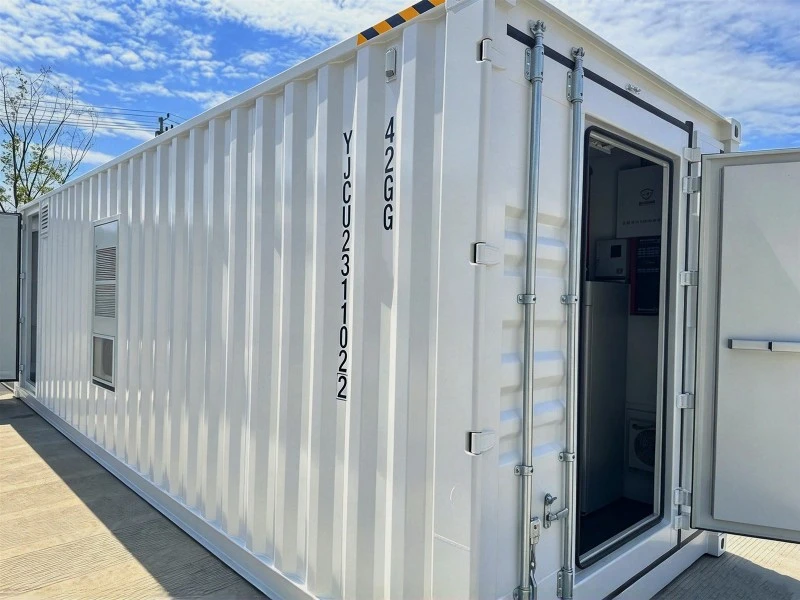
A C&I system is best understood as five layers, each with its own failure modes and its own specification questions.
Cells and modules. LFP dominates for stationary storage: lower fire risk than high-nickel chemistries, long cycle life, and cost per kWh that no alternative currently matches for daily cycling. Module design determines thermal paths, and the quality of cell screening determines the statistical tail of defects.
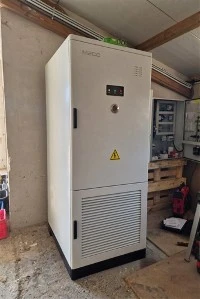
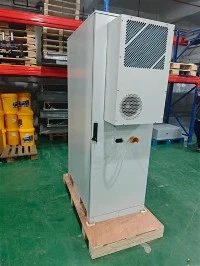
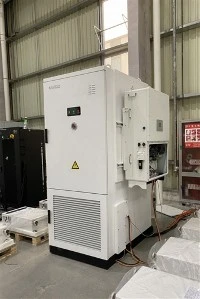
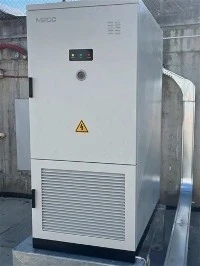
Packs and cabinets. Cells are assembled into modules and racks inside an enclosure with thermal management, fire detection, gas sensing and DC protection. The cabinet is the unit you actually buy, and its enclosure rating, corrosion class and thermal design determine where it can be installed and how long it lasts. Our guides on IP ratings and C4 versus C5 corrosion cover those decisions in detail.
Power conversion. The PCS converts DC to AC and back, sets the system's response speed, provides reactive power and grid-support functions, and is the component most often responsible for downtime. Its rating relative to the battery determines whether the system is an energy asset (long duration, low C-rate) or a power asset (short duration, high C-rate).
Controls. BMS protects the cells, EMS decides the strategy, PCS executes. The hierarchy matters: protection always outranks optimisation, and a system where the EMS can command outside the BMS's safe envelope is a design defect. Our EMS versus BMS versus PCS explainer is the reference for how these layers should interact.
Balance of plant. Transformer, switchgear, protection, metering, cabling, and the civil works. Unglamorous, frequently underestimated, and often 25 to 40 percent of installed cost. A storage project is an electrical infrastructure project with a battery in it, not the other way round.
Where the Value Comes From
Seven value streams matter in commercial applications. Most projects rely on two or three; a well-designed one might stack four.
Demand charge management. Shaving the monthly or annual peak. The most reliable stream in most markets, and the easiest to model from interval data.
Time-of-use arbitrage. Charging in cheap hours, discharging in expensive ones. Value depends entirely on the tariff spread and the number of cycles available per day.
Solar self-consumption. Storing midday generation for evening use, particularly where export is limited or poorly compensated.
Resilience and backup. Keeping critical loads running through outages. Hard to monetise directly, but often the deciding factor for hospitals, data-dependent operations and cold chain.
Power quality and capacity support. Voltage support, motor-start assistance, harmonic mitigation, and avoiding service upgrades. The dominant value in manufacturing and weak-grid sites.
Grid services and flexibility markets. Frequency response, capacity markets, demand response and virtual power plant participation. Revenue varies enormously by market and should be treated as upside unless contracted.
Avoided infrastructure cost. The service upgrade, transformer replacement or generator you did not have to buy. Frequently the largest line item and the one most often omitted from the model.
Our article on behind-the-meter versus front-of-meter siting addresses where these streams can be captured, which is a regulatory question as much as an engineering one.
Sizing: Three Methods, Three Answers
Sizing is where most projects go wrong, usually by applying the wrong method.
The bill method works backwards from the tariff. Take twelve months of interval data, identify the peak and its timing, and size a battery to cap the peak at a setpoint. Fast, defensible, and appropriate for demand-charge-driven projects. Its weakness is that it ignores what the site could do with more capacity.
The load method models the site's actual behaviour - a factory's welding spikes, a cold store's compressor cycles, a depot's charging waves - and sizes for the duty cycle rather than the bill. This is the right approach for power-quality and high-C-rate applications, and it frequently produces a smaller battery than the bill method, because it reveals that the peak is brief.
The resilience method starts from the critical load list and the required autonomy, then sizes for energy. It almost always produces the largest and most expensive system, which is why resilience-only projects need a clear operational justification rather than a general aspiration.
Mature projects run all three and compare. Our articles on multi-day autonomy and on industrial load profiles show how the methods diverge in practice.
Technology Choices That Actually Matter
Four specification decisions carry most of the consequence.
Chemistry. LFP for essentially all C&I applications in 2026. The interesting question is no longer which chemistry but which cell supplier and what the cycle life looks like at your actual duty, not at a nominal 0.5C.
Thermal management. Air cooling is cheaper and adequate for low-C-rate, temperate sites. Liquid cooling costs more upfront, holds cell temperatures more evenly, and pays back in high-ambient or high-C-rate duty. Our comparison article covers the trade-off, including the serviceability penalty of liquid systems.
Voltage architecture. 1500V DC is the mainstream, reducing cable losses and balance-of-plant cost. 2000V is arriving with SiC devices and offers further savings at scale, but brings insulation coordination and arc-flash questions that must be engineered rather than assumed.
Enclosure and environment. IP rating, corrosion class, and thermal design for the actual site - not a generic outdoor assumption. A coastal site, a dusty farm and a rooftop in a hot climate need different answers, and getting this wrong is the most common cause of premature failure.
Software Is Half the Product
A modern C&I system is a dispatched asset, and its returns depend on the control layer as much as the hardware.
The EMS must handle tariff logic, forecast-driven dispatch, state-of-charge management, degradation-aware cycling, and the measurement and verification data that proves savings. Increasingly it also coordinates with solar, EV charging, and building loads, and exposes data to aggregators for flexibility markets.
Three capabilities separate good from adequate. Forecasting that actually narrows error rather than restating the weather. Guardrails that prioritise safety and contractual obligations over optimisation - a battery that maximises arbitrage by arriving at the evening peak empty is not optimised, it is misconfigured. Transparent data, exported at interval level and at cell-module granularity, because that data is what settles warranty and guarantee disputes.
Safety and Compliance: The Floor, Not the Differentiator
Safety is a specification baseline, not a sales argument.
UL 9540 certifies the system; UL 9540A characterises thermal runaway behaviour and propagation at cell, module, unit and installation level, and is what fire authorities actually use to evaluate a design. NFPA 855 governs installation, including separation distances and indoor limits, with local amendments that vary significantly. IEC 62619 covers industrial lithium cells for markets outside North America. Fire suppression technology is a design choice layered on top of these.
The practical advice: engage the authority having jurisdiction early, in writing, before design freezes. A system that meets the code but not the local interpretation of it will sit in a warehouse.
How to Buy One
The procurement path that consistently produces good outcomes has five steps.
Define the objective in financial terms - which value streams, what payback, what constraints. Prepare a load and tariff dataset, not a wish list. Issue an RFQ with the duty cycle, the site conditions and the commercial terms you need, using a structured template. Compare total cost of ownership rather than capital cost, including augmentation, maintenance and end-of-life. And negotiate the warranty and performance guarantee as one package, with measurement boundaries that match your revenue metering.
Two documents deserve particular attention because they are routinely confused: the product warranty covers defects, while the performance guarantee covers output. A system can satisfy the first completely and still underdeliver against the second.
Seven Mistakes That Recur
Sizing for arbitrage when the tariff rewards peak reduction. The most common modelling error.
Ignoring balance-of-plant cost. Transformer, switchgear and civil works can add more than the battery itself.
Specifying a C-rate the warranty does not cover. Welding, motor starts and depot charging are not 0.5C duties.
Assuming the utility upgrade will arrive on schedule. It usually does not.
Buying software as an afterthought. The dispatch layer determines realised value.
Skipping the AHJ conversation. Code compliance is necessary but not sufficient.
Treating the guarantee as boilerplate. It is the document that protects the business case.
Where to Go Next
This guide is the hub. The library around it is organised into clusters, and the most useful entry points are these.
For fundamentals, start with the EMS, BMS and PCS explainer and our piece on behind-the-meter versus front-of-meter siting. For sizing, read the industrial load profile guide and the multi-day autonomy article. For technology, the liquid versus air cooling comparison, the IP rating guide and the C4/C5 corrosion guide. For software, the C&I EMS requirements piece and the AI dispatch article. For safety, thermal runaway prevention, fire suppression and the UL 9540 explainer. For procurement, the RFQ template, the TCO calculator methodology and the warranty versus guarantee guide. For sector-specific requirements, our vertical guides cover cold storage, hospitals, ports, mining, manufacturing, commercial real estate, agriculture and EV fleet depots.
C&I energy storage solutions have become a mature category with mature expectations. The projects that succeed in 2026 are not the ones with the most advanced cells - they are the ones where the load was measured properly, the tariff was read correctly, the duty cycle was specified honestly, and the contract matched the physics.
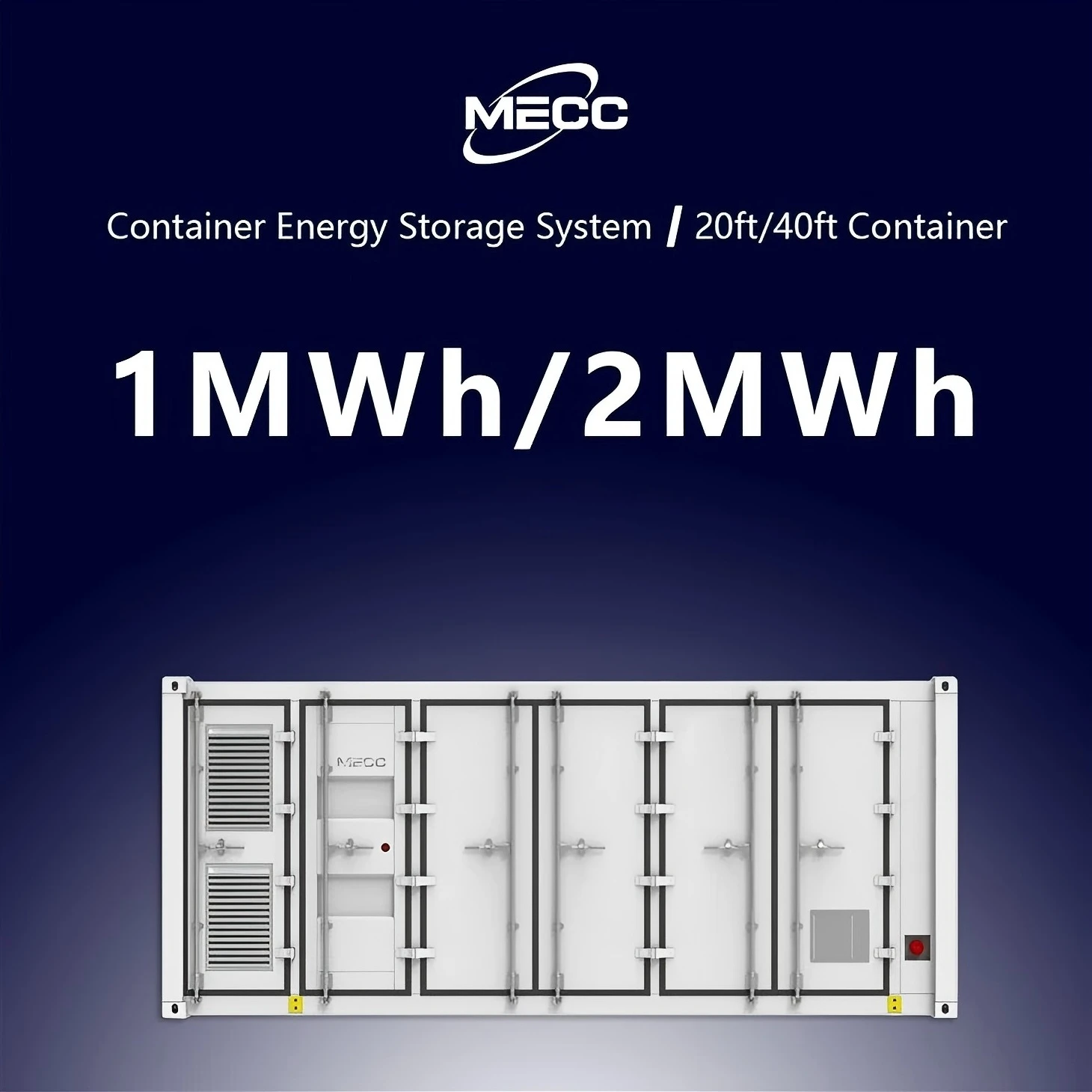
500KW/1MW 1MWh/2MWh Battery Energy Storage System Container
The 500kW/1MW 1MWh/2MWh Battery Energy Storage System Container is a turn‑key utility‑grade energy storage solution housed in standard 20ft or 40ft shipping containers, integrating bidirectional PCS, A‑grade LiFePO4 battery clusters, master BMS, liquid‑cooled thermal management, gas fire suppression, high‑voltage distribution and EMS energy management system with full factory pre‑assembly and pre‑commissioning. Requiring only foundation construction and high‑voltage cable connection for on‑site commissioning, it supports flexible power‑capacity configuration and multi‑container parallel expansion, delivering core capabilities of peak‑shaving and load shifting, renewable energy smoothing, frequency‑voltage grid support, islanded micro‑grid operation and large‑scale emergency backup. Featuring IP54 enclosure protection and comprehensive multi‑layer safety mechanisms, it adapts to diverse harsh outdoor environments, and is widely deployed for ground‑mounted PV power stations, industrial parks, mining operations, island microgrids and grid‑side auxiliary service projects to stabilize grid fluctuations, boost renewable energy utilization and reduce comprehensive energy costs.