


1 Development History
Early exploration stage:
In the late 19th and early 20th centuries, scientists began to study the photovoltaic effect and solar cell technology.
Subsequently, solar cell technology gradually developed, but it was mainly applied in space exploration and special fields.
Initial application stage:
With the maturity of solar cell technology and the reduction of costs, photovoltaic systems have begun to be applied to ground power generation.
At the same time, energy storage technology has also begun to develop, but it is mainly used for peak shaving and backup in the power system.
Rapid development stage:
In recent years, with the global energy transition and the increasing proportion of new energy generation, photovoltaic and energy storage technologies have developed rapidly.
The combination of photovoltaic and energy storage systems has become an important means to address the volatility and instability of new energy generation.
2 Technical features
Photovoltaic power generation:
Using solar cells to convert light energy into electrical energy.
It has the advantages of cleanliness, renewability, and no emissions.
However, the power generation efficiency is affected by factors such as light intensity and temperature, resulting in fluctuations and instability.
Energy storage technology:
Store electrical energy or other forms of energy and release them when needed.
It can balance the supply and demand of the power grid and improve energy utilization efficiency.
Energy storage technology includes various forms such as battery energy storage, pumped storage, and compressed air energy storage.
Photovoltaic+Energy Storage System:
Combining the advantages of photovoltaic power generation and energy storage technology to achieve stable output and efficient utilization of electrical energy.
By using energy storage systems to regulate and backup photovoltaic power generation, the stability and reliability of the power system can be improved.
3 Application Fields
Power system:
The "photovoltaic+energy storage system" can provide auxiliary services such as peak shaving, frequency regulation, and backup for the power system.
Improve the stability and reliability of the power system, and reduce operating costs.
Distributed energy:
Build distributed photovoltaic and energy storage systems on the user side to achieve spontaneous self use of electricity and grid connection of surplus electricity.
Reduce user electricity costs and improve energy efficiency.
Microgrid and Off Grid Systems:
Constructing microgrids and off grid systems in remote areas or special occasions, utilizing photovoltaic and energy storage technologies to provide power supply.
To solve the problem of insufficient or unstable power supply and improve energy self-sufficiency.
4 Development Trends
Technological innovation
Solar cell technology and energy storage technology will continue to innovate and develop.
Improve the efficiency, reduce costs, and extend the service life of photovoltaic and energy storage systems.
Market expansion:
With the acceleration of global energy transition and the increasing proportion of new energy generation, the market demand for "photovoltaic+energy storage systems" will continue to expand.
Governments of various countries will increase their support and promotion of photovoltaic and energy storage technologies.
Policy guidance:
Governments of various countries will introduce relevant policies and regulations to guide the development and application of photovoltaic and energy storage technologies.
Encourage enterprises to increase research and development investment, improve their technological level and market competitiveness.
Intelligence and digitalization:
With the development of intelligent and digital technology, the "photovoltaic+energy storage system" will achieve intelligent management and operation.
Improve the operational efficiency and reliability of the system, and reduce maintenance costs.
In summary, the development of "photovoltaic+energy storage system" has broad prospects and significant importance. It will bring new changes and development opportunities to the energy sector, promoting global energy transformation and sustainable development.
5 The Importance of Fire Protection in Industrial and Commercial Energy Storage Systems

With the continuous development of industry and commerce, the application of energy storage systems has become increasingly widespread. However, its fire safety issues have become increasingly prominent and have become a critical aspect that people cannot ignore.
Once a fire occurs in the industrial and commercial energy storage system, it may pose a serious threat to property and personnel safety. The main hazards of energy storage station fires are generally many, directly affecting people's daily lives and offices. Internally, during the manufacturing process of batteries, there may be defects or hidden dangers within the battery cells, or battery aging caused by long-term use; From an external perspective, factors such as external impact and water immersion can also cause damage to the battery, leading to short circuits. The fire hazards of electrochemical material energy storage system power plants can be roughly divided into two categories: one is mainly caused by power generation fires caused by electrical fires, such as electrical transformer welding fires and cable welding fires that may not occur in conventional energy storage power plants now; The other type is mainly caused by power generation fires in chemical energy storage systems due to battery fires, which pose great harm and are not completely controllable once caused by battery fires.
In summary, fire protection measures for industrial and commercial energy storage systems are crucial. It is not only related to property safety, but also to the safety of personnel's lives. Only by attaching importance to the fire safety issues of energy storage systems and taking effective fire prevention measures can we ensure the stable development of industry and commerce.
6 Fire safety requirements
(1) Requirements for electric energy storage devices
1. Brief description of energy storage battery:
The safety performance of energy storage battery cells, modules, and clusters should strictly comply with relevant regulations, such as GB/T36276, and pass inspection by legally qualified testing institutions to obtain type inspection reports. When plastic is used as the shell material and partition material for battery cells and modules, the combustion performance level should not be lower than the B1 level requirement specified in GB 8624. Flame retardant materials should be used for components such as control harnesses and cables, and foolproof design should be adopted for electrical interfaces. Insulation and shielding measures should be taken for exposed live parts to improve safety. At the same time, the shell of the battery module and the energy storage cabinet can form a reliable equipotential connection, and thermal insulation materials such as mica and aerogel should be set between the monomer in the energy storage battery module to effectively prevent safety problems caused by heat transfer.
2. Brief description of battery management system:
In addition to complying with the provisions of GB/T 34131, the battery management system should also have battery overvoltage, undervoltage, voltage difference, overcurrent, short circuit and other electrical protection functions, as well as temperature (over temperature, low temperature, temperature difference or temperature rise rate), gas and other non electrical protection functions, and be able to issue graded warning signals or trip instructions. In addition, it has a linkage interface with the fire detection and alarm system, receiving gas warning and fire alarm signals, and issuing corresponding linkage control instructions. The system should have battery consistency management function, and the number of temperature collection points for each battery module should not be less than 25% of the number of battery cells in the module and not less than 4. Temperature collection points should be set up near the positive and negative poles of the module to ensure accurate monitoring of battery status.
3. Brief description of energy storage cabinet:
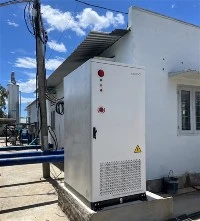
The surface of the energy storage cabinet should have a corrosion-resistant coating or coating, with a corrosion resistance level not lower than C3, and customized treatment is required for special environments. The cabinet should meet the requirements of waterproofing, moisture resistance, etc., and the protection level should not be lower than the IP54 specified in GB/T 4208. The shell structure, insulation materials, and interior and exterior decorative materials should be flame-retardant materials. The cabinet should have insulation design around and at the top, and the fire resistance limit should not be less than 0.5 hours. The cabinet is equipped with ventilation and heat dissipation facilities, and flammable and harmful gases such as H ₂ or CO leaked from the battery should be able to be quickly discharged. The cabinet shell should have nameplate information, including but not limited to rated power, rated capacity, commissioning date, etc. The fire protection distribution line should meet the needs of continuous power supply during a fire, and the laying of its wires and cables should comply with the provisions of GB 50016. The grounding design of power equipment should comply with the provisions of GB/T 50065.
4. Brief description of location selection:
The location selection of energy storage systems should comply with relevant regulations and should not be adjacent to or set up in places where flammable and explosive dangerous goods are produced, stored, or operated. It should not be set up in places with flammable gases, dust, or corrosive gases, nor should it be set up in important overhead power line protection areas. At the same time, energy storage systems should not be installed in densely populated areas, underground or semi underground spaces, and the fire resistance rating of buildings should not be lower than level two.
(2) Requirements for fire protection facilities
1. Brief description of fire detector:
Fire detectors should be installed inside the energy storage cabinet, including but not limited to compound detection of one or more parameters such as gas, temperature, smoke, pressure, etc., and should comply with the provisions of GB 16838. Each battery module in the energy storage cabinet can be equipped with a separate fire detector, including but not limited to built-in or plug-in detectors. The national standard "Safety Regulations for Electrochemical Energy Storage Power Stations" (GB/T 42288-2022) will be officially implemented on July 1, 2023, which specifies that the battery room/compartment should be equipped with an automatic fire extinguishing system, which should be linked with the battery management system, fire detector or combustible gas detection device, air conditioning, and exhaust system, and have remote passive command start and emergency mechanical start functions. The minimum protection unit of the automatic fire extinguishing system should be the battery module, and each battery module should be separately equipped with a detector and a fire extinguishing medium nozzle, that is, using "PACK level detection+fire extinguishing". The Safety Regulations stipulate that fire extinguishing media should have good insulation and cooling performance, be able to extinguish battery fires and electrical equipment fires, and prevent reignition. The main terms repeatedly mention the use of temperature detectors, smoke detectors, and other detection and alarm devices to ensure the safety of energy storage systems.
7 Fire Protection Plan
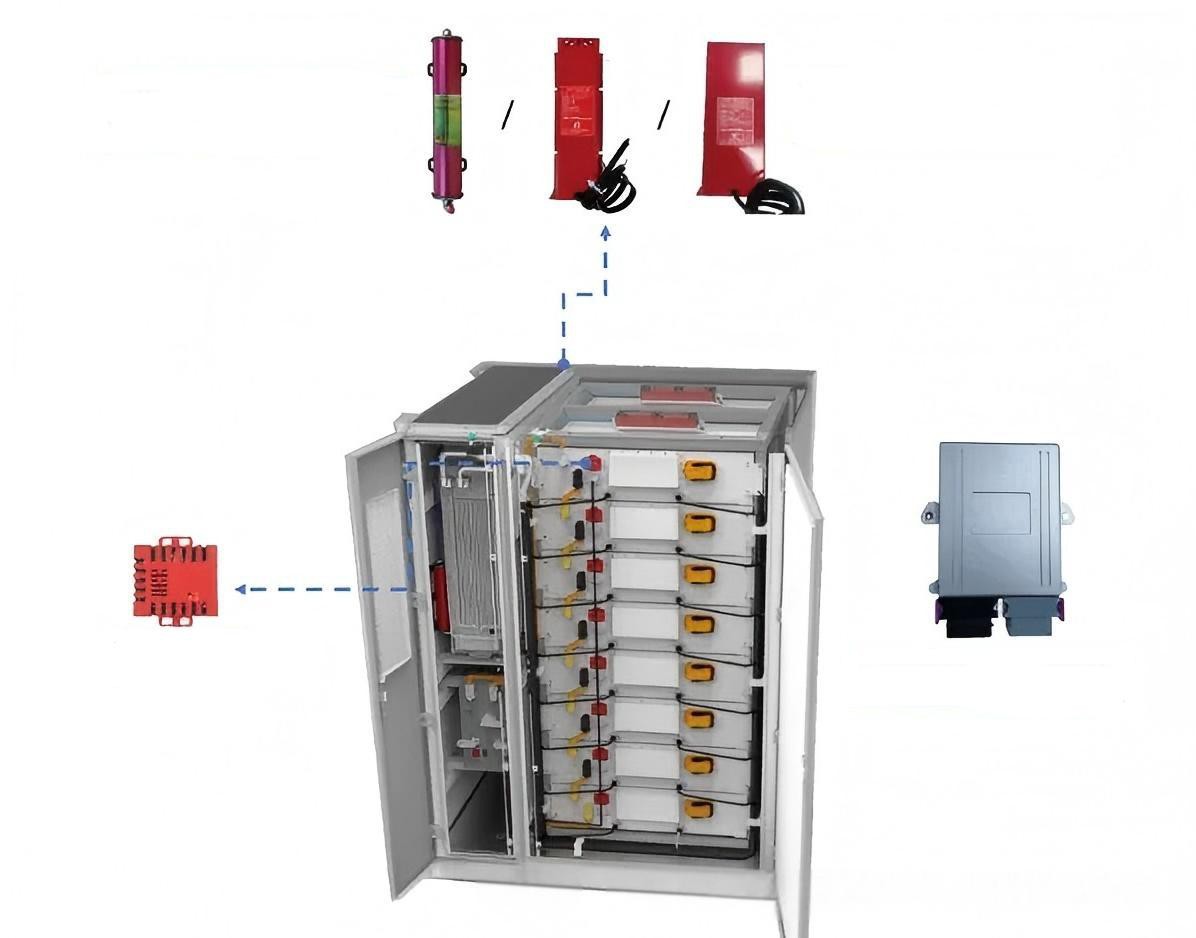
(1) PACK level protection scheme
Description: Using a single PACK as the protective unit, a composite detector is used to detect battery temperature, smoke, etc., achieving fire warning. The fire suppression device is linked to spray fire extinguishing agent into the PACK package to suppress the fire.
In industrial and commercial energy storage systems, PACK level protection solutions are crucial. By using composite detectors to accurately detect battery temperature, smoke, CO, and VOC gases, it is possible to quickly determine fire signals and achieve efficient fire warning. When an abnormal situation is detected, the alarm control device will immediately activate the fire suppression device. At this point, the suppression device accurately sprays the fire extinguishing agent into the PACK package through the nozzle, thereby effectively suppressing the internal fire of the battery. This PACK level protection scheme has the characteristics of high protection level and high integration density. Combined with the battery management system, it can timely identify the early thermal runaway state of the battery, take fire extinguishing measures quickly after the thermal runaway of the individual battery, and prevent the spread of the fire.
(2) Cabinet level protection scheme
1. Brief description of plan one: When the battery thermal runaway occurs inside the energy storage cabinet, the composite detector detects the combustible gas and sends out an alarm signal, which is linked to the sound and light alarm and aerosol fire extinguishing device to completely submerge the protective cabinet fire.
When battery thermal runaway, electrolyte leakage, or open flames occur in electrical equipment inside the energy storage cabinet, a large amount of combustible gas will be released. At this point, the composite detector can detect combustible gases and issue an alarm signal in a timely manner. The alarm signal will be linked to the sound and light alarm, issuing a strong sound and light warning to remind on-site personnel to evacuate in a timely manner. At the same time, the linkage aerosol fire extinguishing device can provide full submergence protection for the cabinet after the aerosol fire extinguishing device is activated, effectively suppressing cabinet fires. This solution can respond quickly in the early stages of a fire, minimizing damage to energy storage cabinets and surrounding equipment caused by the fire.
2. Brief description of plan two: When a fire occurs inside the energy storage cabinet, the fire detection tube bursts at the highest temperature point, the container valve is activated, and the fire extinguishing agent is sprayed from the explosion point of the fire detection tube to suppress the fire.
When a fire occurs inside the energy storage cabinet, the fire detection tube with a certain pressure inside will soften and burst at the highest temperature. By utilizing the pressure drop in the fire detection tube and activating the container valve, the fire extinguishing agent is sprayed from the explosion site of the fire detection tube, directly acting on the fire area to suppress the spread of the fire. This scheme has the characteristics of rapid response and precise fire extinguishing, and can play an important role in the critical moment of fire occurrence.
In summary, the fire protection plan for industrial and commercial energy storage systems should be reasonably selected and designed according to the actual situation to ensure rapid response and effective extinguishing in the event of a fire, and to ensure the safety of personnel and equipment.
8 Key points for selecting fire extinguishing devices
When selecting fire extinguishing devices for industrial and commercial energy storage fire protection systems, multiple important factors need to be comprehensively considered to ensure that the fire extinguishing devices can exert maximum effectiveness in the event of a fire.
Firstly, the types of fire extinguishing agents. At present, common fire extinguishing agents include gas fire extinguishing agents (such as nitrogen, heptafluoropropane, perfluorohexane, etc.), fine water mist, aerosols, etc. Gas fire extinguishing systems have the advantages of fast fire extinguishing speed and high efficiency. Among them, nitrogen fire extinguishing systems are clean, non-toxic, and suitable for large centralized energy storage facilities, which can avoid secondary damage to battery components; Heptafluoropropane is a mainstream fire extinguishing agent in China, and its fire extinguishing mechanism is mainly chemical inhibition. It has a fast extinguishing speed, good cleanliness, and insulation properties; Perfluorohexane, as a new environmentally friendly fire extinguishing agent, has the advantages of zero ozone depletion potential, low global warming potential, high electrical insulation, non toxicity, and non corrosion, making it particularly suitable for extinguishing electrical fires. The fine water mist fire extinguishing system is environmentally friendly and efficient, which can quickly reduce the temperature of the fire scene, effectively isolate oxygen, and prevent reignition, especially suitable for energy storage battery fires. The aerosol fire extinguishing system is easy to install, occupies a small area, and can quickly control the fire. It is suitable for fire prevention and control in local spaces inside energy storage compartments.
Next is the deployment method. Different fire extinguishing systems have different deployment methods, for example, gas fire extinguishing systems can be divided into pipe network systems and non pipe network fire extinguishing devices; The fine water mist fire extinguishing system requires the deployment of high-pressure equipment; The perfluorohexane fire extinguishing system has various deployment methods such as cabinet type, prefabricated type, non storage pressure type, pump group type, etc; The aerosol fire extinguishing system uses a fire extinguishing agent composed of solid particles to quickly extinguish the fire. When choosing a deployment method, it is necessary to comprehensively consider factors such as the type, scale, layout, and environmental conditions of the energy storage system.
Environmental adaptability is also an important consideration factor. Energy storage facilities may be located in different environments, such as large centralized energy storage power stations, distributed modular energy storage facilities, industrial and commercial energy storage cabinets, etc. For different environments, it is necessary to choose a suitable fire extinguishing system. For example, nitrogen fire extinguishing systems are suitable for large centralized energy storage facilities; Water mist fire extinguishing systems are often used in distributed and modular energy storage facilities; The aerosol fire extinguishing system is suitable for local spaces inside energy storage compartments.
In summary, when selecting fire extinguishing devices for industrial and commercial energy storage fire protection systems, factors such as the type of fire extinguishing agent, deployment method, environmental adaptability, and maintenance cost should be comprehensively considered. Scientific selection and reasonable deployment of fire extinguishing devices should be carried out to ensure the safe and stable operation of energy storage power stations.
9 Fire drill and training

Regular fire drills and training are important measures to ensure the fire safety of industrial and commercial energy storage systems. Through fire drills and training, employees' safety awareness and ability to respond to fires can be improved, ensuring that measures can be taken quickly and effectively in the event of a fire, reducing losses.