



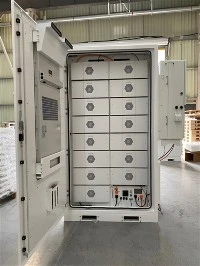

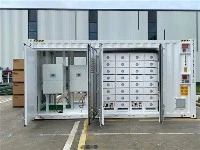
The high proportion of photovoltaic grid integration brings challenges such as voltage fluctuations, frequency deviations, and harmonic pollution to the power grid. Global technology is shifting from simply meeting grid integration standards to actively supporting grid stability. Through technologies such as reactive power compensation, low-voltage ride through, and inertia simulation, photovoltaic power plants have transformed from "grid burdens" to "grid assets". This "grid friendly" upgrade is a key breakthrough in achieving a high proportion of renewable energy grids.
1 Reactive voltage control: precise adjustment to smooth out fluctuations
China's "SVG+inverter synergy" solution. The 800MW photovoltaic power station in Gansu Province is equipped with a 200Mvar static reactive power generator (SVG) at the grid connection point, which is linked to the reactive power output of 100 inverters in the power station. When the grid voltage is below 0.95pu, the SVG prioritizes the output of capacitive reactive power (response time<50ms), and the inverters synchronously adjust the power factor to 0.9 ahead. The combination of the two shortens the voltage recovery time to 200ms. When the voltage is above 1.05pu, it switches to inductive reactive power (power factor 0.9 lagging) to avoid voltage exceeding the limit. This technology controls the voltage deviation of the grid connection point within ± 2%, which improves the efficiency by 40% compared to a single SVG regulation. In a certain power grid fluctuation event, the power station successfully reduced the voltage fluctuation amplitude from 10% to 3%.
Distributed reactive power optimization technology in Europe. A 500MW distributed photovoltaic cluster in Germany (consisting of 100 10MW sub arrays) is equipped with a 10Mvar dynamic reactive power compensation device (DSTATCOM) for each sub array. Through the "regional collaborative control algorithm", reactive power output is allocated based on the sub array position and grid impedance (the edge sub array bears 60% and the center sub array bears 40%). This distributed design avoids the single point of failure risk of centralized SVG, and the reactive power regulation accuracy reaches ± 0.5Mvar, which is 50% higher than centralized. The practice in Baden-W ü rttemberg has shown that this cluster has increased the voltage qualification rate of distribution network lines from 85% to 98%, solving the problem of voltage instability in rural power grids.
2 Low voltage ride through and frequency support: resilience design for dealing with power grid faults
The composite capability of "LVRT+inertia simulation" in the United States. The inverter of the 1GW photovoltaic power station in Texas adopts a dual function design of "low voltage ride through (LVRT)+virtual inertia control": when the grid voltage drops to 0% (three-phase short circuit), the inverter maintains grid connected operation for 150ms (meeting the FERC standard in the United States), and releases energy storage (matched with 200MW/400MWh energy storage) through the "inertia simulation algorithm" (simulating the rotor inertia of synchronous generators) to provide frequency support, reducing the maximum deviation of the grid frequency from 0.5Hz to 0.2Hz. During the Texas grid fault in 2023, the power station continued to be connected to the grid and provided 50MW frequency modulation power, helping the grid quickly recover and stabilize.
India's' Low Cost LVRT Transformation 'Program. For old photovoltaic power plants (inverters without LVRT function), an "external LVRT controller" (with a cost of only 20% of replacing the inverter) is used to collect grid voltage signals, quickly cut off some component strings (control DC side power) when the voltage drops, and trigger the crowbar circuit to consume excess energy, keeping the inverter connected to the grid. The renovation test of a 300MW old power station in Rajasthan showed that the plan increased the LVRT pass rate from 30% to 95%, meeting the grid connection requirements of the Central Electricity Authority of India (CEA). The investment payback period for the renovation is only 2 years.

3 Harmonic control and power quality optimization: improving the purity of the power grid
China's "active filtering+SVG integration" technology. The 1.2GW photovoltaic power station in Qinghai has deployed an integrated device of "SVG+APF (active power filter)" at the grid connection point. SVG is responsible for reactive power regulation, while APF is responsible for harmonic control (which can filter out 2-50th harmonics). The two share a DC bus, reducing costs by 30% compared to a split type. The harmonic compensation accuracy of APF reaches ± 2%, which can reduce the total harmonic distortion (THD) of the power grid from 8% to below 3% (meeting the GB/T 14549 standard). After the application of a certain power station, the equipment failure rate of surrounding precision manufacturing enterprises decreased by 20%, avoiding production interruptions caused by harmonics.
Japan's "Distributed Harmonic Monitoring and Control" program. In response to the harmonic problems caused by distributed photovoltaics (household/industrial and commercial) in the distribution network, a "harmonic monitoring terminal" (sampling frequency 2kHz) is installed on the transformer side of the substation to monitor the content of each harmonic in real time. The "harmonic tracing algorithm" is used to locate the main source of harmonics (such as a photovoltaic inverter in a certain factory), and then the substation APF is used for directional compensation. The practice in a certain district of Tokyo shows that this plan reduces the THD of the distribution network from 10% to 4%, extends the service life of household appliances by 5%, and reduces transformer losses (saving 12000 kWh of electricity per year).
The improvement of the "grid friendliness" of photovoltaic power plants is essentially a transition from "confrontation" to "synergy" between new energy and the grid. In the future, with the integration of virtual power plants (VPP) and AI scheduling algorithms, photovoltaic power plants will be able to more accurately predict grid demand, achieve "on-demand output and on-demand regulation", ensure efficient power generation, and provide auxiliary services such as reactive power, frequency regulation, and backup for the grid, becoming flexible and controllable "green regulators" in the new power system.