


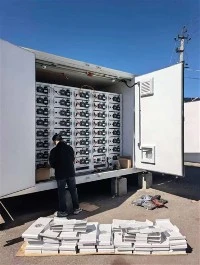
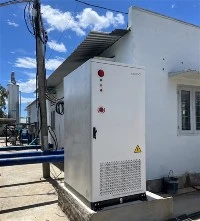
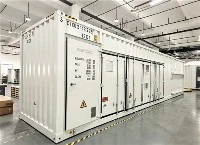
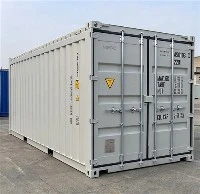
In natural disaster relief, large-scale outdoor activities, and infrastructure construction in remote areas, temporary electricity demand is often sudden and scattered. Traditional diesel generators have problems such as loud noise, heavy pollution, and difficult fuel supply. Energy storage containers, with their zero emissions, mobility, and rapid deployment characteristics, have become an all-around player in the field of mobile energy. They can serve as emergency power sources to support critical loads, and can also be combined with renewable energy to build temporary microgrids, redefining the mode of temporary power supply.
1 Emergency rescue: the 'power lifeline' at disaster sites
Earthquakes, floods, typhoons and other natural disasters often cause power grid paralysis, and the rapid response capability of energy storage containers is crucial at this time. The emergency energy storage container adopts a lightweight design (the weight of a 20 foot container is controlled within 8 tons), which can be quickly transported to the disaster area by truck or helicopter. Within 30 minutes of arrival, the wiring and power supply can be completed, greatly reducing the deployment time of diesel generators by 2 hours. Each 100kWh energy storage container can provide power for 10 medical tents (including ventilators, defibrillators, and other equipment), 20 emergency lighting fixtures, and 5 communication base stations simultaneously, with a continuous power supply time of over 12 hours.
In response to the complex electricity demand at the rescue site, the container is equipped with multiple specifications of output interfaces, including AC 220V/380V, DC 12V/24V, etc., which can be directly connected to equipment such as water pumps, cutting machines, satellite phones, etc. At a certain earthquake rescue site, an emergency power supply system consisting of two energy storage containers prioritized the power supply of medical equipment through intelligent load management. More than 300 injured people were treated before the power grid was restored, and its silent operation characteristics (noise below 55 decibels) avoided secondary interference with the injured.
Collaboration with photovoltaic vehicles further extends emergency power supply time. During the day, the flexible photovoltaic panels of the photovoltaic vehicle can be deployed up to 20 square meters to charge the energy storage container, generating approximately 3kWh of electricity per hour, extending the continuous power supply time by 50%; At night, a backup diesel generator is used to supplement power, forming a "light storage diesel" hybrid system, reducing diesel consumption by 30% and lowering environmental pollution at the rescue site.

2 Large scale event: The 'behind the scenes heroes' of green power supply
Large scale events such as music festivals, sports events, and outdoor exhibitions have a concentrated and diverse demand for temporary power supply. The zero emission characteristics of energy storage containers make them the preferred choice for "carbon neutral activities". A certain international music festival uses 10 50kWh energy storage containers to provide power for stage lighting, audio equipment, and dining areas. Combined with a 300kW mobile photovoltaic array, it achieves 100% clean energy supply during the event, reducing carbon emissions by about 200 tons, equivalent to planting 11000 trees.
The load fluctuation at the event site is large (such as a sudden increase in power at the beginning of the performance), and the fast charging and discharging ability of the energy storage container can effectively smooth out the fluctuation. Through the cluster control system, 10 containers can achieve an instantaneous power output of 500kW with a response time of less than 100 milliseconds, avoiding the impact of voltage fluctuations on precision equipment such as audio and LED screens. After the event, the energy storage containers can be quickly evacuated without the need for complex site cleaning like diesel generators, greatly reducing the logistics costs of the event.
The leasing model reduces the power supply cost for large-scale events. The event organizer does not need to purchase energy storage equipment, but rents it on a daily basis (market price is about 1000 yuan/day · 50kWh), saving 30% of costs compared to diesel generators (including fuel costs of about 1500 yuan/day · 50kWh). A certain marathon event achieved the promotional highlight of a "zero carbon event" by renting 8 energy storage containers and spending only 24000 yuan for 3 days, enhancing the social impact of the event.

3 Remote infrastructure: "energy supply stations" in off grid scenarios
In remote areas not covered by the power grid, such as mines, oil fields, and highway construction sites, energy storage containers can be combined with photovoltaic and wind power to construct off grid microgrids, replacing traditional diesel power generation. The drilling platform of a certain western oilfield adopts a "200kW photovoltaic+500kWh energy storage container" system, with a daily power generation of 1200 kWh, meeting 70% of the platform's electricity demand, reducing diesel consumption by 800 tons annually, saving fuel costs of about 1.5 million yuan, and eliminating safety hazards in diesel transportation.
In response to the difficulty of maintenance in remote areas, the energy storage container adopts a "maintenance free design": the battery uses lithium iron phosphate with a long cycle life (over 6000 cycles), which can achieve 5-year replacement free operation; The equipment inside the box has an IP65 protection level to resist erosion from sand, dust, and rain; The remote monitoring system can transmit real-time operational data, allowing operation and maintenance personnel to diagnose faults from bases hundreds of kilometers away, reducing on-site maintenance frequency. The energy storage system of a certain gold mine has been designed to control the annual maintenance cost within 50000 yuan, which is significantly lower than that of diesel generators (with an annual maintenance cost of 200000 yuan).
Modular expansion meets the electricity demand at different stages. In the initial stage of infrastructure projects, 1-2 energy storage containers can be deployed, and as the construction scale expands, the quantity can be gradually increased to avoid one-time large investments. A certain highway construction project is divided into three phases. In the first phase, 2 100kWh containers are used to meet the electricity needs of the campsite. In the second phase, 5 containers are added to meet the demand of the mixing station. In the third phase, 10 containers are expanded to supply power for tunnel construction, flexibly matching the project's electricity growth curve.
The application of energy storage containers in the fields of mobile energy and emergency response has broken the inherent thinking of "power supply relying on the grid", making energy supply more flexible, green, and reliable. From the "life support" of disaster relief to the "green business card" of large-scale events, and to the "energy pillar" of remote infrastructure, these mobile "energy warehouses" are using the power of technology to bring electricity to every corner in need, providing elastic energy support for social operation.