


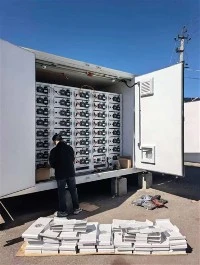
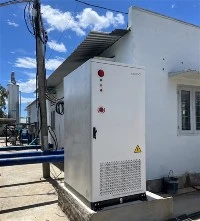
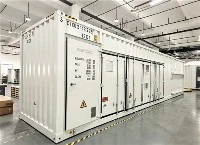
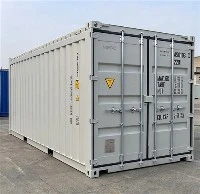
In extreme environments such as deserts and Gobi, high-altitude mountainous areas, and polar scientific research stations, stable energy supply is the lifeline for maintaining production and life. Energy storage containers, with their modular design, strong environmental adaptability, and rapid deployment capabilities, have become the "energy special forces" for these scenarios. They can not only withstand harsh conditions such as sandstorms, severe cold, and oxygen deficiency, but also collaborate with new energy systems such as photovoltaics and wind power to build independent and reliable power networks, providing continuous power for operations and scientific research in extreme environments.
1 Desert Gobi: an "energy fortress" against sandstorms and high temperatures
The desert and Gobi regions in northwest China have an annual sunshine duration of over 3000 hours, making them an ideal location for photovoltaic power plants. However, they also face challenges such as frequent sandstorms and surface temperatures exceeding 70 ℃ in summer. In response to this environment, desert type energy storage containers adopt a "triple protection" design: the outer shell is made of 3mm thick weather resistant steel, which has undergone sandblasting, rust removal, and fluorocarbon coating treatment. Its resistance to wind and sand wear is three times higher than that of ordinary containers, and its service life is extended to more than 20 years; Install a 50mm thick rock wool insulation layer on the inner wall of the box, combined with a photovoltaic sunshade on the top, to control the temperature inside the cabin below 40 ℃ and avoid battery degradation due to high temperature; The bottom adopts a raised 30cm anti sand base to prevent the accumulation of quicksand from blocking the heat dissipation holes.
In terms of energy storage system configuration, high temperature resistant lithium iron phosphate batteries are preferred, with a working temperature range of -20 ℃~60 ℃ and a cycle life of over 6000 times. In a certain Gansu desert photovoltaic energy storage project, 10 20 foot energy storage containers (with a total capacity of 20MWh) are matched with a 50MW photovoltaic power station. Through an intelligent temperature control system, liquid cooling is automatically activated during high temperatures at noon in summer to stabilize the battery temperature at 35 ℃± 2 ℃, ensuring daily full load charging and discharging. The annual power generation reaches 80 million kWh, providing strong support for peak shaving and valley filling of surrounding wind farms.
The "intelligent cleaning+redundant design" for dealing with sandstorm weather is equally crucial. The photovoltaic panels on the top of the container are equipped with an automatic brush cleaning device, which can be cleaned within 1 hour after a sandstorm, restoring over 95% of the power generation efficiency; The energy storage system adopts N+1 redundancy design, so even if a single container fails, the remaining equipment can still maintain 80% of its power supply capacity, ensuring uninterrupted operation of key loads such as oil extraction and border posts.

2 High altitude mountainous areas: cracking the energy code of hypoxia and low temperature
At an altitude of over 4000 meters on the Qinghai Tibet Plateau, the oxygen content in the air is only 60% of that in the plain. Extreme low temperatures of -30 ℃ can cause battery capacity to drop by more than 30%. The high-altitude energy storage container solves the problem through the dual strategy of "cold resistance+oxygenation": the battery uses lithium titanate material, which maintains a discharge capacity retention rate of 85% in -40 ℃ environment, and has a fast charging speed (up to 80% in 10 minutes), suitable for meeting the intermittent electricity demand in mountainous areas; A dispersed oxygen supply system is installed inside the box, which automatically starts when the altitude exceeds 3500 meters, increasing the oxygen content in the cabin to 21%, ensuring the stable operation of electronic components such as inverters and monitoring equipment.
To adapt to the complex terrain of mountainous areas, the energy storage container adopts a modular split design, which can be disassembled into three independent units, transported to the mountaintop by helicopter or mule and horse, and then assembled on site. In the energy storage project of a scientific research station in Xizang, three 50kWh energy storage units were deployed in only two days, forming a micro grid with a 20kW photovoltaic array, which solved the problem of difficult fuel supply for diesel generators in the scientific research station in winter, reducing diesel consumption by 15 tons and carbon emissions by 40 tons annually.
Anti UV aging and lightning protection design are equally indispensable. The anti UV coating on the surface of the container can resist strong UV radiation from high altitude and prevent plastic parts from becoming brittle; The active lightning protection device installed at the top can directly introduce lightning current into the ground, and with the help of internal equipment surge protectors, the lightning protection level of the system reaches IEC Class IV, ensuring safe operation in thunderstorm weather.

3 Polar Expedition: An Energy Ark to Resist Cold and Polar Nights
The Antarctic scientific research station is facing extreme cold of -60 ℃ and half a year of extreme night, which puts extreme demands on the reliability of the energy storage system. The polar type energy storage container adopts the "ultra-low temperature insulation+multi energy complementarity" scheme: the cabin adopts vacuum insulation panel (VIP) and polyurethane composite insulation, with a thermal conductivity as low as 0.008W/(m · K), only 1/5 of ordinary insulation materials. With electric heating compensation, even if the external temperature is -60 ℃, the cabin can maintain 15 ℃± 5 ℃; The energy storage battery uses lithium iron phosphate graphene composite battery, which improves low-temperature performance through the high conductivity of graphene. The discharge capacity retention rate at -50 ℃ reaches 70%, and the cycle life exceeds 5000 times.
To cope with the dilemma of no light at night, energy storage containers are combined with diesel generators and wind power systems to form a hybrid microgrid. At Zhongshan Station in Antarctica, two 100kWh energy storage containers and three 50kW diesel generators work together to reduce diesel consumption by 20% during the polar night period through the "energy storage peak shaving+generator leveling" mode, while also reducing mechanical losses caused by frequent generator starts and stops. The intelligent energy management system inside the container can predict the power load for 7 days, automatically adjust the charging and discharging strategies, and ensure the normal operation of laboratory equipment and living facilities in the polar night of the scientific research station.
Anti ice edge impact and wind resistant design are the foundation of polar survival. The container shell is equipped with a 5mm thick high manganese steel anti-collision layer, which can resist the impact of falling ice edges; The bottom adopts a sled style base, which can be fixed on snow covered ground and has a wind resistance level of 12, maintaining structural stability in Antarctic blizzard weather.
The application of energy storage containers in extreme environments is not only a technological victory, but also demonstrates humanity's determination to conquer nature with clean energy. From deserts to polar regions, these mobile "energy fortresses" are using the power of technology to provide stable and reliable electricity to every remote corner, providing solid energy security for scientific research exploration, resource development, and border construction.