





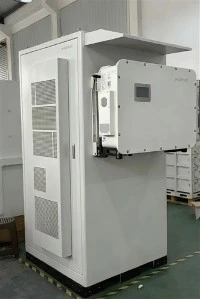
Most battery systems are designed for the day they are commissioned. The good ones are designed for the day they are not enough.
Battery storage augmentation - adding capacity to an existing system - happens for two reasons that are often confused: restoring capacity lost to degradation, and adding capacity for load growth. They have different triggers, different economics and different design implications. What they share is this: whether augmentation is cheap and routine or expensive and disruptive is decided on day one, years before anyone needs it.
This article covers the degradation math, the design decisions that keep the option open, and the commercial structures that make the second tranche affordable.
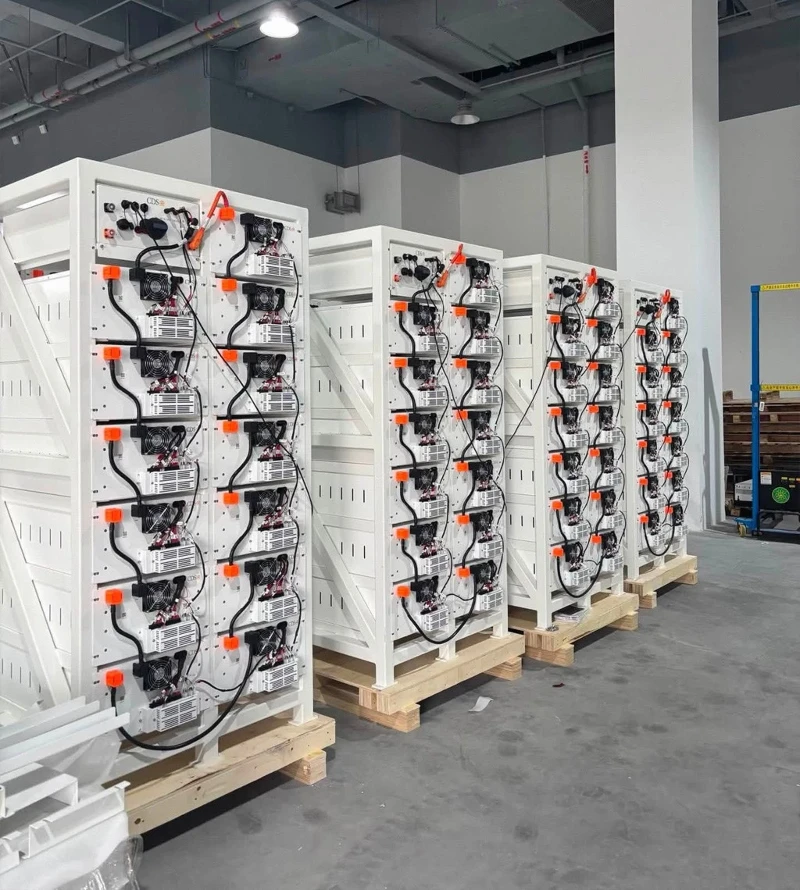
Two motives, two different contracts
Degradation compensation. The site's energy requirement is fixed - a demand-charge target, a contracted delivery, a resilience duration - and the battery slowly loses the ability to meet it. Augmentation restores margin. This is an operating-cost event, and it belongs in the ten-year model as a scheduled capex item.
Load growth. The site adds EV chargers, a production line, a cold store. The requirement grows, and the battery must grow with it. This is an expansion decision, and it competes with alternatives like a second system or a grid upgrade.
The distinction matters commercially. A vendor will happily sell you an augmentation clause for degradation - it is predictable and they can price it. Load growth is your forecast, not theirs, and it is better handled as a separately priced option or simply as a future purchase.
Specify which one the contract covers. A clause that only covers degradation will not help when the site adds two chargers.
The degradation math
Capacity declines year by year, typically 1.5–3% annually depending on chemistry, cycling and climate, with a slightly faster initial fade. Warranties usually guarantee a floor - commonly 70% of beginning-of-life usable capacity - but the economic trigger arrives much earlier than the warranty floor.
A worked example:
System: 1,000 kW / 2,000 kWh usable at commissioning.
Daily dispatch requirement: 1,800 kWh on the days that matter.
Fade: 2% per year, roughly linear.
Usable capacity falls to 1,800 kWh around year five. From that point, the system misses its target on peak days - not because anything failed, but because the arithmetic ran out. Waiting until the warranty floor at 70% would mean roughly a decade of partial delivery.
The augmentation tranche restores headroom: adding about 250 kWh at year five brings capacity back to roughly 2,050 kWh and carries the requirement through year ten, when a second augmentation or end-of-life decisions arrive.
Two refinements matter in the model:
Round-trip efficiency also fades, so the delivered energy per cycle declines slightly faster than capacity.
Augmentation cost per kWh at year five is not today's price. It will likely be lower on hardware, but installation into an operating system carries its own cost - which is precisely what day-one design determines.
The four layers of designing for augmentation
Layer 1: Electrical
The most common blocker is not space - it is switchgear.
Bus and breaker headroom. Reserve a breaker position and bus capacity for the augmentation feed. Retrofitting a switchboard is disruptive; specifying a spare way costs little.
Transformer margin. If the service transformer is sized for the final capacity, growth is an electrical task. If it is sized for phase one, growth becomes a utility project - the slowest, most expensive kind.
Conduit and cable routes. Install ducts and trays with spare capacity during the original civil works. Trenching twice doubles the cost of the second trench.
Metering and protection. Spare CT positions, relay settings documented for the expanded configuration, and a protection study that anticipates the added fault current contribution.
DC/AC ratio headroom. If the PCS is sized with margin, augmentation can be energy-only - the cheapest form. If the PCS is fully loaded, augmentation means power electronics too.
Layer 2: Physical
Reserved footprint. Mark and protect the augmentation area on the site plan - and make sure nothing else gets built there. Fencing, drainage and bollards installed for two units cost less than re-fencing for four.
Access. Crane or forklift access routes must survive whatever landscaping or construction happens in between. Check turning radii against the actual delivery vehicle, not the concept drawing.
Foundations. Pour the pad for the second unit with the first, or at least set out the datums. Matching elevations later is tedious.
Fire separation. NFPA 855 and local codes prescribe separation distances and per-unit energy limits. An augmentation that moves the array into a non-compliant configuration fails permitting. Design the final layout, then build it in stages.
Layer 3: Controls
Controller capacity. Confirm the EMS or microgrid controller supports the final unit count and point count, not just phase one.
Licence model. Per-point licensing makes growth expensive in software fees; site-wide licensing makes it routine. This is a negotiation item, not a technical detail.
Architecture. Systems designed around a single master device scale badly. Distributed architectures with defined parallel limits - and documentation of the tested maximum - scale cleanly.
Dispatch logic. The controller must handle units with different capacities and fade levels. Confirm that mixed-vintage dispatch is supported, not just homogeneous fleets.
Layer 4: Contractual
A priced option for the augmentation tranche - a formula, not a promise. Fixed price with an index collar, exercisable in a defined window.
Warranty treatment. Does adding capacity extend the warranty, reset the throughput counter, or create a second parallel warranty? Get it in writing.
Continuity of supply. The augmentation tranche must match the existing system, or be engineered to coexist with it. If the OEM discontinues the product line in year five - common in this industry - what then? A contractual commitment to supply compatible units, or an engineering solution for mixing vendors, is worth negotiating on day one.
Data and configuration export. The right to take the controller configuration and performance data to another vendor protects the augmentation path.
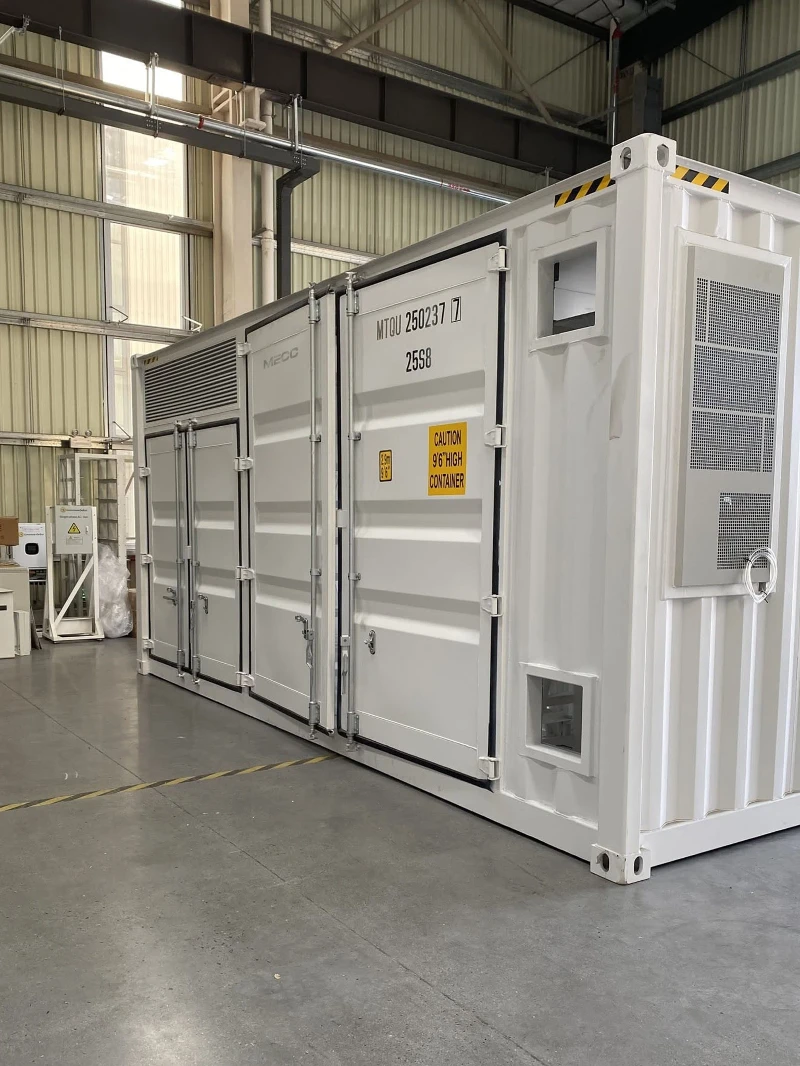
Mixing old and new batteries
The hardest technical problem in augmentation is combining a five-year-old battery with a new one.
The problems. Different open-circuit voltage at the same SOC, different internal resistance, different fade. Paralleled directly at DC, the packs exchange current with each other rather than with the load; the older, higher-resistance unit under-delivers and the BMS platforms may not even communicate.
The solutions, in increasing cost:
Same-vintage augmentation. Adding the same module type from the same OEM, managed by the same BMS family. Cleanest, and only possible if supply continuity holds.
Dedicated DC/DC conversion. The new block connects through its own converter, isolating voltage differences. Adds cost and one more failure point, but works.
Separate PCS. The augmentation gets its own inverter and joins at the AC bus. Most robust, and the standard answer for multi-vintage sites. Requires AC-side headroom - which is Layer 1's job to provide.
AC-parallel new unit. Functionally similar to a separate PCS; the new system is effectively independent and coordinated at the controller level.
Decide the mixing strategy at design time, because it dictates the electrical architecture. Retrofitting a decision in year five is possible; retrofitting the bus capacity is not.
Four augmentation modes
In-cabinet block addition. Some cabinet and container designs allow adding racks within reserved internal space. Cheapest per kWh, but only available if the enclosure, thermal and BMS were specified for it - and if the OEM still supports the platform.
Parallel addition. A second cabinet or container alongside the first. The default mode, and the reason pad space and breaker ways matter.
Power addition. A new PCS or a larger one, when the requirement is power rather than energy - faster dispatch, more concurrent capability.
Module replacement. Replacing degraded modules with higher-density new ones inside the existing enclosure. Attractive in theory, constrained by certification: the system was tested as a configuration, and changing it may require re-certification under UL 9540 or local equivalents. Ask before assuming.
Commercial structures for the second tranche
Fixed-price option with index collar. You pay a small option premium or accept a defined price formula; the vendor carries supply risk. Best when degradation timing is predictable.
Vendor-managed augmentation. The supplier monitors capacity and delivers augmentation as a service, priced per kWh-year. Shifts performance risk to the vendor and converts capex to opex. Common in energy-as-a-service structures.
Open-market purchase. No commitment; buy at year five from whoever is competitive. Cheapest in a falling market, but requires the architecture to accept third-party equipment - which the vendor has no incentive to guarantee.
The choice interacts with the mixing strategy: an open-market purchase almost certainly means a separate PCS.
Modelling it properly
In the financial model, augmentation is a dated capex event - typically one or two tranches in years five to eight - plus its share of installation, and possibly a controller or licence step. Model the trigger condition (capacity falls below requirement plus margin), not just a fixed year, and let the fade assumption drive the date.
Present the sensitivity too: at 1.5% and 3% annual fade, the augmentation date moves by roughly two years in either direction, and the ten-year cost changes with it. A business case that hides augmentation is one that reappears in year six as a budget surprise.
When you do not need to design for it
Not every project should carry the overhead. Skip it when:
The site's requirement is fixed and the system is oversized from day one, with fade never reaching the requirement inside the horizon.
The land is constrained and expansion is physically impossible - in which case size for end-of-life, not for growth.
The project is a single-block deployment where augmentation economics are dominated by the utility upgrade you would need anyway.
Designing for augmentation costs real money - switchgear ways, pads, controller licences. Spend it where growth or degradation will actually arrive.
FAQ
What is battery storage augmentation?
Adding capacity to an existing system - either to restore capacity lost to degradation or to serve load growth. It typically takes the form of additional racks, cabinets or containers integrated with the original system.
When should augmentation happen?
When usable capacity approaches the site requirement plus operating margin - commonly years five to seven for a system sized to its requirement at commissioning, depending on fade rate.
Can I mix old and new batteries?
Yes, but rarely at the DC bus directly. Voltage and resistance differences require either a DC/DC converter or a separate PCS with AC-side paralleling. Design the architecture for it in advance.
Does augmentation reset the warranty?
It varies. Some warranties run per-asset, some per-system, and augmentation can create a second parallel warranty with different terms. Get the treatment specified before signing.
How much does augmentation cost?
Per kWh, usually less than the original install on hardware and more on integration - the cost sits in engineering, protection updates, controller changes and site works, which is exactly why day-one design matters.
The bottom line
Battery storage augmentation is decided twice: once in the spreadsheet when the fade curve crosses the requirement, and once on day one when someone decides whether the second transformer way, the spare breaker position and the reserved pad exist.
Design the final configuration, build it in stages, and contract the second tranche with a formula instead of a hope. The cheapest augmentation is the one whose infrastructure was already installed.

High Voltage Lithium Battery LiFePO4 314Ah Racked
MECC High Voltage Battery 314AH, the epitome of safety and reliability in the world of energy storage. This cutting-edge lithium iron phosphate battery system is specifically designed to cater to the demanding needs of UPS, home storage, and industrial as well as commercial energy storage fields. Whether you're looking to secure uninterrupted power supply, optimize home energy consumption, or enhance industrial energy capabilities, this battery energy storage system delivers the solution you need with unmatched versatility and reliability.