





When a lithium-ion cell enters thermal runaway, it vents a hot mixture of flammable gases - hydrogen, carbon monoxide, methane and hydrocarbons. In an open-air installation that mixture disperses. In a container or a battery room it accumulates, and at some concentration and some ignition source, it deflagrates.
The two standards that govern this outcome take opposite philosophical positions. NFPA 68 accepts that a deflagration may occur and manages it - venting the pressure and flame to a safe location. NFPA 69 works to prevent the ignitable atmosphere from forming at all, through ventilation and detection.
For a containerised or indoor BESS, the question is not which one to choose. Modern designs usually apply both, in layers. This article explains the physics, the mechanisms, the design decisions, and the mistakes that show up in plan review.
As with the previous article in this series: the numeric values here are typical figures for orientation. Vent sizing depends on enclosure geometry and test-derived gas data, and the requirements depend on the adopted edition and the AHJ. Final designs belong with a fire protection engineer.
The physics in one paragraph
Thermal runaway releases a gas mixture whose composition varies by chemistry and cell design. Hydrogen is the critical component: it has a low flammable limit (roughly 4% by volume in air), a wide flammable range, and a very high flame speed. The mixture's explosibility is characterised in NFPA 68 by its Kst value - the deflagration index. Hydrogen-rich mixtures sit at the aggressive end of the scale, with typical values in the hundreds of bar-metres per second, which is why battery enclosures need far more vent area than a methane-heated building of the same volume would.
The amount of gas produced is not a guess. It is measured - in the UL 9540A large-scale fire test - and that measured gas generation is the design input for everything below.
NFPA 68: managing the deflagration
NFPA 68 assumes an ignition happens inside the enclosure and designs so that the resulting pressure is released without destroying the enclosure or harming people.
The mechanism. Vent panels - lightweight, low-inertia covers - open at a defined activation pressure, well below the enclosure's structural limit. The expanding gas and flame exit through the vents, keeping the internal pressure below the enclosure's withstand.
The key parameters:
Enclosure strength (Pred). How much internal pressure the container can take before it fails. A standard ISO container is relatively weak; a purpose-built enclosure can be designed stiffer, which reduces the required vent area. This is a design trade the mechanical engineer must make consciously.
Activation pressure (Pstat). How early the vent opens. Lower is better for limiting peak pressure, but the panel must still stay sealed against wind, rain and normal operations.
Vent area. Calculated from the gas Kst, the enclosure volume, Pred and Pstat. For hydrogen-rich mixtures the required area is large - often a substantial fraction of a container's roof area. This is frequently the governing constraint on whether a design fits.
The details that determine whether venting works:
Discharge path. Vents must discharge to a safe location - away from personnel, egress routes, adjacent units, buildings and equipment. On a constrained site, the discharge path is often the binding constraint, not the vent area.
Discharge ducts. Routing the vent through a duct dramatically reduces its effectiveness and increases the pressure the enclosure sees. Avoid ducts; if unavoidable, they must be accounted for in the sizing.
Obstructions. Cable trays, lighting, HVAC ductwork or snow accumulation over a vent panel can effectively remove it from the design. Roof-mounted vents on containers regularly lose area to equipment installed after the fact.
Environmental degradation. Insect screens, corrosion in coastal environments, insulation, and ice can all change activation pressure. Vents need inspection in the maintenance plan - they are safety devices, not roof hardware.
NFPA 69: preventing the atmosphere
NFPA 69 takes the other approach: never allow the gas concentration to reach an ignitable level.
The mechanism. Continuous or demand-controlled ventilation dilutes the released gas, and gas detection verifies that the concentration stays below a defined fraction of the lower flammable limit - commonly a value well under the LFL, with an additional safety margin. On detection of rising concentration, the system escalates: increase ventilation, shut down charging, de-energise the affected section, alarm.
The key design elements:
Ventilation rate. Sized from the credible gas generation rate - which comes from UL 9540A data, not from an assumption. The fan must dilute the worst credible release to below the design concentration, with margin for fan degradation.
Detection. Gas detectors, calibrated for the expected gas mixture. Hydrogen rises, so detectors belong high in the enclosure, near the likely release points and out of dead zones where airflow is weak. Detector technology matters: hydrogen sensing has cross-sensitivities and calibration drift, and a detector that alarms at the wrong time - or never - is worse than none.
Fail-safe behaviour. If ventilation is lost - fan failure, power loss, blocked intake - the system must not simply carry on. Loss of ventilation should trigger alarm and, depending on design, shutdown. This is the requirement most often left unspecified and discovered during commissioning.
Interlocks. Detection-to-ventilation-to-disconnection must be a tested sequence, with defined setpoints, delays and actions, verified at commissioning and re-verified after any firmware change.
NFPA 69 is the primary layer in most modern BESS designs because it acts early - before an ignition source, before a deflagration, before the event escalates to neighbouring units.

How the two combine in practice
The standard modern architecture for a containerised or indoor system is a two-layer design:
Prevention layer (NFPA 69): gas detection, continuous or demand ventilation, automatic escalation to shutdown, fail-safe on ventilation loss.
Mitigation layer (NFPA 68): vent panels sized for the credible deflagration, discharging to a safe location, as the backstop if prevention fails.
NFPA 855 and the fire codes reference both mechanisms for indoor installations and, in practice, reviewers increasingly expect the same discipline outdoors. The balance between them is an engineering decision: strong prevention can justify a smaller venting provision on some designs; weak prevention cannot be compensated by venting alone, because a vent manages pressure but does not stop a fire from starting.
One point worth stating plainly to buyers: fire suppression does not address deflagration. Suppression systems act on flames after ignition; they neither prevent the gas accumulation that causes an explosion nor protect the enclosure from the pressure event. A container with sprinklers and no gas strategy is not protected against the failure mode that matters most.
UL 9540A: the data source
Every number in both standards needs an input: how much gas, how fast, of what composition. That input comes from UL 9540A testing at cell, module, unit or installation level.
The test report provides:
Gas composition and quantities released during thermal runaway.
Whether ignition and propagation occur between units.
Heat release rates.
This is why the test data package has become a procurement item, not just a compliance document. A vendor with installation-level UL 9540A data can support a ventilation design sized to real measurements and can defend reduced separations. A vendor without it forces the designer to assume worst credible values - larger vents, more ventilation, more cost, and a harder conversation with the AHJ.
Eight mistakes that appear in plan review
Sizing vents for methane or "generic hydrocarbon" parameters instead of the hydrogen-rich mixture the battery actually produces. The vent area comes out far too small.
Blocked or shaded vents - cable trays and HVAC ductwork installed over vent panels after the fire design was approved.
Discharge paths aimed at walkways, parking, other units or the building. The vent works; the site does not.
Long discharge ducts assumed to be neutral. They are not.
Detectors at the wrong height or in dead zones, where airflow never carries the gas.
No fail-safe on ventilation loss. Fan trips, controller never notices.
Treating 68 and 69 as alternatives and letting a value-engineering exercise delete one layer.
No maintenance provisions - vents and detectors are safety instruments that drift, corrode and get painted over. If the inspection plan does not name them, they will not be inspected.
A six-step design workflow
Obtain the vendor's UL 9540A data package - gas composition, quantities, propagation behaviour.
Define the enclosure: volume, structural withstand, geometry, roof area available.
Choose the prevention strategy: ventilation rate, detector type and placement, interlocks, fail-safe behaviour.
Size the deflagration venting for the credible gas, with the discharge path defined on the site plan.
Coordinate the discharge path with everything else that wants that space: egress, other units, vehicle access, the next expansion phase.
Define the inspection and test regime - detectors, fans, interlocks, vent panels - and put it in the O&M manual.
FAQ
What is the difference between NFPA 68 and NFPA 69?
NFPA 68 manages a deflagration after ignition, venting pressure and flame to a safe location. NFPA 69 prevents the ignitable atmosphere from forming, through ventilation and gas detection. Battery systems typically use both, in layers.
Does a fire suppression system protect against explosion?
No. Suppression acts on flame after ignition; it does not remove the gas accumulation that drives a deflagration. Gas detection, ventilation and venting address the explosion risk; suppression does not.
Do outdoor containers need vent panels?
Often yes, but the requirement depends on the enclosure, the credible gas quantities and the AHJ's position. Outdoor dispersion helps, but a sealed container can still accumulate gas and fail violently. Test data drives the answer.
Why is hydrogen the problem gas?
It has a low flammable limit, a wide flammable range and a very high flame speed. A mixture that is mostly water vapour and CO2 with a few percent of hydrogen behaves far more aggressively than a hydrocarbon of the same bulk.
Can I skip venting if I have strong ventilation?
Sometimes, and only with an engineering justification the AHJ accepts. NFPA 69 prevention with a documented basis can reduce - not automatically remove - the NFPA 68 provision. That analysis belongs to a fire protection engineer.
The bottom line
NFPA 68 BESS compliance and NFPA 69 prevention are not competing codes but two layers of one strategy: keep the atmosphere below ignitable, and if that fails, give the deflagration somewhere to go that hurts no one.
Both layers are only as good as their inputs - which means UL 9540A data, a real enclosure strength figure, detectors that actually see the gas, and vents that are still clear in year five. Buy the data package, design the discharge path early, and put the safety devices on the inspection list by name.

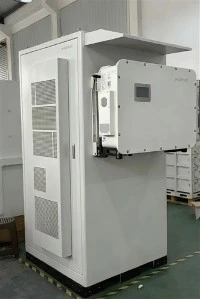
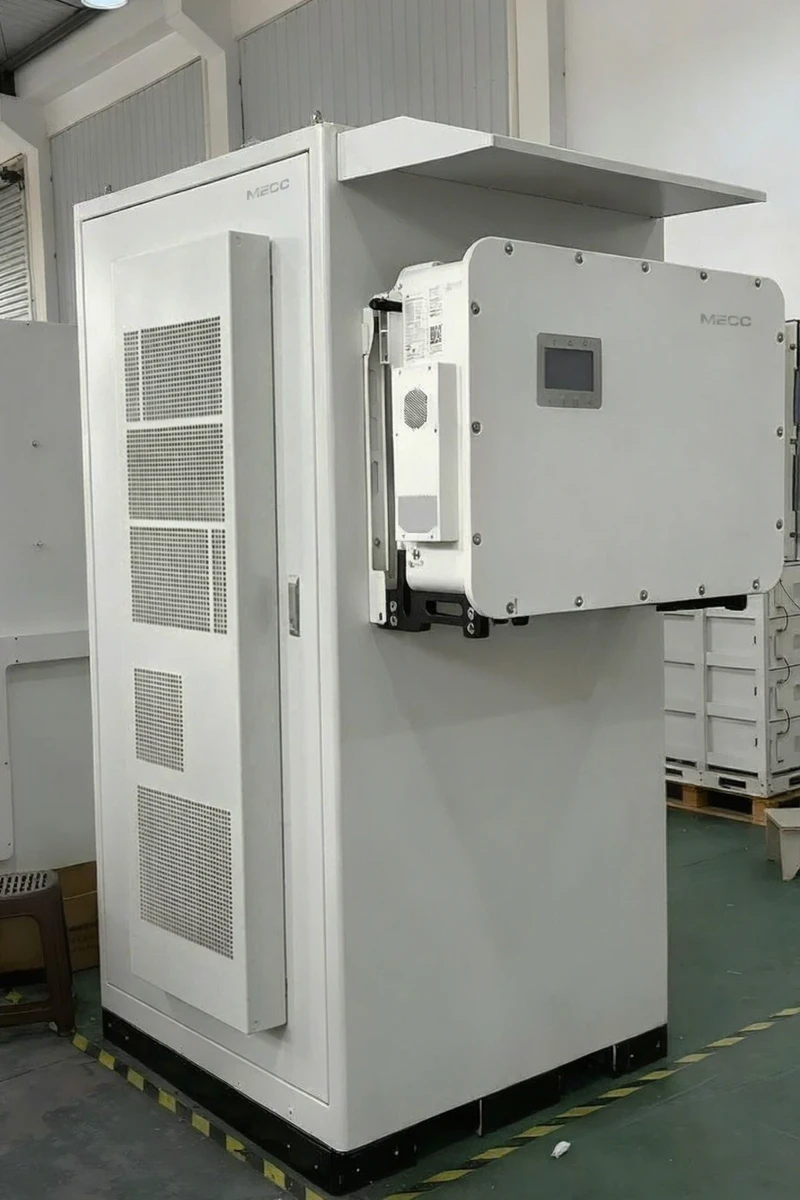
125KW 241kWh Battery Energy Storage System Cabinet
The BESS 125KW 241kWh Lithium Battery Energy Storage Cabinet is a high-power, large-capacity integrated energy storage solution engineered for medium-to-large commercial, industrial, and utility-scale applications. It integrates a 125kW high-performance bidirectional inverter, a 241kWh lithium iron phosphate (LiFePO4) battery bank, and a full-featured intelligent energy management system (EMS) into a modular cabinet design. This system enables efficient renewable energy storage, peak shaving, load shifting, grid frequency regulation, and emergency backup power supply. Ideal for large factories, shopping malls, industrial parks, utility-scale solar/wind farms, and microgrids, it enhances energy independence, reduces high grid demand charges, and supports the stable integration of high-penetration renewable energy into the grid.