


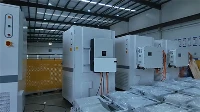
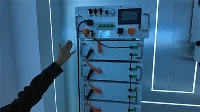


For two decades, every lithium battery in commerce was built the same way: cells grouped into modules, modules into packs, packs into racks, racks into enclosures. That hierarchy is now dissolving from the bottom up.
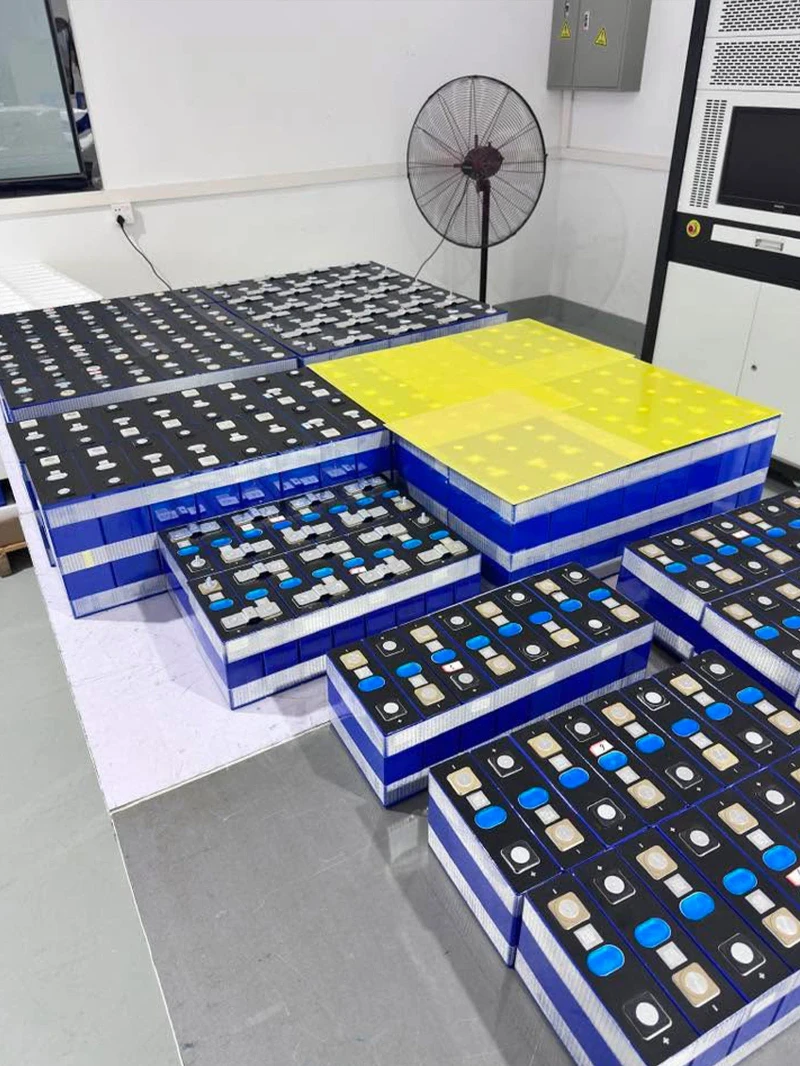
Cell-to-pack design removes the module layer entirely - cells assembled directly into the pack. Cell-to-system goes further, integrating cells into the structural enclosure itself. Both originated in electric vehicles, both are now migrating into stationary storage, and both deliver real cost and density gains - along with a set of trade-offs that land, quietly, on the owner's operating budget rather than the purchase price.
If you are comparing quotes in 2026, some systems on the table are module-less. Understanding what that changes - and what it costs you later - is the purpose of this article.

The hierarchy and why it existed
The cell-module-pack-rack structure was never arbitrary. Modules existed to solve four problems:
Manufacturing. Assemble and test a manageable unit, then build systems from it.
Service. Replace a faulty group of cells without touching the whole pack.
Safety. Contain a cell failure within a mechanical boundary.
Scalability. One module design, many product sizes.
Each layer added hardware: brackets, busbars, module BMS boards, covers, fasteners. In a traditional pack, that structure can consume a meaningful share of the internal volume and a noticeable slice of the cost. The module was insurance paid in dollars and litres.
What cell-to-pack changes
Large-format LFP cells - now in the hundreds of amp-hours - made the module optional. A cell big enough, and a BMS capable of managing cell-level data directly, allows cells to be arrayed straight into the pack enclosure.
The gains are real:
Volumetric efficiency. Removing module hardware frees interior space for cells. Densities improve materially - the same cabinet energy in the same footprint.
Cost. Fewer parts, fewer connections, less assembly labour. In a market where quotes compete on $/kWh, this is the whole point.
Thermal design. Direct cell-to-cold-plate contact becomes possible without a module boundary in the way.
Reliability arithmetic. Every connection removed is a failure point removed.
Cell-to-system extends the logic: the cells contribute to the structural enclosure - the battery is the box. This maximises density and part count reduction, and it is the direction the most integrated products are taking.
The trade-offs, honestly assessed
Every layer the packaging removes, the operating model pays for. Four costs deserve explicit attention.
1. Serviceability: the replaceable unit gets bigger.
Modules were the field-replacement unit. In a module-less design, the replacement unit is the pack - a larger, heavier, more expensive object requiring more lift capacity, more labour and more downtime. A failed group of cells that once cost a module swap now costs a pack exchange. This changes the O&M contract, the spare parts strategy and the crane access design simultaneously. Ask one blunt question of every vendor: what exactly is the field-replaceable unit, and what does it weigh?
2. Certification and augmentation become harder.
A listed system is certified as a configuration. The more integrated the design, the more a cell substitution or capacity addition means re-certifying the whole. Module-based systems offer a natural seam for augmentation; integrated systems often do not. If your business case depends on a mid-life augmentation tranche, the packaging choice determines whether that tranche is routine or a re-engineering project - the same trap the augmentation article warns about, arriving through a different door.
3. Second life and recycling lose their seams.
Second-life buyers and recyclers value disassemblability. Modules can be graded, tested and resold as units. Pack-integrated and system-integrated designs must be broken down to cell level - more labour, more cost, less residual value. The packaging decision quietly reprices your end-of-life exit.
4. Mechanical management moves to the cells.
In cell-to-system designs, cells carry structural load and must be managed against swelling over life - compression fixtures, pressure tolerances, and a maintenance story that did not exist in module-based products. Done well, this is engineered; done cheaply, it is a long-term reliability risk that shows up as accelerated degradation. It is also harder to assess from a datasheet, which puts more weight on vendor track record and third-party data.
The BMS shift nobody prices
Removing modules does not remove the need to know what every cell is doing. Cell-to-pack shifts sensing and protection responsibility from the module BMS to a central, higher-channel-count architecture.
Consequences worth checking in procurement:
More sensing channels per rack - confirm the BMS actually measures cell-level voltage and temperature, not group averages.
Wiring harness complexity concentrated rather than distributed - a failure mode with different service characteristics.
Software dependency increases. The central BMS carries more of the safety logic, making firmware quality, update discipline and cybersecurity part of the safety case, not just the IT case.
Where the market is heading
The trend line is clear: large-cell LFP plus module-less racks are becoming the default in Chinese-manufactured storage products, and the "rack as pack" architecture is spreading through C&I cabinets and container systems alike. Western suppliers are following at varying speeds.
For buyers, the market consequence is a new evaluation asymmetry: the integrated products look better on purchase price per kWh - often decisively so - while the module-based products retain advantages in serviceability, augmentation flexibility and end-of-life value. Neither is wrong. They are different distributions of the same lifecycle cost.
The correct comparison, as always in this industry, is ten-year total cost of ownership: purchase price, augmented capacity, expected downtime, field replacement costs, spare parts holding, and residual value. On that basis, the packaging choice is a genuine decision - not a footnote on the datasheet.
FAQ
What is the difference between cell-to-pack and cell-to-system?
Cell-to-pack removes the module layer, assembling cells directly into the pack. Cell-to-system goes further, making the cells part of the structural enclosure. Each step trades serviceability and modularity for density and cost.
Does cell-to-pack make batteries less safe?
Not inherently. Propagation behaviour depends on the whole design - cell format, thermal management, spacing, BMS - not on whether modules exist. Integrated designs can be safer or less safe; the UL 9540A data is what decides, as always.
Will cell-to-pack designs lower my price per kWh?
Usually yes, visibly. The question is what the same design does to field replacement cost, augmentation cost and residual value - the parts of the lifecycle that never appear on the quote.
Is this trend bad for second-life batteries?
It reduces disassemblability, which lowers second-life and recycling value somewhat. Not fatally - grading simply happens at pack level where possible - but it is a real factor in end-of-life economics.
Should I prefer module-based systems for easier maintenance?
Only if maintenance flexibility is worth the price premium to your operation. Fleets with strong in-house service capability often prefer module-based or modular architectures; single-site owners focused on capex often prefer integrated products. Decide with your O&M model on the table.
The bottom line
Cell to pack battery architecture is a genuine advance: less hardware, more density, lower purchase cost. Cell-to-system pushes the same logic further. What they trade away - modular service, augmentation seams, end-of-life disassembly - does not appear in the quote, but it appears in years four through twelve of your ownership.
Ask what the replaceable unit is, how augmentation works, and where the residual value went. The packaging trend is good for the industry; just make sure you are buying the whole lifecycle, not only the first inch of it.