


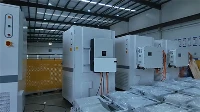
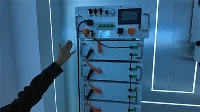
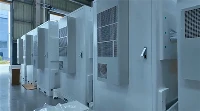
MECC Solar, a specialised manufacturer of lithium-based energy storage equipment for global commercial and industrial clients, has opened factory demonstrations of its 112kWh and 241kWh all-in-one energy storage cabinets. The integrated cabinet units are built for commercial solar projects, peak shaving, demand response and backup power applications. The live factory display allows international distributors, EPC contractors and commercial project buyers to review cabinet layout, internal wiring, thermal management and system integration before placing orders or launching customised OEM and ODM development.
Commercial energy storage buyers often face inconsistent site conditions, varying grid regulations and unique load profiles for factories, retail centres and agricultural facilities. Standard off-the-shelf storage cabinets cannot always match these project requirements. MECC's expanded customisation programme addresses this gap, with the 112kWh and 241kWh models serving as the core baseline platforms for tailored commercial energy storage deployments.
Core Features of 112kWh and 241kWh All-in-One Energy Storage Cabinets
The two baseline cabinet configurations are engineered with different power and energy targets to cover mid-scale commercial use cases.
The 112kWh all-in-one energy storage cabinet is compact and transport-friendly. It suits small commercial sites, including retail stores, small manufacturing workshops and agricultural facilities that require moderate energy capacity for peak shaving and emergency backup. Its footprint is optimised for limited indoor or sheltered outdoor installation space, reducing civil construction work on site. EPC teams find this model easier to schedule and deploy for projects with tight installation timelines.
The 241kWh all-in-one energy storage cabinet delivers higher energy capacity for larger commercial and light industrial locations. It supports longer discharge durations and heavier continuous loads, making it suitable for warehouses, data edge nodes and medium-sized factory power optimisation projects. Both models adopt an all-in-one design that integrates battery packs, BMS, power conversion unit, fire suppression and thermal control inside a single cabinet enclosure. This integrated structure removes much of the on-site assembly work required for split storage systems.
MECC designs these baseline cabinets to be fully adaptable. Beyond the standard 112kWh and 241kWh specifications, the engineering team can adjust capacity, power rating, communication protocols and cabinet markings according to client specifications under OEM and ODM arrangements.
Technical Advantages for Commercial and Industrial Energy Storage
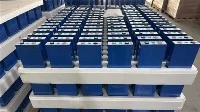
Every all-in-one storage cabinet on factory demonstration uses lithium iron phosphate battery cells, selected for stable cycling performance and enhanced thermal safety in commercial operating environments.
A high-precision battery management system runs across the whole cabinet to monitor cell voltage, temperature and current in real time. The BMS maintains cell balancing during charge and discharge cycles, prevents overcharge, deep discharge and short-circuit risks, and sends early warning alerts when abnormal parameters appear. This continuous monitoring reduces unexpected shutdowns and extends the service life of the battery system, a key concern for commercial asset owners with multi-year return-on-investment plans.
Active thermal management is built into each cabinet. The temperature control system stabilises internal operating conditions across hot summers and cold winters, supporting consistent performance in different regional climates for overseas installations. Integrated fire detection and suppression modules follow international safety standards, helping EPC contractors meet local commercial building and electrical codes.
The unified communication interface supports common industrial protocols, enabling seamless connection with SCADA platforms, solar inverters and grid management systems. This interoperability simplifies remote operation, data logging and demand response participation for utility-connected commercial storage projects.
Application Scenarios for Custom All-in-One Commercial Storage Cabinets
MECC's 112kWh and 241kWh integrated storage cabinets, alongside customised OEM and ODM variants, fit four high-demand commercial energy storage scenarios.
Peak shaving and demand charge reduction remains the largest use case for commercial clients. Business operators store solar power or low-cost grid electricity during off-peak hours and draw stored energy during high-price peak periods to cut monthly electricity bills. This application is widely adopted by factories, supermarkets and logistics warehouses across Europe, Southeast Asia and North America.
Grid backup power protects critical commercial loads during utility outages. Retail businesses, cold storage facilities and small production lines can avoid revenue loss and equipment damage with reliable stored power.
Solar self-consumption optimisation works for sites equipped with rooftop PV arrays. Surplus solar generation is captured inside the storage cabinet instead of being exported to the grid, maximising on-site renewable utilisation.
Microgrid and off-grid commercial power systems rely on these cabinets for stable power supply at remote mining camps, island commercial sites and rural industrial hubs where grid access is limited or unreliable.
With flexible OEM and ODM support, distributors can request branded enclosures, custom software dashboards, modified voltage parameters or special packaging to fit their local market requirements.
Market Value for EPC Contractors, Distributors and OEM Partners
Many global commercial storage resellers prefer working with manufacturers that provide both standard baseline models and custom development capacity. MECC's factory demonstration gives B2B buyers transparent visibility into build quality, component layout and testing workflows before committing to large contracts.
Standard 112kWh and 241kWh units support fast order fulfilment for repeat orders and urgent project schedules. Meanwhile, the ODM service opens opportunities for partners who want to launch their own branded commercial storage product lines without building an in-house R&D and production line. This split offering lowers the market entry barrier for new regional storage distributors.
All cabinets undergo factory-level performance testing before shipment. Test reports, certification documentation and technical drawing packages are available to support partner submissions for local approval and tender bidding. This technical documentation package saves significant preparation time for EPC teams bidding on commercial solar and storage projects.
Outlook
MECC Solar will continue to expand its commercial all-in-one cabinet lineup while refining its OEM and ODM processes. The factory demonstration zone will be updated regularly to show new capacity options and upgraded control features. The company invites overseas procurement managers, EPC engineers and brand owners to arrange factory visits, review the 112kWh and 241kWh storage cabinets and discuss custom development terms.
As commercial energy storage markets grow, MECC Solar will focus on balancing standardised mass production and customised engineering support. The goal is to deliver robust, code-compliant integrated storage cabinets that help global B2B partners capture more commercial solar and energy optimisation projects.

125KW 241kWh Battery Energy Storage System Cabinet
The BESS 125KW 241kWh Lithium Battery Energy Storage Cabinet is a high-power, large-capacity integrated energy storage solution engineered for medium-to-large commercial, industrial, and utility-scale applications. It integrates a 125kW high-performance bidirectional inverter, a 241kWh lithium iron phosphate (LiFePO4) battery bank, and a full-featured intelligent energy management system (EMS) into a modular cabinet design. This system enables efficient renewable energy storage, peak shaving, load shifting, grid frequency regulation, and emergency backup power supply. Ideal for large factories, shopping malls, industrial parks, utility-scale solar/wind farms, and microgrids, it enhances energy independence, reduces high grid demand charges, and supports the stable integration of high-penetration renewable energy into the grid.