Case Study: 15MW/30MWh Behind‑the‑meter Energy Storage System For Heavy‑Industry Enterprise

Aug 14, 2026 Leave a message

Project Background


Faced with steep electricity tariffs during daytime peak hours, excessive demand charges caused by volatile transformer loading rates, and severe financial losses from power outages due to production processes requiring high power‑supply continuity, how can industrial enterprises break through these bottlenecks?


A 15 MW/30 MWh behind‑the‑meter energy‑storage system offers the solution. Adopting an intelligent operational strategy dominated by peak‑valley load shifting, supplemented by demand management and emergency backup power, the system precisely addresses the three major power‑consumption pain points and builds a stable and cost‑effective energy safety barrier for the enterprise.
 
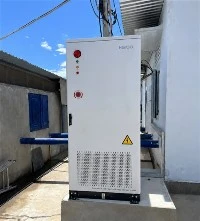
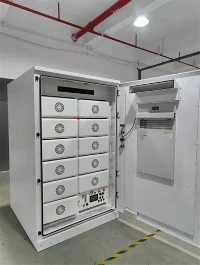
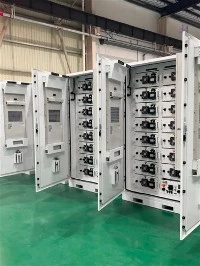
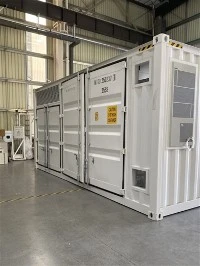
The total installed capacity of this project is 15 MW/30 MWh. MECC supplies converter‑and‑step‑up integrated cabins including core PCS units and complete supporting electrical equipment. The project applies string‑type architecture with individual management for each battery string; power is boosted to 10 kV via step‑up transformers.
 
The core advantage of string‑type PCS lies in the paradigm shift from "centralized control" to string‑level refined management. Equipped with an independent converter for each battery string, it mitigates efficiency degradation and safety risks originating from battery inconsistency in conventional centralized solutions.


2026-08-14094845773


Eliminate the "cask‑barrel effect" and unlock battery potential: In centralized solutions, multiple battery strings are paralleled on the DC side, and overall performance is constrained by the weakest battery string, resulting in wasted usable capacity. String‑type PCS implements "independent management per string", enabling separate charge‑discharge control for every battery string and greatly improving battery usable capacity.


Eliminate circulating current risks and enhance system safety: In centralized schemes, performance discrepancies among battery strings produce DC‑side circulating currents, lowering system efficiency and potentially triggering short‑circuit and thermal‑runaway hazards. The string‑type architecture shifts parallel connection from DC side to AC side, physically isolating individual battery strings and substantially reducing safety risks.


Superior long‑term economic performance (LCOS): By raising operational efficiency and extending battery service life, the string‑type solution effectively reduces the levelized cost of storage (LCOS) over the full asset lifecycle.


Technical Highlights & Engineering Challenges with Practical Solutions


Technical highlight: String‑type architecture improves full‑lifecycle returns


Traditional centralized PCS connects multiple battery strings in parallel to one central converter, which brings inter‑string circulating current and SOC divergence and accelerates usable‑capacity degradation. This solution adopts string‑type PCS with "one set of management per battery string". Each battery string is independently connected to a 125 kW PCS module. Inter‑string circulating current is eliminated, and system efficiency across the whole lifecycle is significantly improved.


Key on‑site technical pain point 1: Large‑scale multi‑string coordinated control risk under fluctuating industrial load


Problem description


Although string‑type hardware realizes independent control of each battery string, the project contains a huge quantity of 125 kW PCS modules. Frequent, sharp fluctuations of on‑site industrial production loads will constantly change target charge‑discharge power of the whole 15 MW station. Without high‑precision cluster coordination logic, individual PCS modules may respond asynchronously. Asynchronous power output among massive PCS units will cause AC‑side power oscillation, voltage flicker on the 10 kV bus, and interfere with the enterprise's critical production loads. In addition, SOC imbalance may gradually emerge among numerous battery strings during long‑term continuous operation, weakening the original advantages of the string‑type solution.


2026-08-14094851487


MECC technical solution


MECC deploys a dedicated energy management system (EMS) tailored for large‑scale string‑type ESS clusters. The EMS performs centralized upper‑layer scheduling for all 125 kW string‑PCS modules. It delivers synchronized power‑setting commands with millisecond‑level time consistency and adopts smooth power‑ramp limiting logic for the whole station. When industrial load changes rapidly, total charge‑discharge power rises or falls gradually rather than jumping abruptly, suppressing AC‑side power oscillation and 10 kV bus voltage flicker.


Meanwhile, the EMS continuously collects real‑time SOC, voltage and temperature data of every single battery string. It executes automatic cross‑string SOC equalization scheduling on the AC side. According to each string's real‑time state, the system dynamically distributes charge‑discharge power set‑points for different PCS modules. Well‑performing strings undertake more load while degraded strings are properly derated. This keeps SOC deviation among all battery strings within a reasonable range over long‑time operation, preserves the string‑architecture benefits, avoids partial string premature ageing, and guarantees full‑lifecycle usable capacity of the 30 MWh energy‑storage station.


Key on‑site technical pain point 2: Strict grid‑code compliance and anti‑disturbance requirement under heavy‑industry complex grid conditions
 
 
Problem description
 
The plant belongs to heavy‑industry scenario with large numbers of nonlinear motor loads. Harmonics, voltage sag and transient grid disturbances frequently occur on the 10 kV point of common coupling. For a 15 MW large‑scale user‑side energy‑storage station, grid‑code requirements for low‑voltage ride‑through, harmonic suppression and grid‑adaptability are rigorous. Conventional string‑type PCS may trigger frequent protection tripping under harsh industrial grid disturbances. Frequent trips will interrupt peak‑valley arbitrage, demand‑limit regulation and emergency‑standby functions, causing revenue loss and failing to deliver promised backup capability for key production equipment.
 
 
MECC technical solution
 
MECC 125 kW string‑type PCS is embedded with advanced grid‑adaptive control algorithms complying with local industrial grid codes. It supports complete low‑voltage ride‑through (LVRT) capability. During grid voltage sags, PCS modules stay connected to grid instead of instant tripping, and output specified reactive supporting current to stabilize grid voltage.
 
Built‑in active harmonic compensation function works collaboratively across the whole PCS cluster. It dynamically compensates harmonic components injected by factory nonlinear loads, improving power quality at the point of interconnection. The converter‑and‑step‑up integrated cabin adopts enhanced electromagnetic interference shielding design. The MECC EMS is equipped with multi‑level flexible protection logic: when grid disturbance approaches warning thresholds, the system firstly derates power smoothly instead of cutting off the whole station immediately. Hard shutdown is only executed when facing severe faults. This maximizes continuous operation time of the energy‑storage station under complex industrial grid conditions, securing stable execution of peak‑valley arbitrage, demand management and emergency‑backup missions.


2026-08-14094856907


Project Outcomes, Functions & Industry Impact
 
 
Economically, the 15 MW/30 MWh behind‑the‑meter energy‑storage system delivers stable peak‑valley arbitrage gains. It effectively constrains real‑time transformer apparent power, curbs demand‑charge overspending caused by load spikes and substantially cuts the enterprise's comprehensive electricity expenditure. In case of utility‑grid outage, the energy‑storage station can switch to emergency‑backup mode to sustain power supply for core production processes, avoiding massive economic losses induced by production halt.
 
From a technical perspective, this project fully validates the practicability and superiority of large‑capacity string‑type ESS solutions in heavy‑industry behind‑the‑meter scenarios. It verifies the complete set of technologies including cluster coordinated scheduling, AC‑side SOC equalization and harsh‑grid adaptability. It provides replicable engineering references for other large‑scale industrial user‑side energy‑storage projects.
 
In terms of industry influence, the project demonstrates a proven path for high‑energy‑consumption manufacturing enterprises to realize cost reduction, power‑supply safety enhancement and flexible participation in new‑power‑system operation. It shows how string‑type ESS solves bottlenecks of traditional centralized schemes on capacity utilization, safety and full‑lifecycle economy, promoting technical popularization of string‑architecture energy‑storage in large‑scale user‑side markets.


500kw-1mwh-2mwh-battery-energy-storage

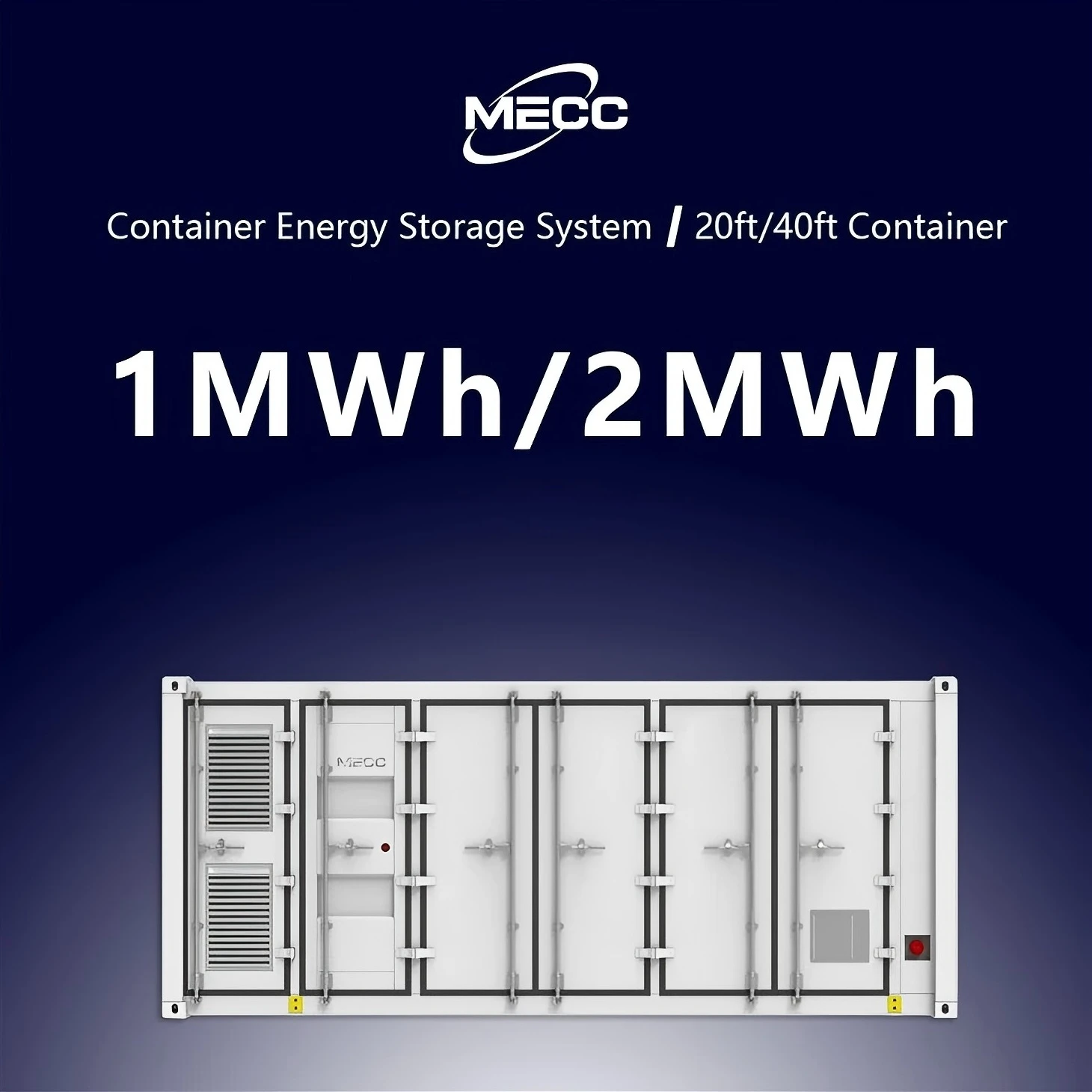
500KW/1MW 1MWh/2MWh Battery Energy Storage System Container


The 500kW/1MW 1MWh/2MWh Battery Energy Storage System Container is a turn‑key utility‑grade energy storage solution housed in standard 20ft or 40ft shipping containers, integrating bidirectional PCS, A‑grade LiFePO4 battery clusters, master BMS, liquid‑cooled thermal management, gas fire suppression, high‑voltage distribution and EMS energy management system with full factory pre‑assembly and pre‑commissioning. Requiring only foundation construction and high‑voltage cable connection for on‑site commissioning, it supports flexible power‑capacity configuration and multi‑container parallel expansion, delivering core capabilities of peak‑shaving and load shifting, renewable energy smoothing, frequency‑voltage grid support, islanded micro‑grid operation and large‑scale emergency backup. Featuring IP54 enclosure protection and comprehensive multi‑layer safety mechanisms, it adapts to diverse harsh outdoor environments, and is widely deployed for ground‑mounted PV power stations, industrial parks, mining operations, island microgrids and grid‑side auxiliary service projects to stabilize grid fluctuations, boost renewable energy utilization and reduce comprehensive energy costs.

Send Inquiry

whatsapp

Phone

E-mail

Inquiry