


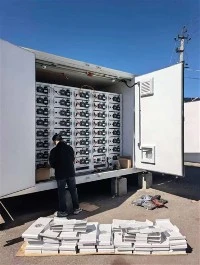
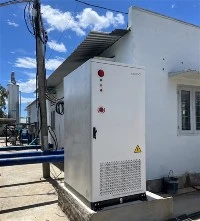
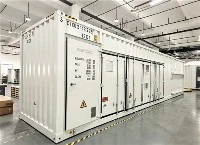
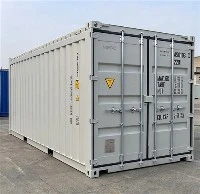
Container energy storage, with its core advantages of prefabrication, modularity, and mobility, is becoming a "flexible energy unit" to cope with sudden energy demands and fill temporary power supply gaps. The global project achieves "deployment and grid connection within 1-2 weeks" by optimizing transportation design, simplifying grid connection processes, and strengthening environmental adaptability, shortening the construction period by 80% compared to traditional civil energy storage. It plays a key role in natural disaster emergency response, large-scale event power maintenance, and power grid upgrade transition scenarios, demonstrating the mobile value of "energy goes wherever it is needed".
1 Natural disaster emergency: rapid restoration of critical power supply
The Hurricane Emergency Energy Storage Cluster in the United States. Hurricane Hillary hit California in 2023, causing 1.5 million users to lose power. FEMA (Federal Emergency Management Agency) urgently dispatched 60 50MWh container energy storage units and deployed 12 emergency power supply points within 72 hours through a "trailer transportation+temporary grid connection" mode, providing continuous power for hospitals, shelters, and communication base stations. The energy storage container adopts "off grid grid grid dual-mode switching": in the initial off grid stage, it supplies power to key loads (such as ICU equipment and emergency lighting), and after partial restoration of the power grid, it switches to grid connection and cooperates with diesel generators to supplement nighttime electricity. In this emergency, container energy storage increased the power supply reliability of the shelter to 99%, which is 35% higher than relying solely on generators. Until the power grid is fully restored, a total of 1.2 GWh of emergency electricity was provided, ensuring the basic living needs of over 500000 people.
China's' Post earthquake Mobile Energy Storage '. Ganzi Prefecture, Sichuan Province has 20 sets of 10MWh "mobile emergency energy storage containers" on standby, equipped with heavy-duty trailer chassis (which can be towed by trucks), fast grid connection interface (supporting cable connection within 1 hour), and a top mounted 20kW flexible photovoltaic panel (emergency energy replenishment). After the local earthquake in 2024, three energy storage containers will arrive in the earthquake zone within four hours to provide lighting, medical equipment (such as electrocardiographs), and mobile phone charging power for temporary resettlement sites. Photovoltaic daytime charging can meet 30% of the electricity demand, and the remaining will be supplemented through emergency power grids. Within 7 days after the disaster, this batch of energy storage provided a cumulative power supply of 280000 kWh, avoiding the problems of diesel generator noise pollution and fuel shortage, and becoming the core force of "silent energy guarantee" in the earthquake stricken area.

2 Large scale events and temporary scenarios: ensuring short-term high load power supply
Europe's' Temporary Energy Storage for the European Championship '. During the 2024 European Championship in Germany, the organizers will deploy 40 30MWh container energy storage units around 10 event venues as a "dual guarantee of primary and backup power sources": during the competition period (with a peak load of 20MW), the energy storage and power grid will work together to share 30% of the load and avoid power grid overload; If the power grid suddenly fails, the energy storage can switch to off grid mode within 50ms, ensuring uninterrupted operation of venue lighting, scoring system, and broadcasting equipment. The energy storage container adopts a "silent design" (operating noise<55 decibels), which meets the environmental protection requirements of the surrounding residential areas of the venue. During the event, the accumulated power supply was 8.6 million kWh, and there was no power interruption. At the same time, arbitrage benefits were achieved through "valley charging and peak discharging", covering 30% of the energy storage rental cost.
Australia's' Temporary Energy Storage for Mining '. A certain open-pit mine in Western Australia requires temporary power supply for 6 months due to the relocation of mining equipment (traditional civil energy storage construction period is too long). The mining party leases 15 40MWh container energy storage units, combined with 10MW temporary photovoltaics, to form a "photovoltaic storage complementary system": during the day, photovoltaics prioritize supplying power to mining equipment (such as crushers and transport vehicles), and the remaining electricity is charged into energy storage; Full power discharge of energy storage at night to meet continuous mining needs. The system takes only 10 days from equipment entry to grid connection, shortening the construction period by 80% compared to traditional solutions. Within 6 months, it provides a cumulative power supply of 18 million kWh, reduces diesel consumption by 5000 tons (avoiding the use of diesel generators), and reduces mining costs by 0.5 USD/ton, achieving the dual goals of "temporary power supply+cost reduction and carbon reduction".

3 Transition of power grid upgrade: filling the power supply gap
India's' Summer Load Peak Energy Storage Supplement '. The summer electricity load in Uttar Pradesh, India has surged (peak exceeding 22GW), and the insufficient transmission capacity of the power grid has led to frequent power outages and restrictions. The local power company leases 120 20MWh container energy storage units from April to June each year, deployed in load intensive industrial parks and residential areas, using a "peak discharge, valley charging" mode: releasing 2400MWh of electricity every day from 18:00 to 22:00 (peak load) to alleviate the power supply pressure of the grid; Charge from 2:00-6:00 am (low load) to avoid occupying daytime power resources. In the summer of 2023, this batch of energy storage will reduce the frequency of power outages and restrictions from 12 times per day to 3 times per day, reduce production losses for industrial enterprises by 40%, and at the same time, the leasing cost will only be 1/5 of that of newly built transmission lines, becoming an "economic choice" for the transition of power grid upgrading.
Brazil's' Remote Region Grid Extended Energy Storage '. A remote community in the Brazilian Amazon rainforest has long relied on diesel power supply (electricity price of $1.2 per kilowatt hour) due to the high cost of extending the power grid (over $100000 per kilometer). The local power company deployed 5 15MWh container energy storage units and 20MW photovoltaics to form an "off grid solar energy storage system", providing power to 5000 households in the community: photovoltaics generate electricity during the day to meet the needs of residents, and surplus electricity is charged into energy storage; Nighttime energy storage discharge, completely replacing diesel generators. The deployment cycle of the system is 2 weeks, which shortens the construction period by 18 months compared to the grid extension plan. The residential electricity cost has been reduced to 0.3 US dollars per kilowatt hour, reducing carbon emissions by 8000 tons per year. At the same time, it lays the foundation for subsequent grid extension (energy storage can be used as a backup power source for grid nodes).
The "rapid deployment and mobile application" of container energy storage is redefining the "spatial attributes" of energy storage - from "fixed infrastructure" to "movable energy assets". In the future, with the improvement of standardized interfaces (such as unified grid connection protocols and quick connection plugins) and intelligent scheduling platforms (real-time allocation of global energy storage resources), container energy storage will achieve "rapid response and efficient utilization on a global scale" and become a "flexible and mobile reserve force" in the global energy security system.