


When photovoltaic panels enter urban balconies from wilderness power stations, their role is not only as power generation equipment, but also as an integral part of architectural aesthetics. Modern balcony photovoltaic systems break the label of "industrial feel" through material innovation, form customization, and spatial adaptation. While meeting power generation needs, they form a harmonious dialogue with architectural styles such as apartment buildings and villas, making clean energy equipment a plus point in home design.
1 Material Innovation: Making Photovoltaic Panels an "Invisible Power Generator"
Translucent cadmium telluride thin film photovoltaic modules are the core carrier of aesthetic fusion. This thin film with a thickness of only 0.3 millimeters can be directly attached to balcony glass, with a light transmittance of 50% -70%. It can not only transmit natural light to ensure indoor brightness, but also generate electricity using residual light. In a high-end apartment project in Shanghai, the developer combined it with Low-E insulated glass to create photovoltaic glass windows. From the outside, they present a light gray frosted texture and blend seamlessly with the aluminum curtain wall on the building facade. The annual power generation of a single piece of glass can reach 150 degrees, fully meeting the needs of balcony lighting and small household appliances.
Flexible photovoltaic tiles are suitable for retro style buildings. Flexible tiles made of copper indium gallium selenide material can bend and conform to the curved contour of balcony railings. The color is customized in retro tones such as brick red and dark black, echoing the red brick walls of old villas. In the renovation of a historical and cultural block in Hangzhou, 20 households installed this type of photovoltaic tile on their balcony railings. The annual power generation per meter of railing is about 80 degrees, which can charge mobile phones, light lanterns and other decorative lamps without damaging the historical style of the block, becoming an energy-saving highlight in the "micro renewal".
2 Customization of Form: Modular Design Suitable for Various Balcony Spaces
For enclosed balconies, the foldable photovoltaic panel system solves the pain point of "shading". Multiple photovoltaic panels connected by hinges can be folded and stored at the top of the balcony. When unfolded, they form a 30 degree angle with the glass to efficiently absorb light. When not in use, the folding thickness is only 10 centimeters, which does not affect the balcony's drying function. The owner of a small-sized apartment in Shenzhen tested that the folding system of 2.5 square meters generates an average of 1.2 kWh of electricity per day, which is enough to power two laptops and routers, saving 40 yuan in electricity bills per month. After folding, it is completely hidden under the curtain box and does not affect the indoor aesthetics.
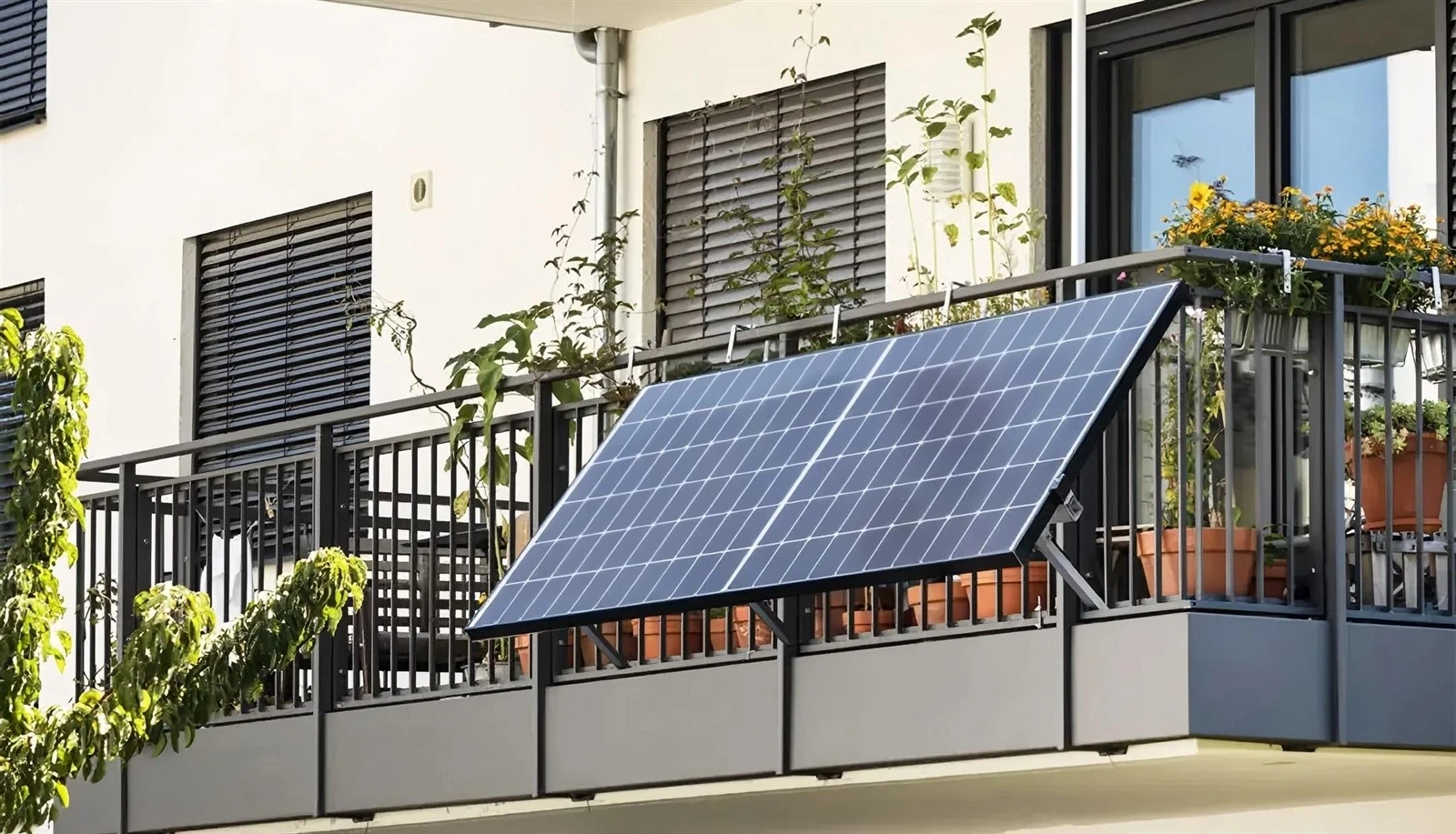
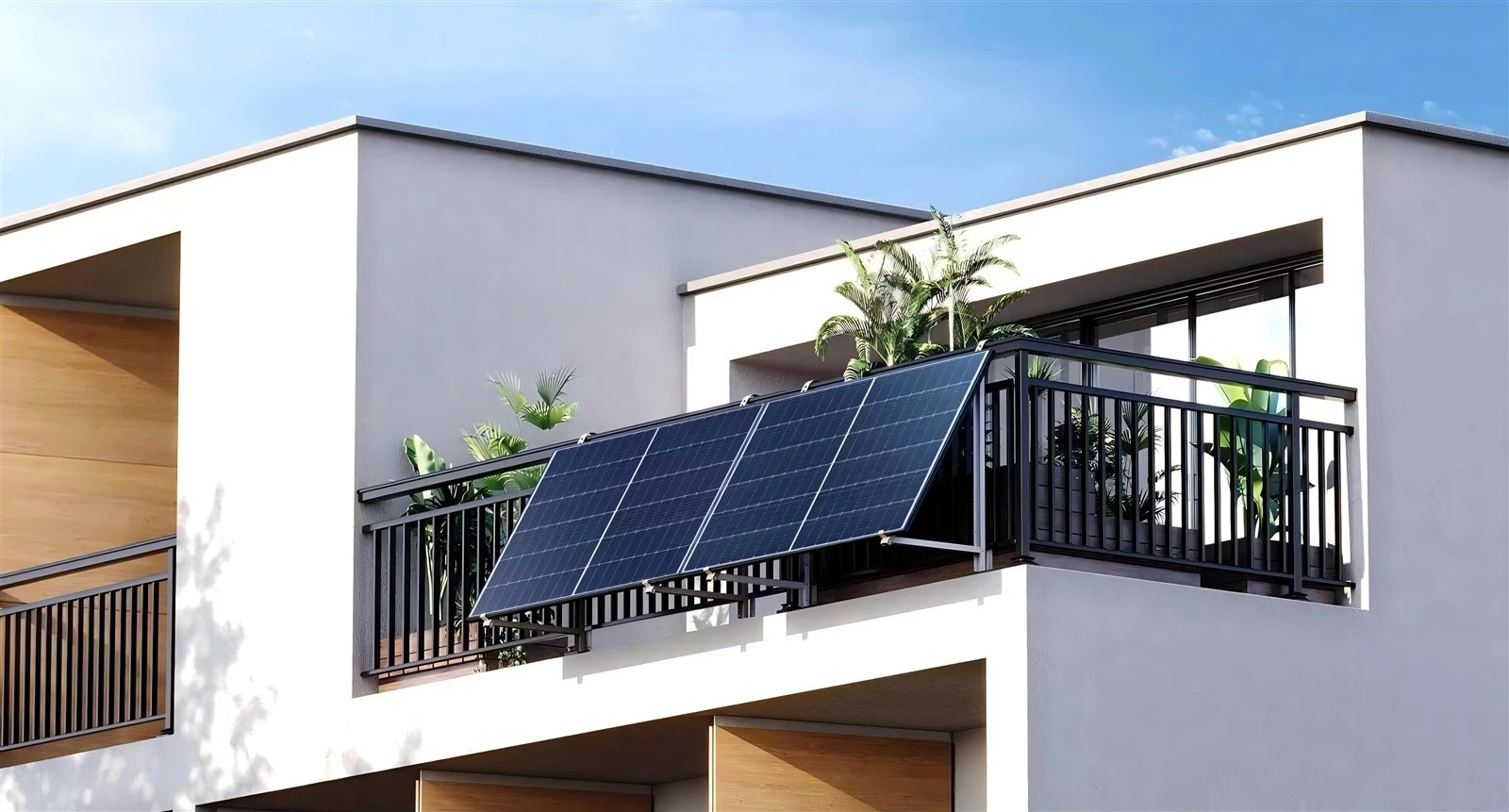
The integrated design of "photovoltaic guardrail" is popular for open balconies. Combining photovoltaic panels with stainless steel guardrails, the photovoltaic panels serve as the barrier part of the guardrail, with a height of 1.2 meters and a width customized according to the size of the balcony, meeting both safety protection requirements and fully receiving sunlight. A resettlement housing community in Beijing has installed this type of guardrail in bulk. The average annual power generation of a single balcony is 200 kWh, and the overall annual power generation of the community reaches 50000 kWh, reducing carbon dioxide emissions by about 50 tons. Residents can also view their own contribution of "green energy" through the community app.
3 Scene fusion: from power generation equipment to lifestyle carriers
The combination of balcony photovoltaics and gardening creates a "photovoltaic vegetable garden" model. In the shaded area below the photovoltaic panel, shade tolerant vegetables such as chives and lettuce are planted. The photovoltaic panel blocks strong light from the plants, and the transpiration of the plants can cool the photovoltaic panel, improving power generation efficiency by 5% -8%. The practice of a family in Guangzhou shows that 30 lettuce plants can be planted under 1.8 square meters of photovoltaic panels, with an annual harvest of 15 kilograms of vegetables and a power generation of 220 kWh, achieving a virtuous cycle of "one kilowatt hour of electricity for one kilogram of vegetables".
The nighttime lighting scene allows photovoltaic panels to generate electricity during the day and emit light at night. Some photovoltaic panels use transparent luminescent backboards, which generate electricity normally during the day and are powered by energy storage batteries at night, emitting soft warm light and becoming ambient lights on the balcony. In a renovation case of a young homeowner in Shanghai, when the balcony photovoltaic panels are lit up at night, the light passes through the curtains to create a starry sky effect indoors, which not only saves nighttime lighting electricity costs but also creates a unique home atmosphere. The related renovation video has received millions of likes on social media.
The aesthetic upgrade of balcony photovoltaics is essentially a deep coupling between clean energy and daily life scenarios. When photovoltaic equipment is no longer an abrupt "industrial product", but an "organic composition" integrated into the building texture and in line with lifestyle habits, its popularization will no longer rely on policy promotion, but become a lifestyle choice actively chosen by residents. This is a key step for distributed energy to enter thousands of households.