


In cities where the rental market accounts for over 30%, balcony photovoltaics are no longer exclusive to homeowners. Portable photovoltaic systems designed for renters, characterized by "hole free installation, easy relocation and removal, and plug and play", are becoming a new choice for young people to practice low-carbon living. These lightweight 'solar power generation packages' enable mobile living spaces to embrace clean energy.
1 Modular design: install PV like assembling furniture
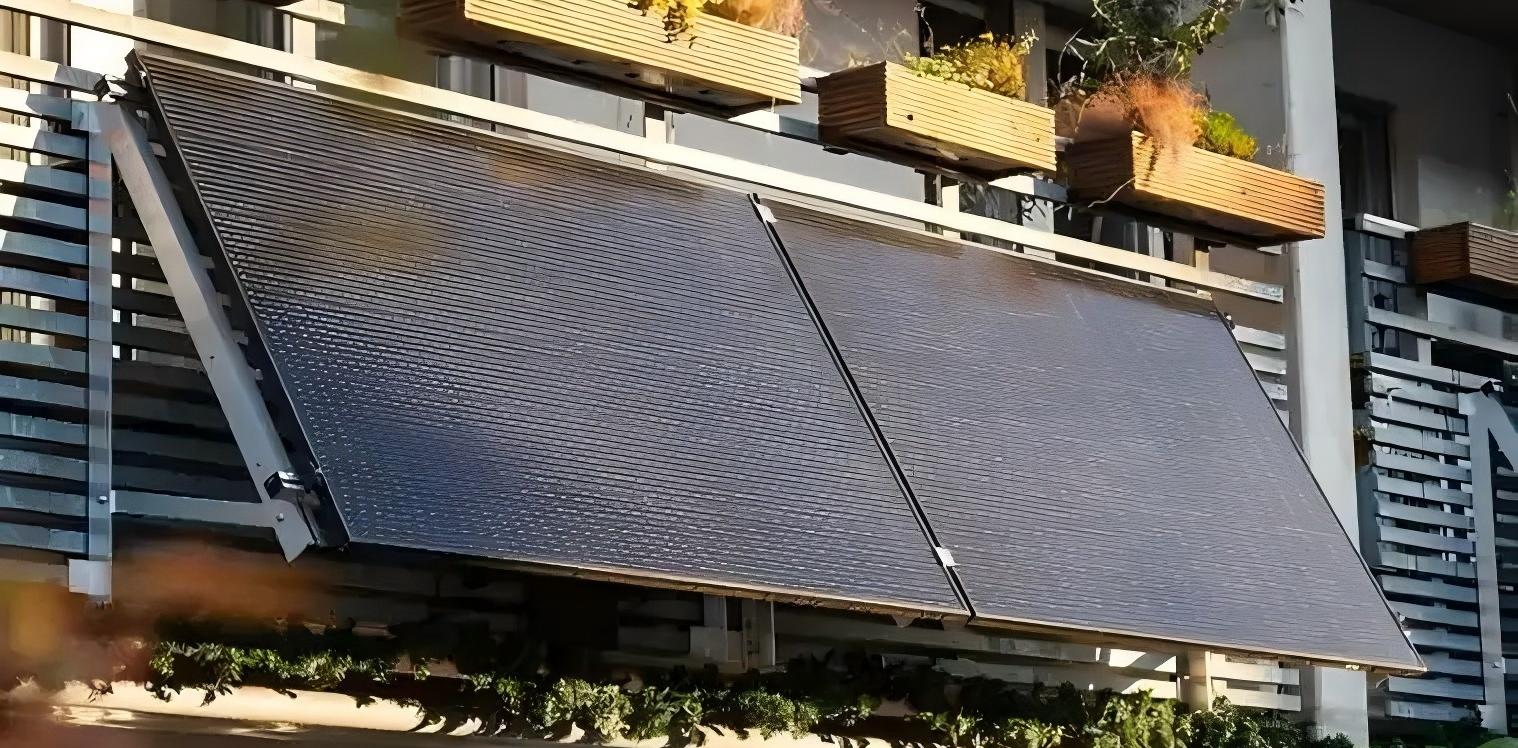
The "photovoltaic building block" system launched by a start-up company in Shenzhen is quite representative. The whole set of equipment consists of 4 flexible photovoltaic panels measuring 1 meter by 0.5 meters, a small inverter, and a folding bracket, with a total weight of only 8 kilograms, which can also be easily carried by girls. No need to drill holes during installation, fixed to the balcony glass with strong suction cups or Velcro. The bracket can be folded to adjust the angle and adapt to balconies with different orientations.
This modular design supports flexible expansion. Renters can first buy 2 boards to meet the electricity needs of low-power devices such as mobile phones and routers, generating about 80 kWh of electricity per month and saving 40 yuan on electricity bills; When the demand for winter heating increases, two more panels can be added to increase the total capacity to 160 watts, which can drive small heaters. Beijing tenant Xiao Zhang's actual test shows that the installation of the entire system only takes 20 minutes, and dismantling it during moving does not damage the balcony doors and windows. He has followed him to change rental houses three times.
Interface standardization is a key innovation. The inverter is equipped with USB-A, USB-C, Type-C, and traditional sockets, supporting direct charging for devices such as mobile phones, laptops, and projectors. It can also be connected to a mobile app via Bluetooth to view real-time power generation and device usage. A certain brand even launched "photovoltaic power bank" accessories, which can be charged with photovoltaic panels during the day and taken out as a mobile power source at night to meet the outdoor electricity needs of renters.
2 Cost control: making clean energy within reach
Affordable prices are the key to opening up the market for portable photovoltaics. At present, among the mainstream products, the 100 watt set (including photovoltaic panels, inverters, and brackets) is priced at about 500 yuan. Calculated based on an average daily power generation of 0.4 kWh, the annual electricity cost savings are about 90 yuan, and it can be recouped in 5-6 years. The product life can reach more than 10 years, and the long-term cost-effectiveness is outstanding.
The leasing model further lowers the threshold. A platform in Shanghai has launched a "photovoltaic sharing" service, where you can rent a 100 watt system by paying a deposit of 199 yuan. The monthly rent is 19 yuan, and you can cancel the lease at any time. This model is particularly suitable for short-term rental (1-2 years) users, avoiding equipment idle waste. The data shows that the average usage time of rental users is 8 months. After termination, the equipment can be rented again after testing and maintenance, with a recycling rate of 90%.
Packages that combine with rental living scenarios are more popular. A certain brand has launched a combination of "photovoltaic+clothesline", integrating flexible photovoltaic panels above the clothesline, which not only does not affect drying, but also uses sunlight to generate electricity. The package price is 799 yuan, saving 200 yuan compared to purchasing separately. Guangzhou tenant Xiaolin calculated an account: "This equipment generates 0.5 kWh of electricity per day, enough to power washing machines and desk lamps. The annual electricity savings can cover one-third of the rent.

3 Policy adaptation: solving the landing problem of rental photovoltaic systems
Policy innovations targeting rental scenarios are emerging. Hangzhou, Chengdu and other cities have made it clear that portable photovoltaic systems installed in rental housing do not require the consent of landlords or changes to the grid registration. As long as the structure of the house is not damaged, they can be installed, solving the core pain point of "installation permission". The power grid company has also launched a "tenant exclusive grid connection channel", which can be processed by submitting their ID card and lease contract online, shortening the grid connection process from 7 days to 2 days.
Community facilities are also being followed up. Some long-term rental apartment operators cooperate with photovoltaic companies to reserve photovoltaic installation interfaces on the balconies of newly built apartments, and the rent includes the cost of using the photovoltaic system. The "Sunshine Apartment" of a certain brand of apartment in Shanghai has a rent that is 100 yuan/month higher than ordinary apartments, but it is equipped with a 200 watt photovoltaic system and energy storage batteries, which reduces the actual monthly electricity expenses of tenants by 150 yuan, making it more cost-effective. The occupancy rate of this type of apartment is 100%.
Insurance services reduce usage risks. In response to the concerns of renters about equipment damage, falling, and other issues, insurance companies have launched special insurance with an annual premium of 30 yuan to cover losses up to 5000 yuan. In a certain case, a typhoon caused the suction cup of the photovoltaic panel to fall off and be damaged. The insurance company completed the claim within 24 hours and replaced the user with a new device, eliminating any worries.
The balcony photovoltaics of renters essentially transform clean energy from "fixed assets" to "current assets". When photovoltaic equipment can move with residents like furniture, and when the use of clean energy is no longer restricted by property rights, low-carbon living will have a wider range of applicable scenarios. This is a vivid manifestation of energy democratization - whether or not one owns property, everyone can equally enjoy the green benefits brought by sunlight.