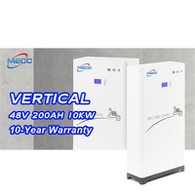
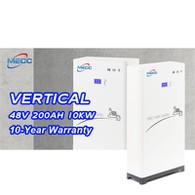
It possesses a high energy density, which is a significant advantage over traditional lead-acid batteries. It can store a substantially larger amount of energy within a smaller volume and with a lighter weight. This not only simplifies installation procedures but also makes transportation more convenient and cost-effective, opening up new possibilities for portable and space-constrained applications. For example, in portable power tools used by construction workers or DIY enthusiasts, its compact size and high energy density allow for longer usage times without the need for frequent recharging or the burden of heavy battery packs. In the field of renewable energy storage, such as in home solar panel systems, it can efficiently store the generated electricity in a relatively small space, enabling homeowners to have a more self-sufficient and sustainable energy supply.
The self-discharge rate of it is relatively low. This means that even when it is left unused for an extended period, it will only lose a minimal amount of power. As a result, it can still retain a significant level of available power after long-term storage, ensuring that it is ready to be used whenever needed without the need for frequent recharging or maintenance. In emergency backup power systems, where the battery may need to remain dormant for long periods until a power outage occurs, this low self-discharge rate is crucial. It ensures that when the lights go out and the backup power is required, it will spring into action with sufficient energy to keep essential appliances and systems running, providing peace of mind and security.
The assembly of battery cells requires a high-precision stacking or winding process. In the stacking process, multiple layers of cathode, separator, and anode are precisely stacked together. The separator, usually a porous polymer membrane, is crucial for preventing short circuits between the electrodes. It acts as a physical barrier while allowing the passage of lithium ions. In the stacking process, automated robotic arms with high positioning accuracy are used to place each layer with extreme precision. The alignment of the layers is carefully monitored and adjusted to ensure uniform contact and minimal internal resistance. In the winding process, the electrodes and separator are wound into a cylindrical or prismatic shape, ensuring proper alignment and contact. The winding tension and speed are precisely controlled to avoid any damage or misalignment of the layers during the process.
The welding technology used to connect the electrode tabs and current collectors is of utmost importance. Laser welding is often employed due to its high precision and minimal heat-affected zone. It creates reliable and low-resistance electrical connections, which are essential for efficient charge and discharge of it. The laser welding parameters, such as power, pulse duration, and frequency, are carefully optimized based on the material and thickness of the tabs and collectors. The welding process is carried out in a controlled environment to prevent any contamination or oxidation that could affect the quality of the weld. Advanced vision systems are also used to monitor the welding process in real-time, ensuring the integrity of each weld joint.
|
Model |
48100 |
48200 |
|
Specification |
48V100Ah |
51.2V200Ah |
|
Combination |
15S1P |
16S1P |
|
Capacity |
4.8KWh |
10.24KWh |
|
Standard discharge current |
50A |
50A |
|
Max. discharge current |
100A |
100A |
|
Working voltage range |
40.5-54VDC |
40.5-54VDC |
|
Standard Voltage |
48VDC |
51.2VDC |
|
Max. charging current |
50A |
100A |
|
Max. charging voltage |
54V |
54V |
|
Cycle |
3000~6000cycles @DOD 80%/25℃/0 . 5C |
|
|
Operating temperature |
-10~+50℃ |
|
|
Working altitude |
≤2500m |
|
|
Installation |
Wall mount/Stacked |
|
|
Warranty |
5~ 10 Years |
|
|
Communication |
Default: RS485/RS232/CAN Optional :WiFi/4G/Bluetooth |
|
|
Certified |
CE ROHS FCC UN38 .3 MSDS |
|


Power wall 48V 100AH


Stacked 48V 100AH


Vertical 48V 200AH