


A battery that dispatches badly is an expensive paperweight with a warranty. On a commercial or industrial site, the difference between a BESS that earns and one that idles is rarely the hardware - it is the software making the decisions. That software is the C&I EMS, and unlike residential energy apps or factory SCADA, it has a specific, demanding job: turn your tariff, your load, and your battery into the best possible cash flow, every 15 minutes, for ten years.
This article lays out what a serious C&I EMS must actually do - the functions that are non-negotiable, the behaviors that separate good from mediocre, and how to evaluate one before you sign.

The Job Description, in One Sentence
A C&I EMS must convert tariffs, forecasts, and battery constraints into dispatch decisions that maximize economic value - while never violating a safety or contract limit - and prove afterward that it did.
Every function below is a clause in that sentence.
Function One: A Real Tariff Engine
Everything starts with knowing what electricity costs. The EMS must model your actual rate structure - not a generic "peak" and "off-peak":
Demand charges, including ratchets (where a single monthly peak sets a floor for future bills), kVA-based demand, and power-factor penalties.
Time-of-use windows and seasonal variations, plus holiday calendars.
Demand-response event pricing and export compensation, where applicable.
This sounds basic and is routinely botched. Many platforms treat tariffs as a fixed schedule; real utility tariffs have riders, ratchets, and conditional charges that change the optimal dispatch materially. Demand ratchet management alone can shift the entire sizing and dispatch strategy. Before buying, hand the vendor your actual tariff sheet and ask them to model it exactly. If they simplify it, they will leave money on the table every month.
Function Two: Forecasts That Feed the Dispatcher
Dispatch quality is capped by forecast quality. A C&I EMS needs working forecasts of:
Site load, at 15-minute resolution, learned from your interval data - weekday/weekend, seasonal, production-schedule-aware.
On-site solar, if present, using irradiance and the array's historical output.
Optionally, market prices or DR event schedules for sites that participate.
The forecast does not need to be exotic - it needs to be used. A system that predicts your 3 p.m. production ramp and pre-charges for it earns more than a smarter algorithm that reacts late. This is also where the line sits between a conventional rules-based EMS and the next generation: our guide to AI dispatch for battery storage covers what machine-learning approaches add beyond good statistics.
Function Three: Value Stacking With Honest Priorities
A C&I battery usually serves several masters: peak shaving, TOU arbitrage, backup reserve, DR programs, maybe VPP participation. These objectives conflict - energy saved for backup cannot shave a peak, and a DR dispatch may collide with a demand-charge window.
The EMS must implement an explicit priority stack:
Which objective wins when two compete (typically: contractual obligations > safety reserve > demand-charge protection > arbitrage > optional programs).
How much SOC is reserved for backup, and when that reserve may be released.
How program penalties for non-performance are weighed against bill savings.
Insist on seeing the priority logic. An EMS whose priorities are a black box will make trade-offs you did not agree to - and you will discover them on a bill.

Function Four: Constraint Awareness, Down to the Cell
Dispatch decisions are only valid if they respect what the hardware can actually do this hour: the BMS-reported usable capacity, temperature derating, charge-rate limits, and the PCS power rating. A serious EMS ingests these live constraints rather than assuming nameplate.
The practical test: on a hot afternoon when the battery is derated 15%, does the EMS plan a demand-charge strategy that still hits the target - or does it optimistically schedule power the battery cannot deliver, leaving the peak unprotected? The second failure mode is common and quietly expensive. The EMS should also coordinate with site electrical limits (transformer capacity, service headroom) so charging never becomes your new demand spike.
Function Five: Market and Program Interfaces
Beyond bill optimization, the EMS is your gateway to programs:
Demand response: receiving event signals, confirming participation, dispatching accordingly, and reporting performance for payment.
VPP aggregation: exposing flexibility to an aggregator platform while honoring host-site priorities.
Utility program telemetry where mandated.
Interfaces should run on open, documented protocols (see storage communication protocols) so that changing aggregators does not mean changing your EMS.
Function Six: Measurement and Verification
The most underrated EMS function: proving it worked. A credible platform must:
Report savings against a defensible baseline - typically a modeled no-battery counterfactual using your actual tariff.
Track dispatch KPIs honestly: demand-charge hit rate (percentage of months the billed peak was reduced as targeted), arbitrage capture rate, battery availability, and round-trip efficiency.
Export raw interval data - your data, in a standard format, not trapped in a proprietary dashboard.
Without M&V, you cannot verify a savings guarantee, settle a performance dispute, or feed a real storage TCO calculator with actuals. Treat data export as a contract term, not a feature request - our guide to data ownership and vendor exit covers the contractual side.
Function Seven: Fail-Safe Behavior and Human Control
Software fails; bills do not pause. The EMS must degrade gracefully:
Loss of connectivity: continue executing a local schedule (pre-loaded tariff logic) rather than going dark.
Component failure: fall back to a conservative strategy - protect the demand charge, preserve backup reserve - rather than chasing optimization with partial information.
Human override: your operators must be able to pause dispatch, force a mode, or lock a reserve level, with every manual action logged.
Ask each vendor one simple question here: "The internet line is cut for three days - what does the site's bill look like?" The answer reveals whether resilience was designed or assumed.
What a C&I EMS Is NOT
Two common misconceptions cost buyers money.
It is not a residential energy app scaled up. Home systems optimize a few kWh against simple TOU windows; a C&I EMS must handle demand ratchets, kVA penalties, hundreds of kilowatts, and program obligations. Buying "the same software, bigger" is how sites discover their demand charge was never modeled.
It is not SCADA. SCADA watches and records; an EMS must decide and optimize under uncertainty. A monitoring dashboard bolted onto a rules engine is not a substitute - although the two should integrate cleanly with your battery storage remote monitoring setup.
The Bottom Line
A C&I EMS must do seven things: model your real tariff, forecast your load, stack value with explicit priorities, respect hardware constraints, interface with programs, verify its own savings, and fail safely with human override. Everything else is interface design. Evaluate with a sandbox replay on your data, contract KPIs on dispatch performance, and demand your interval data back - and the software layer will earn its keep for the full life of the asset.
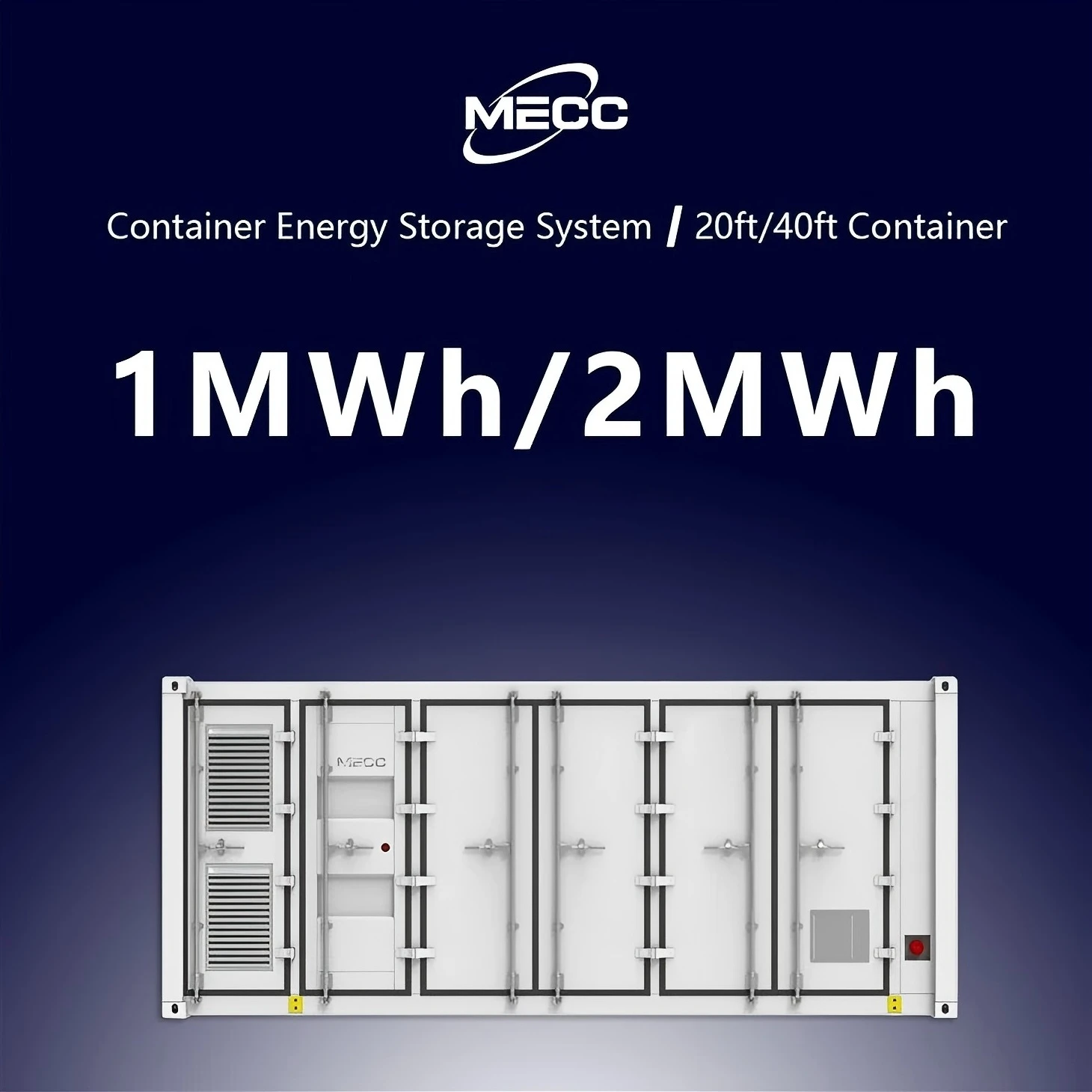
500KW/1MW 1MWh/2MWh Battery Energy Storage System Container
The 500kW/1MW 1MWh/2MWh Battery Energy Storage System Container is a turn‑key utility‑grade energy storage solution housed in standard 20ft or 40ft shipping containers, integrating bidirectional PCS, A‑grade LiFePO4 battery clusters, master BMS, liquid‑cooled thermal management, gas fire suppression, high‑voltage distribution and EMS energy management system with full factory pre‑assembly and pre‑commissioning. Requiring only foundation construction and high‑voltage cable connection for on‑site commissioning, it supports flexible power‑capacity configuration and multi‑container parallel expansion, delivering core capabilities of peak‑shaving and load shifting, renewable energy smoothing, frequency‑voltage grid support, islanded micro‑grid operation and large‑scale emergency backup. Featuring IP54 enclosure protection and comprehensive multi‑layer safety mechanisms, it adapts to diverse harsh outdoor environments, and is widely deployed for ground‑mounted PV power stations, industrial parks, mining operations, island microgrids and grid‑side auxiliary service projects to stabilize grid fluctuations, boost renewable energy utilization and reduce comprehensive energy costs.